Follow the photographs into the wider country story with the new AquaRank Nations: explore China’s IAPLC 2026 results and the creators behind them.
This is part of AquaLibs’ IAPLC 2026 Country Studies, returning to our archived China introduction through this season’s photographs. The archive is historical commentary; the new observations are AquaLibs’ independent visual analysis, separate from official judging. The 6 selected works form an editorial comparison, not a census of national styles.
The 2026 result in context
| Published ranking range | China places |
|---|---|
| Ranks 1–7 | 2 |
| Ranks 1–27 | 6 |
| Ranks 1–100 | 11 |
| Ranks 1–300 | 40 |
Counts are calculated from the official final ranking, using the country-and-area label People’s Republic of China. They count published places, not total submissions or participants. Rank 61 is vacant, so the global ranks 1–300 contain 299 published names.
From individual aquariums to the national view
The five ranks used in China’s national average all fall within the first 17 places. That makes Nations a useful companion to the close readings below: open the contributing creators, then compare how their photographs use wooded layers without assuming they share one identical recipe. The rank 107 case widens our visual selection beyond the five-result calculation.
| AquaRank Nations · IAPLC 2026 | China |
|---|---|
| AquaRank national position | #1 |
| Average of five contributing overall ranks | 8.8 |
| Contributing individual ranks | #1, #5, #10, #11, #17 |
| Published country results in the full edition | 120 |
These are AquaRank’s calculated national standings, not official IAPLC national awards. The average uses the five lowest overall ranks from five confirmed aquascapers; a lower average is better. The 2026 edition is marked as complete on Nations. This full-ranking view is broader than the Top 300 photo selection used in this article. Figures were checked on 16 October 2026.
Explore China at IAPLC 2026 on AquaRank Nations →
Open the contributing five, follow available artwork and creator profiles, then use the edition selector or China’s IAPLC history to explore other available seasons. Use the IAPLC 2026 nations comparison to see the same method applied across countries and regions.
Inspired by Josh Sim’s IAPLC Nations Challenge. Read the Nations methodology for coverage and ranking rules. The average describes results; it does not measure a design style or explain a judge’s decision.
Follow the country journey
Explore China through the years below. Switch between nation position and average rank, then open an edition or its contributing aquascapers to continue the journey.
China at IAPLC
Loading country history…
Returning to the archive
The archived China introduction, published in 2021 and attributed to IAPLC Nations Challenge, highlighted wood, intricate hardscape and strong visual impact. It also raised questions about planting and durability. Those historical opinions provide context, but a 2026 final photograph cannot establish maintenance history. Here we examine the visible relationship between construction, planting, open water and fish instead of carrying old criticisms forward as current facts.
The photographs to study
| World rank | Creator | A detail to follow |
|---|---|---|
| #1 | Chuanwei Yu | Unequal trees, connected space |
| #5 | Fan Zhe Min | An opening shaped by fine foliage |
| #10 | Gang Zhao | A clearing beyond a sheltered foreground |
| #11 | Liwei Guan | Several frames around one distant destination |
| #17 | Mingxiang Wei | An arch of wood above a planted mound |
| #107 | Jin Liang | Vertical roots build a distinctive woodland vocabulary |
Rank 1 — Chuanwei Yu
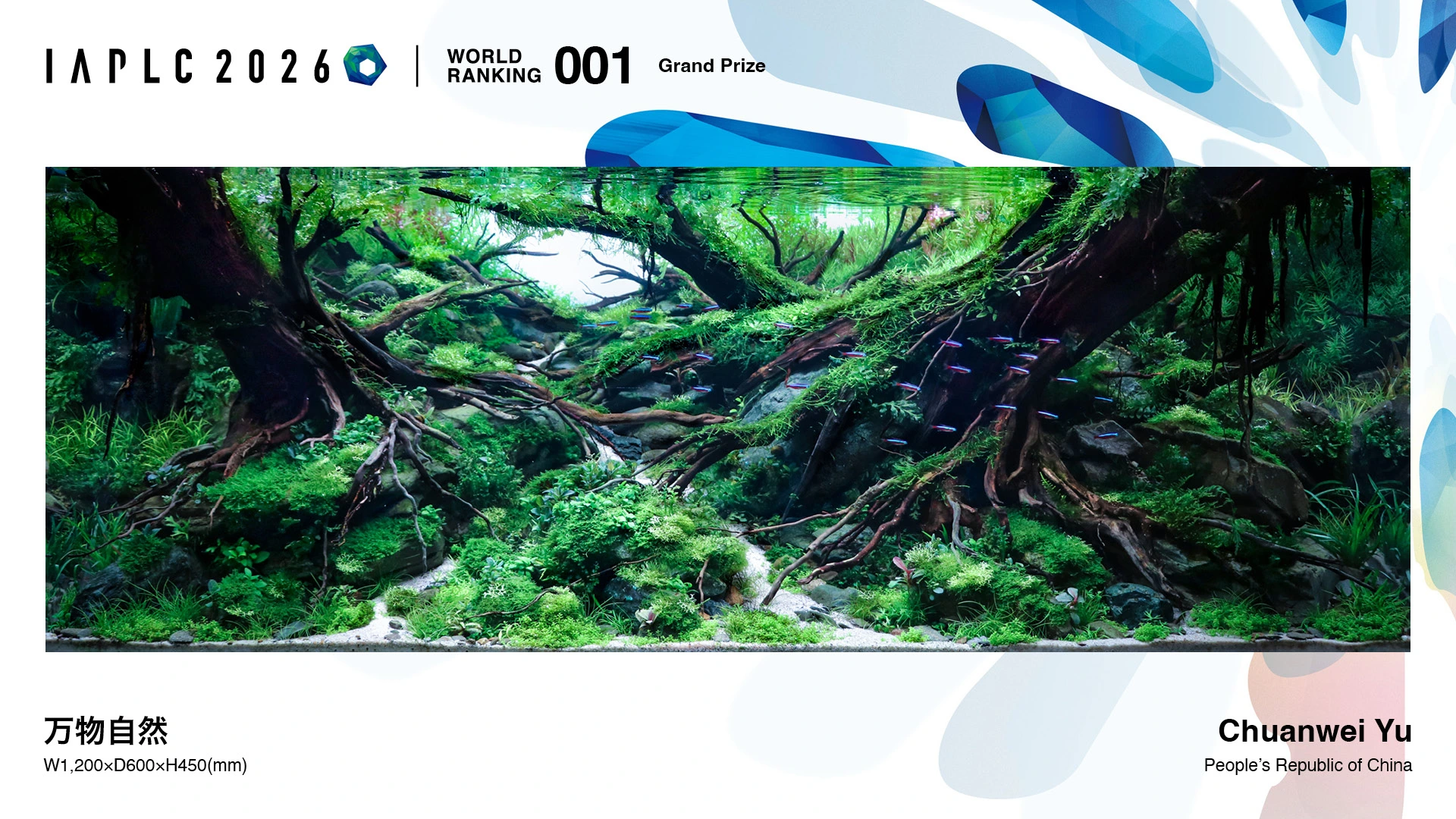
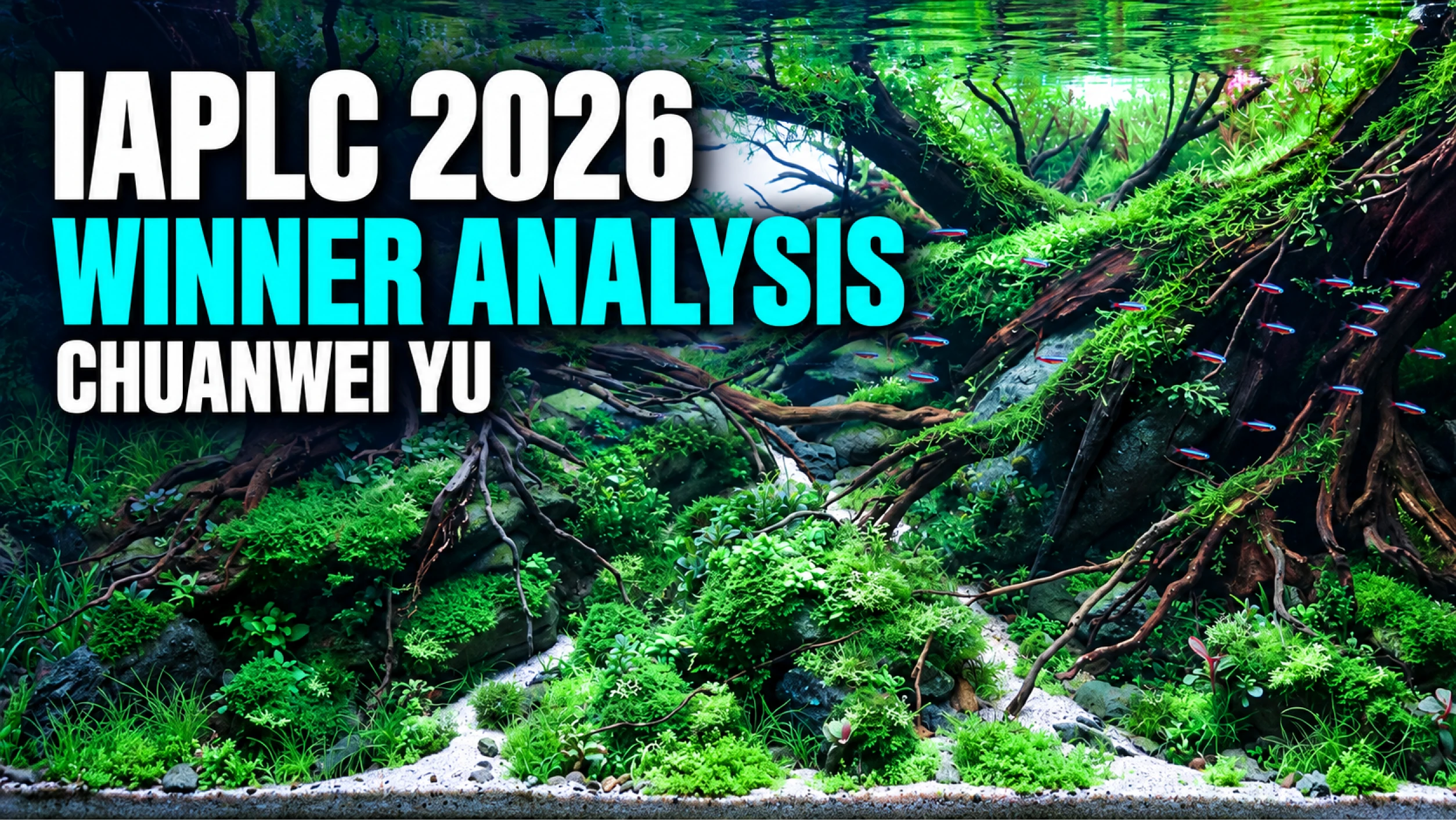
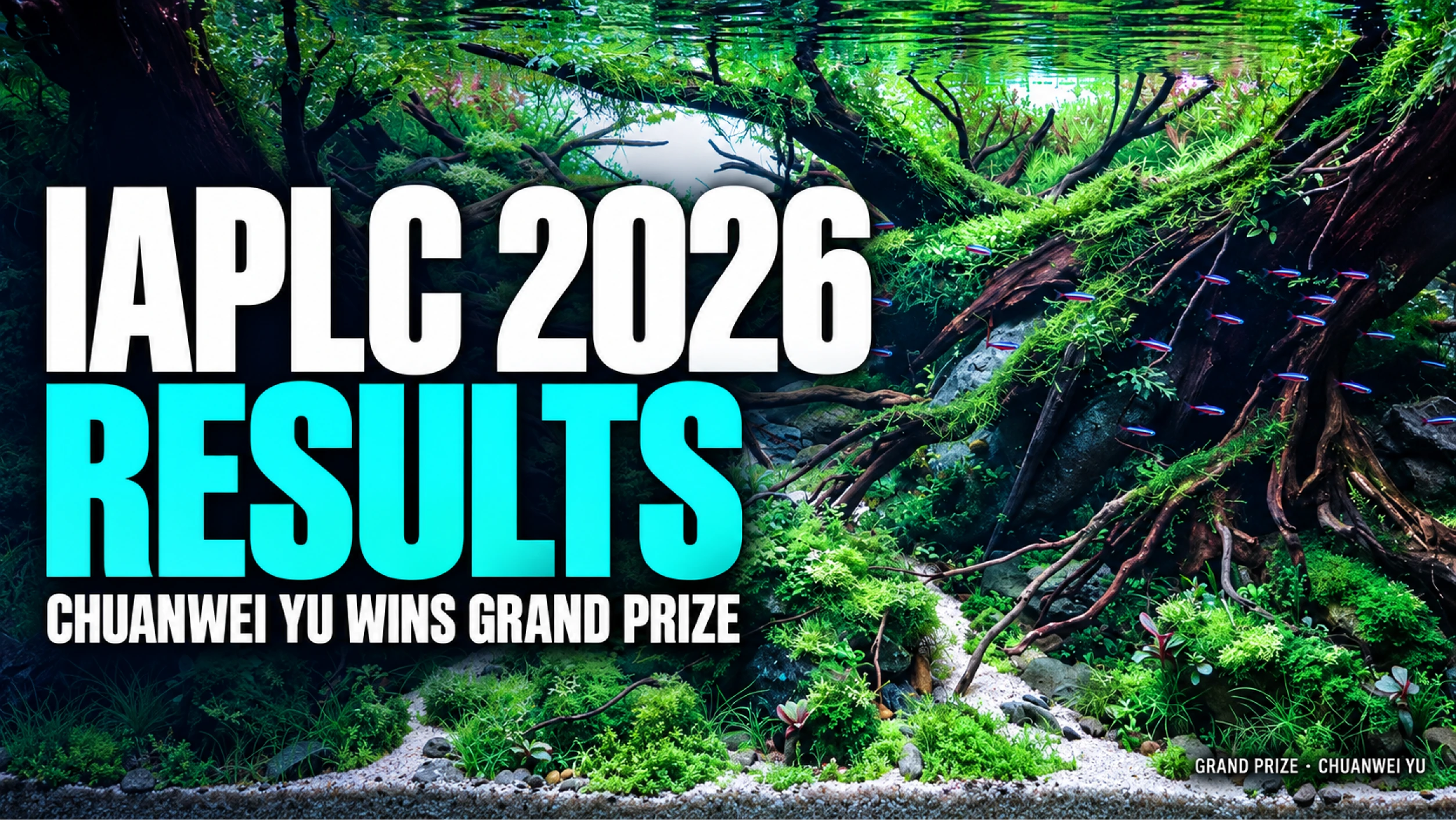
Unequal trees, connected space. Substantial trunks frame the aquarium without matching each other. Smaller roots overlap between them, and a bright opening slightly left of centre gives the dense scene a destination. Fine green growth connects planted stones with the wood while retaining dark exposed surfaces. The blue-red fish make the space between the structures an active part of the photograph.
Look closer: Follow the overlaps before judging the amount of detail.
Explore Chuanwei Yu’s recorded work on AquaRank · Back to the selected works
Rank 5 — Fan Zhe Min
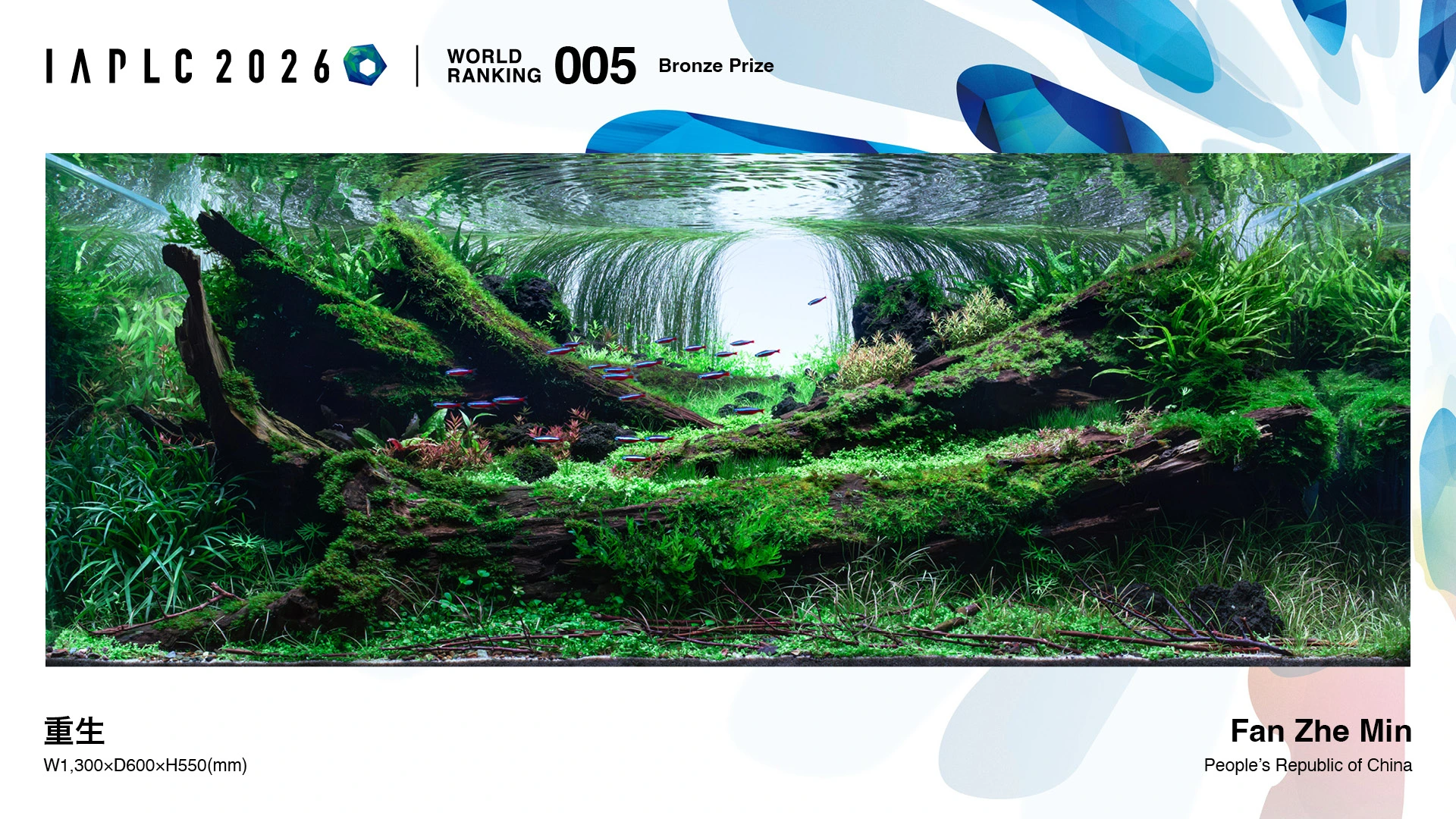
An opening shaped by fine foliage. Long upper leaves bend around the bright background, while planted wood forms lower ridges and ledges. That meeting of fine foliage and heavier structure makes the opening readable from across the room. Smaller warm accents and bright fish markings enliven the greens. The construction is intricate, but its parts share a direction: they carry attention towards the same area of light.
Look closer: Notice which leaves frame the light and which planted surfaces lead towards it.
Explore Fan Zhe Min’s recorded work on AquaRank · Back to the selected works
Rank 10 — Gang Zhao
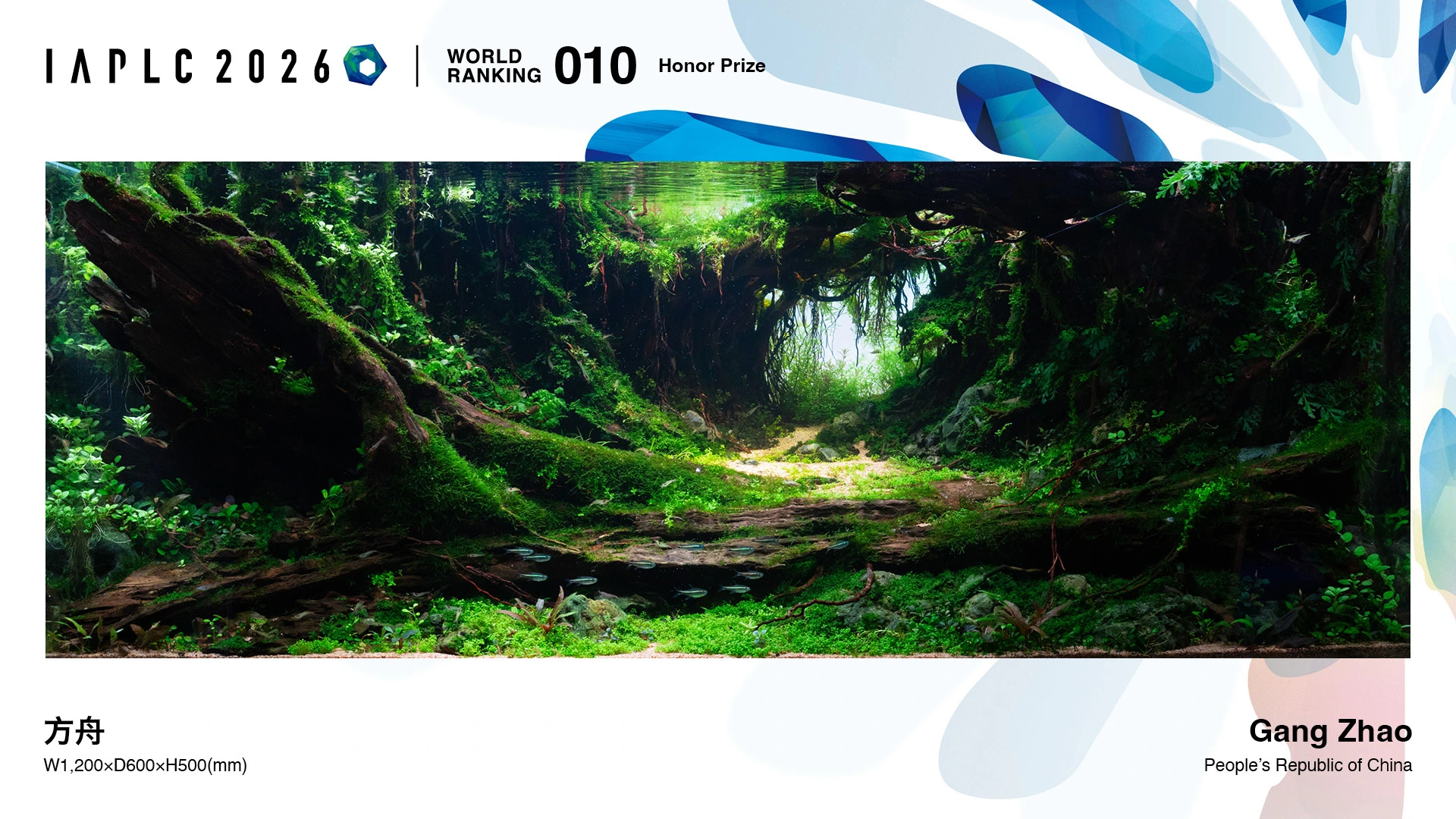
A clearing beyond a sheltered foreground. Planted masses and overhead wood surround a bright opening slightly right of centre. Low greenery and pale ground patches lead towards it, while a horizontal fallen piece establishes the nearer plane. Fish are prominent against the dark water beneath that wood. The opening gives direction, but the foreground retains enough activity and texture to reward attention before the eye travels to the back.
Look closer: Start with the foreground fish, then follow the ground towards the opening.
Explore Gang Zhao’s recorded work on AquaRank · Back to the selected works
Rank 11 — Liwei Guan
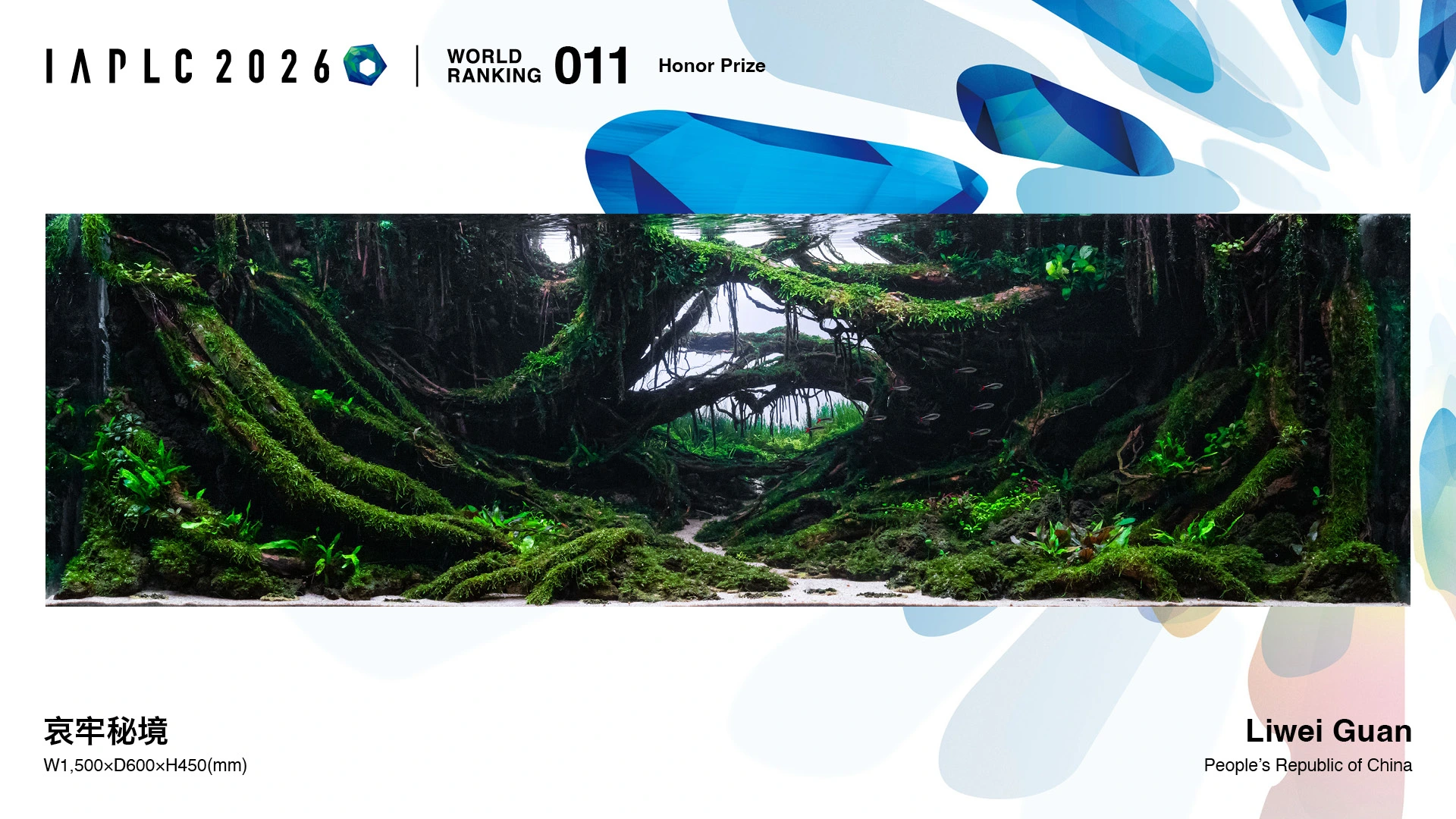
Several frames around one distant destination. Heavy roots descend from both sides and cross beneath successive openings. Bright background patches remain visible through the dark timber, producing a sequence of near and far frames. Green growth traces the principal diagonals rather than concealing them completely. The pale foreground ground offers a quieter entry into a highly structured middle, where the eye must navigate around the wood to reach the light.
Look closer: Count the separate openings rather than treating the middle as one tunnel.
Explore Liwei Guan’s recorded work on AquaRank · Back to the selected works
Rank 17 — Mingxiang Wei
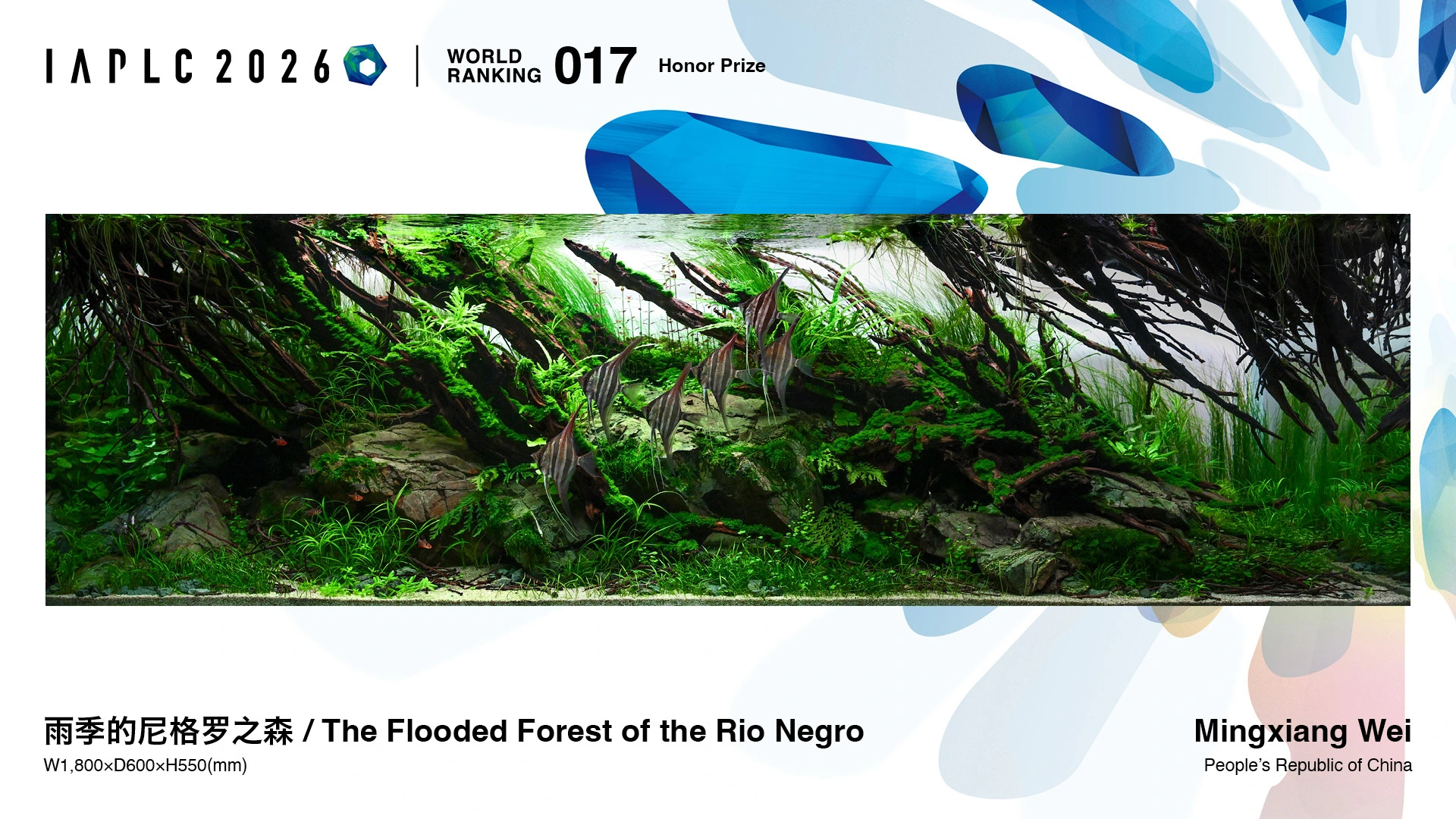
An arch of wood above a planted mound. Heavy dark branches lean inward above a central green mound, but the higher background remains relatively light. Thin upright growth on the right contrasts with the more compact planting below. The foreground uses several leaf textures around the hardscape, making the mound feel attached to its surroundings. Unlike a single tight vanishing-point scene, this aquarium places substantial interest in a broad middle area.
Look closer: Compare the overhead frame with the lower mound it encloses.
Explore Mingxiang Wei’s recorded work on AquaRank · Back to the selected works
Rank 107 — Jin Liang
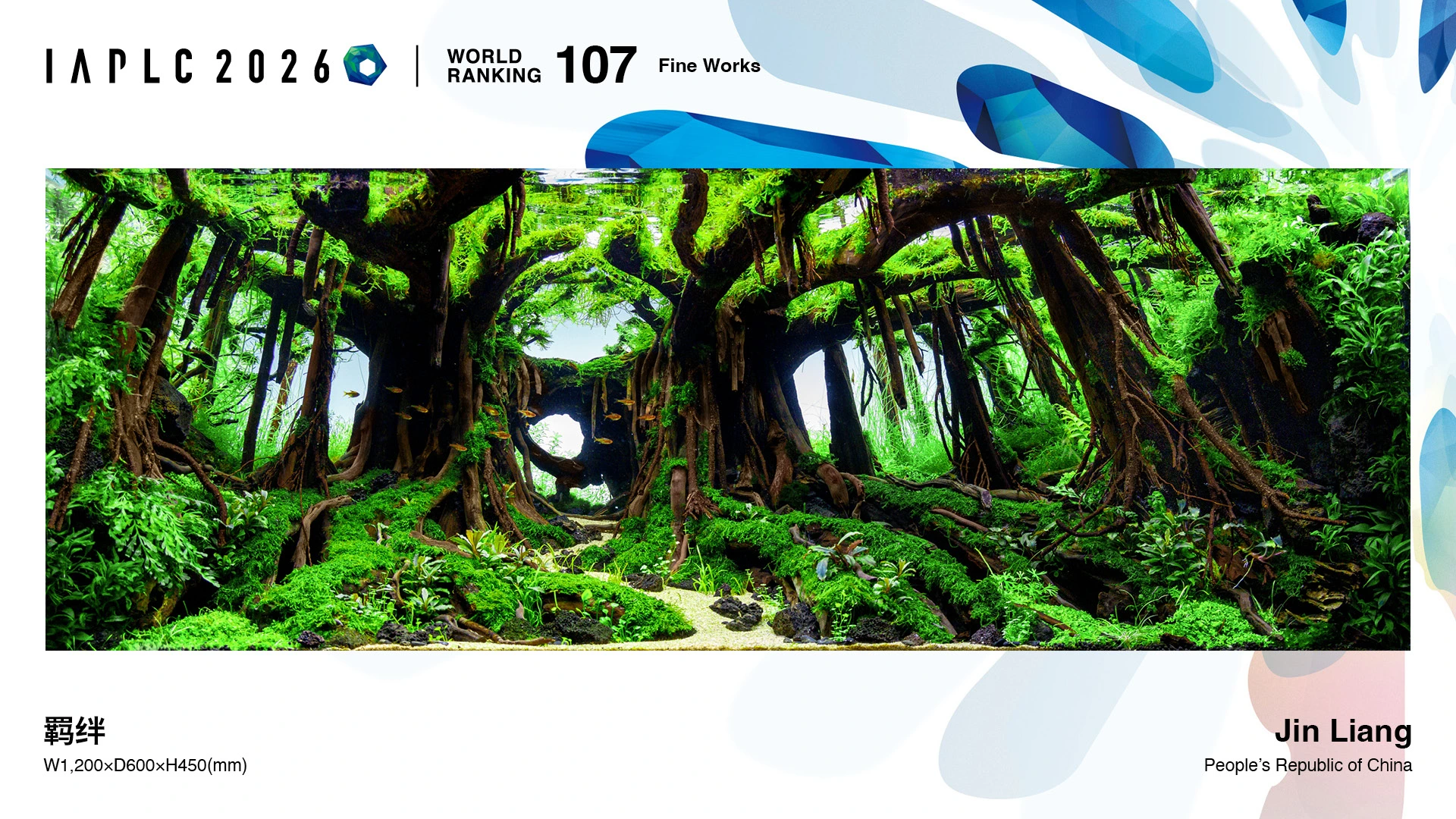
Vertical roots build a distinctive woodland vocabulary. Large upright tree-like forms and hanging roots organise the aquarium, with several bright openings visible between them. Green growth covers portions of the wood and connects the foreground to the larger structures. The repeated verticals create a strong rhythm, but the openings vary in size and shape. The eye therefore discovers several routes through the scene instead of one perfectly repeated corridor.
Look closer: Compare the different openings between the repeated vertical structures.
Explore Jin Liang’s recorded work on AquaRank · Back to the selected works
What the comparison reveals
Light is a recurring destination in these six photographs, yet the frames surrounding it vary considerably. The winner uses unequal large trunks. Fan Zhe Min gives fine foliage a major role in defining the opening. Gang Zhao balances a rear clearing with fish activity in a shaded foreground, while Liwei Guan layers several frames around distant water.
Mingxiang Wei concentrates attention on a broad planted middle, and Jin Liang establishes a more strongly vertical rhythm. That last comparison is particularly useful: wood-led aquascapes need not share one outline or one route into depth. The common design question is how planting preserves, softens or interrupts the principal hardscape lines. These selected images illuminate that question; they do not measure the proportion of every Chinese style in the Top 300.
A design exercise to take away
Follow a principal wood line and mark where it is exposed, covered by planting or concealed behind another form. The transitions often explain more about depth than the total amount of hardscape.
All published places at ranks 1–300
| World rank | Published name | Country / area |
|---|---|---|
| 1 | Chuanwei Yu | People’s Republic of China |
| 5 | Fan Zhe Min | People’s Republic of China |
| 10 | Gang Zhao | People’s Republic of China |
| 11 | Liwei Guan | People’s Republic of China |
| 17 | Mingxiang Wei | People’s Republic of China |
| 19 | Yongming Zhang | People’s Republic of China |
| 30 | Shaofeng Chen | People’s Republic of China |
| 34 | Yang Guan Lin | People’s Republic of China |
| 41 | Li Rui | People’s Republic of China |
| 43 | Yuepeng Li | People’s Republic of China |
| 91 | Dong He | People’s Republic of China |
| 103 | Fangda Zhang | People’s Republic of China |
| 106 | Xiaoxi Feng | People’s Republic of China |
| 107 | Jin Liang | People’s Republic of China |
| 108 | Jie Zhang | People’s Republic of China |
| 116 | Shuang Li | People’s Republic of China |
| 134 | Sheng Long Wang | People’s Republic of China |
| 139 | Zhuo Shi Jia | People’s Republic of China |
| 156 | Lin Zhe | People’s Republic of China |
| 159 | Jihang Liang | People’s Republic of China |
| 169 | Beibei Zhang | People’s Republic of China |
| 174 | Deren Li | People’s Republic of China |
| 175 | Zhenrong Ding | People’s Republic of China |
| 183 | Zhang Yu Fan | People’s Republic of China |
| 201 | Peng Xi | People’s Republic of China |
| 207 | Mi Xin Wei | People’s Republic of China |
| 212 | Xin Qi | People’s Republic of China |
| 213 | Lizi Wei | People’s Republic of China |
| 216 | Jinhui Liao | People’s Republic of China |
| 217 | Pan Gang | People’s Republic of China |
| 218 | Guangyang Zhang | People’s Republic of China |
| 222 | Chaoran Wang | People’s Republic of China |
| 227 | Wenjie Tian | People’s Republic of China |
| 235 | Jiefeng Li | People’s Republic of China |
| 243 | Zhaoyue Huang | People’s Republic of China |
| 244 | Deng Tao | People’s Republic of China |
| 255 | Ruowei Jia | People’s Republic of China |
| 291 | Xiaolin Chen | People’s Republic of China |
| 294 | Hua Sun | People’s Republic of China |
| 295 | Cheng Li Hong | People’s Republic of China |
Continue through the archive
Revisit the original China introduction, then open the IAPLC 2026 gallery to view the selected works at full size and keep browsing beyond them. For a related reading, explore the 2026 Grand Prize analysis.
Keep exploring with AquaRank Nations. Open China’s country overview to move from this season’s photographs to recorded results across available competitions and years. Start with the 2026 IAPLC result, choose an earlier available edition, and follow a creator whose work catches your attention. Country overviews keep competition and edition context visible; they do not combine raw ranks from different contests into one overall score.
Which of China’s five contributing creators makes you want to explore earlier seasons?


Leave your comments