AquaLibs presents AquaRank Discover the world’s leading aquascapers

Explore transparent rankings built from published results across the world’s leading aquascaping contests.

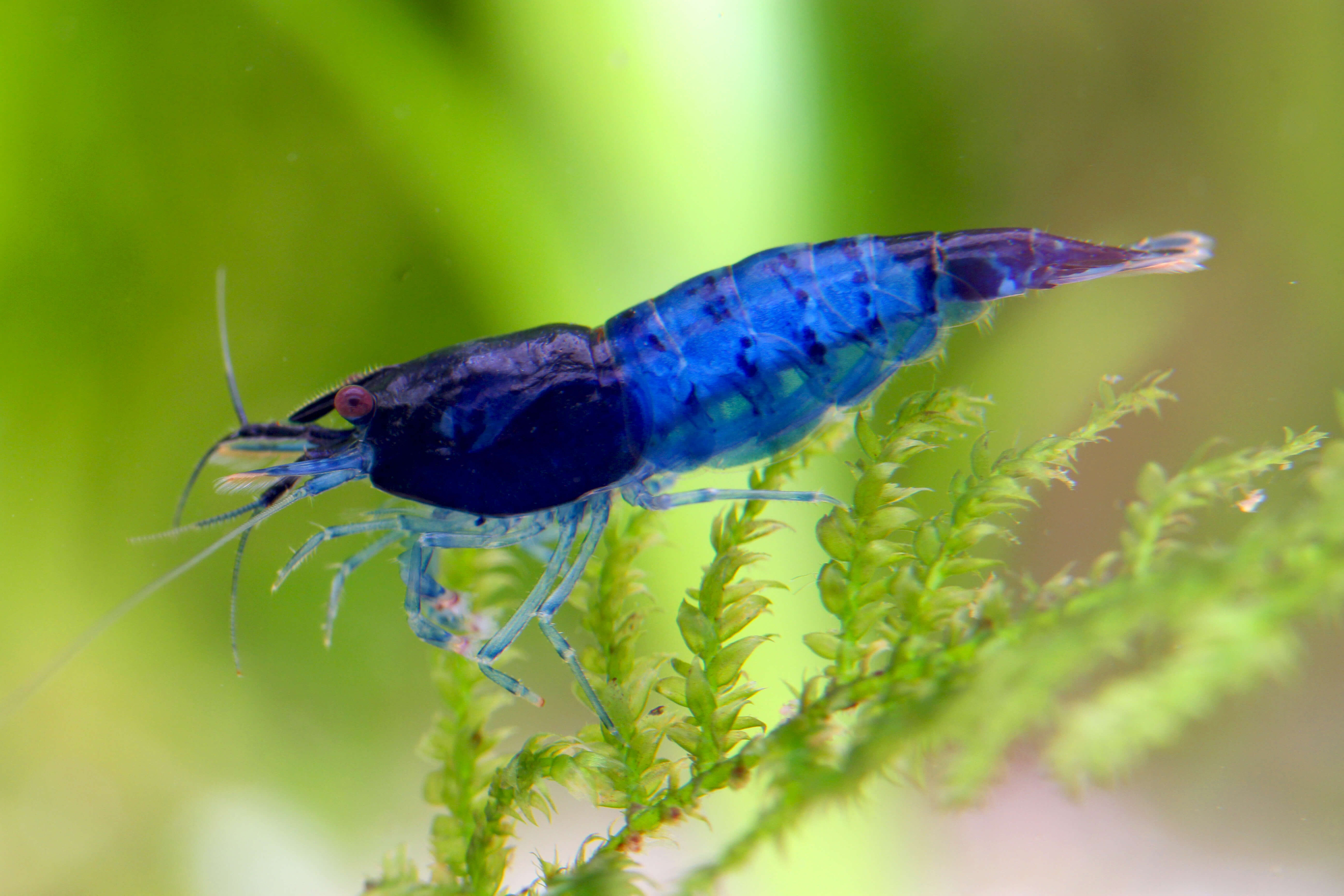
Blue Black Rili Shrimp

Taxonomy and identification

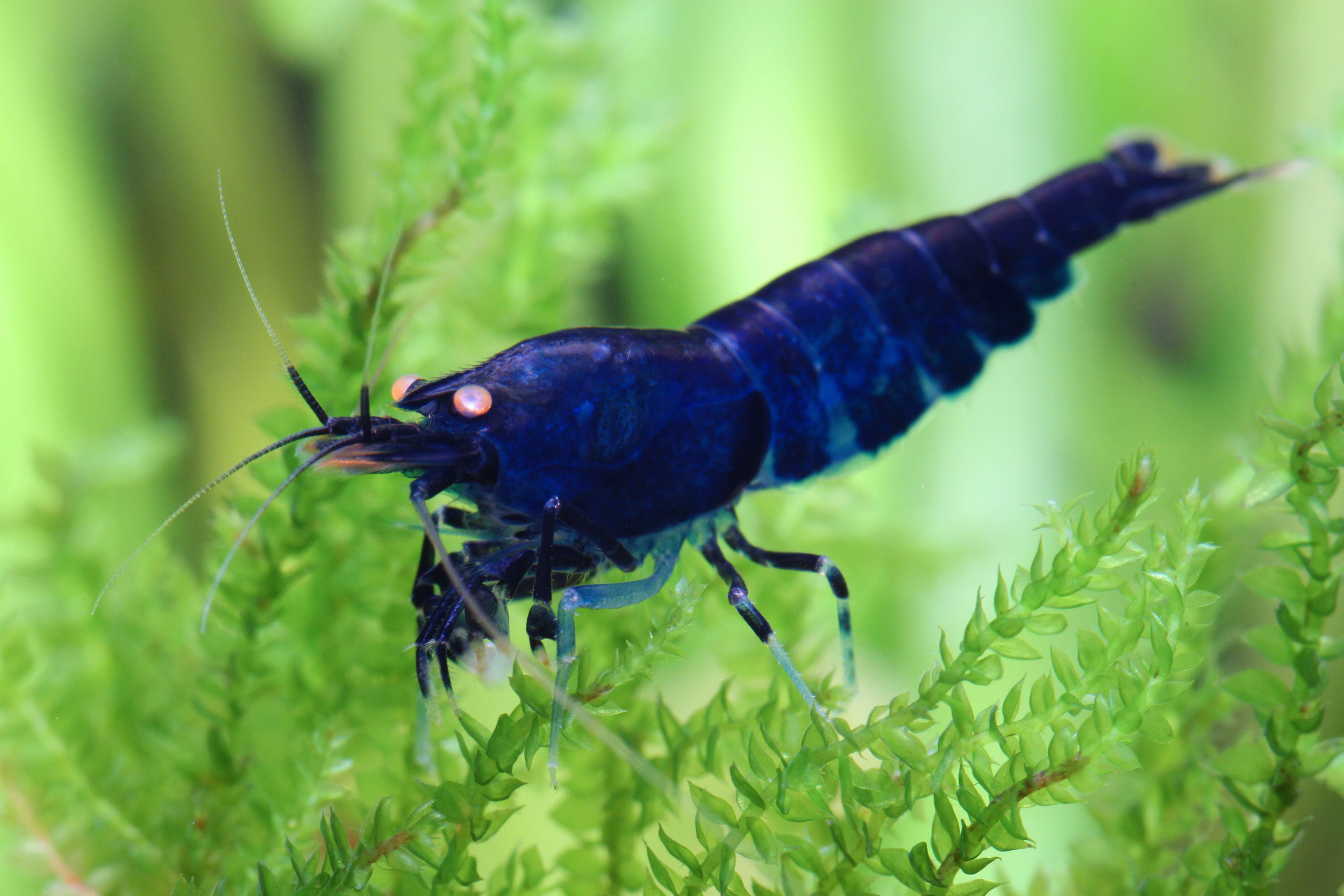
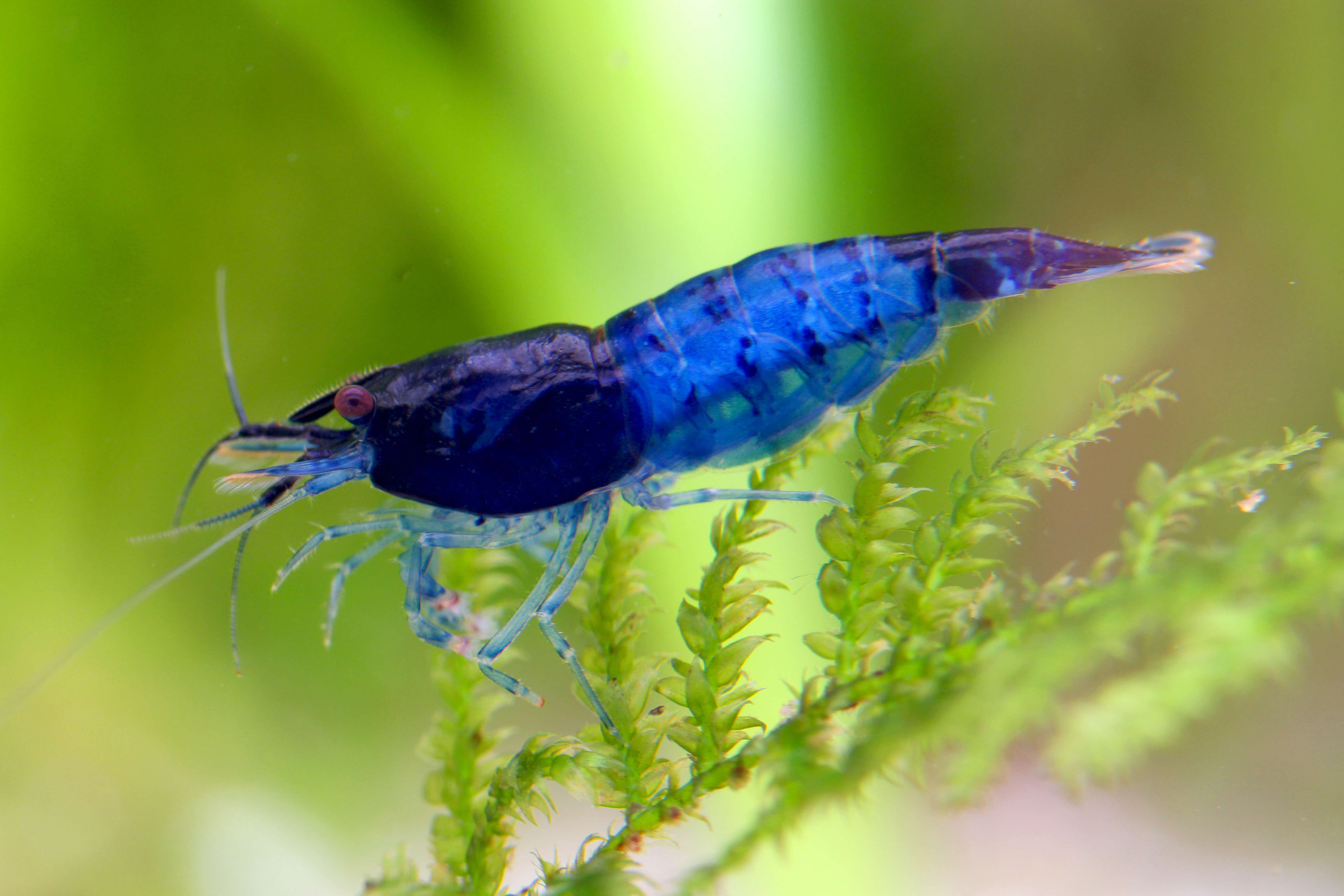
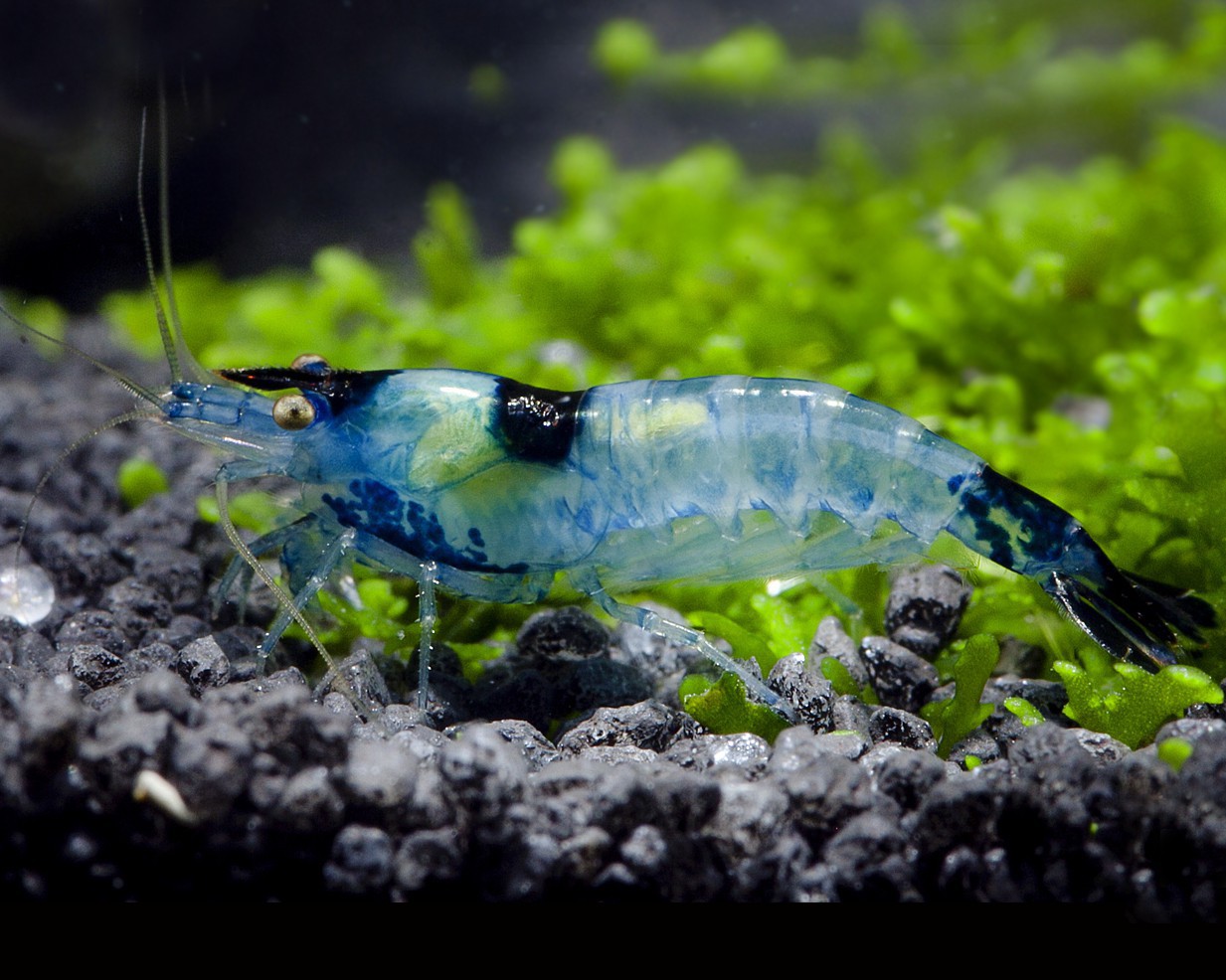
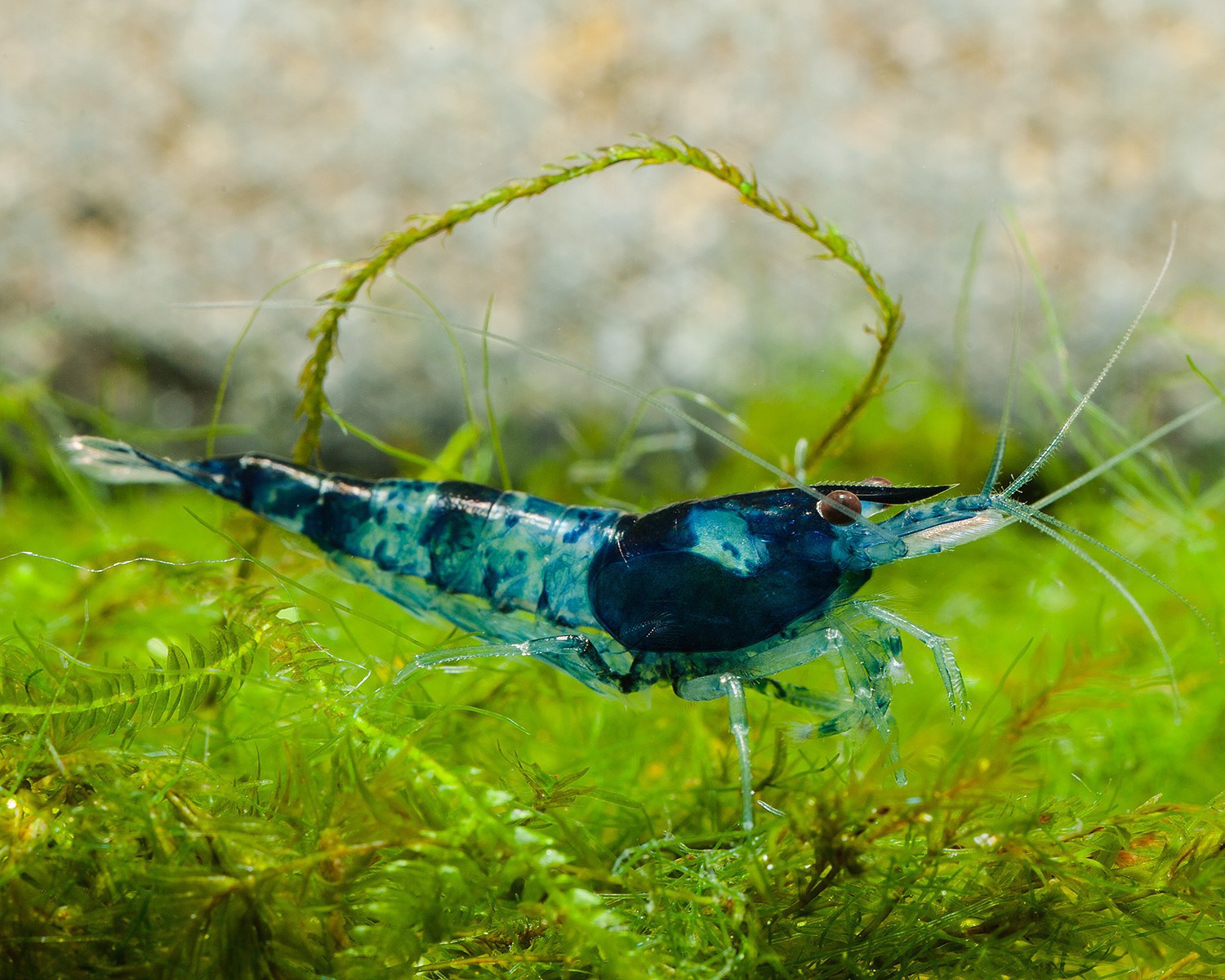
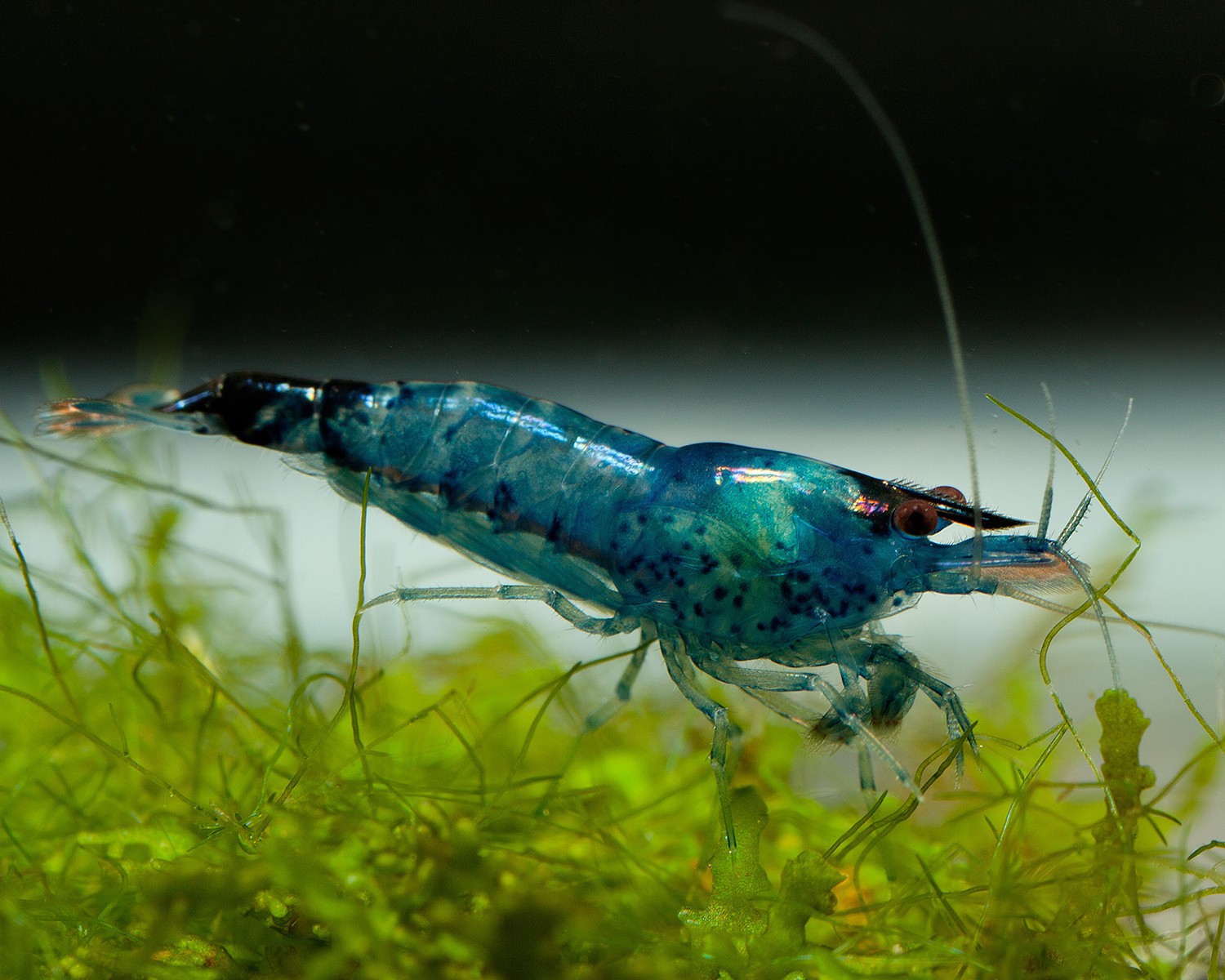
The shrimp sold as Blue Black Rili is generally treated as a selectively bred color form of Neocaridina davidi, a freshwater shrimp in the family Atyidae. Rili describes a broken or partly transparent body pattern rather than a separate species. Selective-breeding lines are not always standardized, and individuals may show different proportions of blue, black, and clear coloration. The trade name and supplied images support this identification, but they do not prove a particular breeder line or genetic purity.
Taxonomy and identification

Natural background and habitat

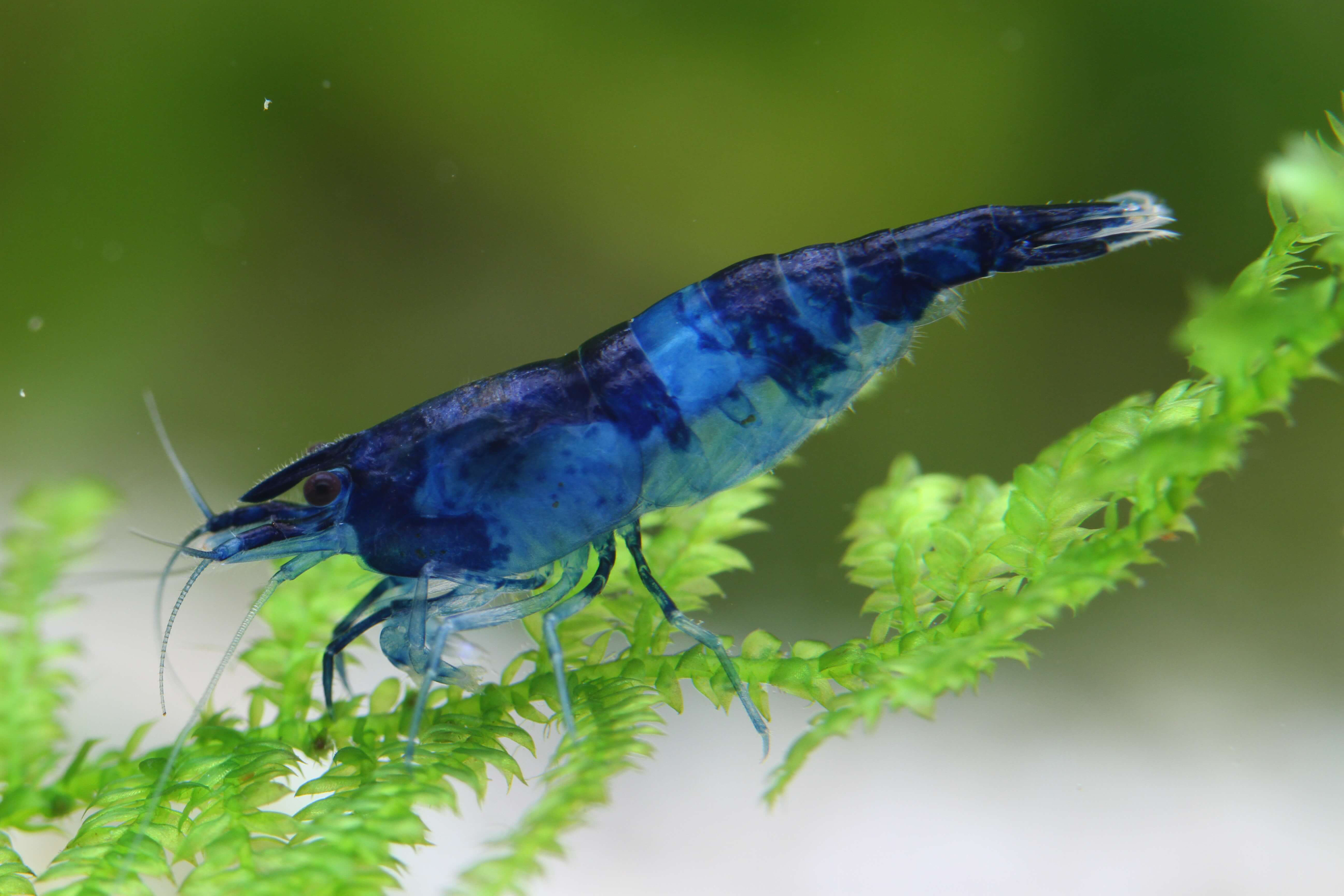
Neocaridina davidi is associated with freshwater streams, ponds, ditches, and other slow to moderately moving waters in its native East Asian range. In aquaria, it benefits from stable, oxygenated water, plant cover, biofilm-producing surfaces, and gentle circulation. Moss, fine-leaved plants, wood, and smooth hardscape provide grazing area and refuge, especially for juveniles and recently molted adults.
Natural background and habitat

Aquarium and water parameters

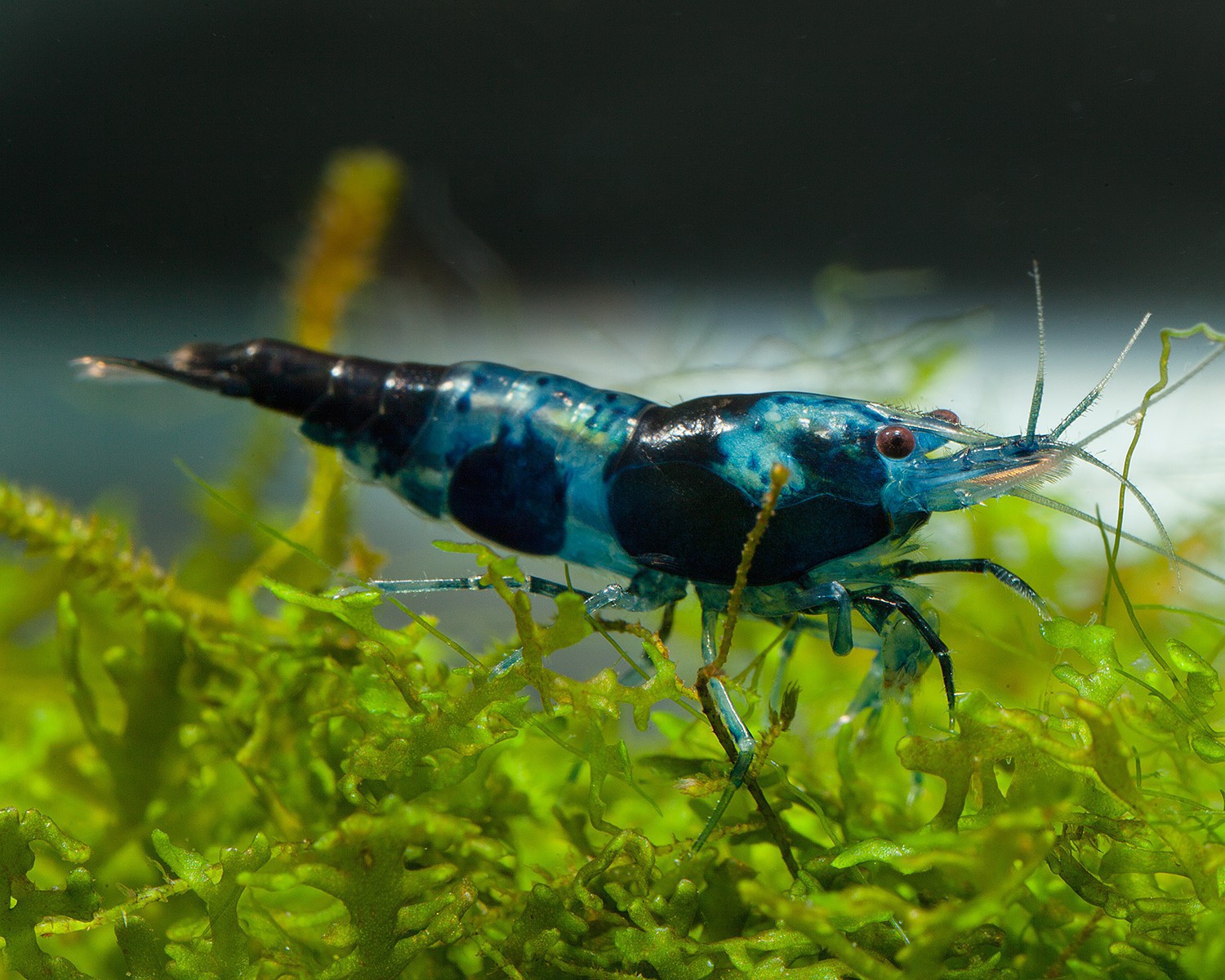
Use a fully cycled aquarium with ammonia and nitrite at zero and low, controlled nitrate. A small colony can be maintained in a planted aquarium of about 20 litres or larger, although more volume provides greater stability. Keep the temperature around 18-26 °C and pH around 6.5-8.0, avoiding abrupt changes. Moderate general hardness and carbonate hardness are useful because the shrimp require dissolved calcium and magnesium to form a new exoskeleton. Use dechlorinated water and make water changes gradually.
Aquarium and water parameters

Feeding

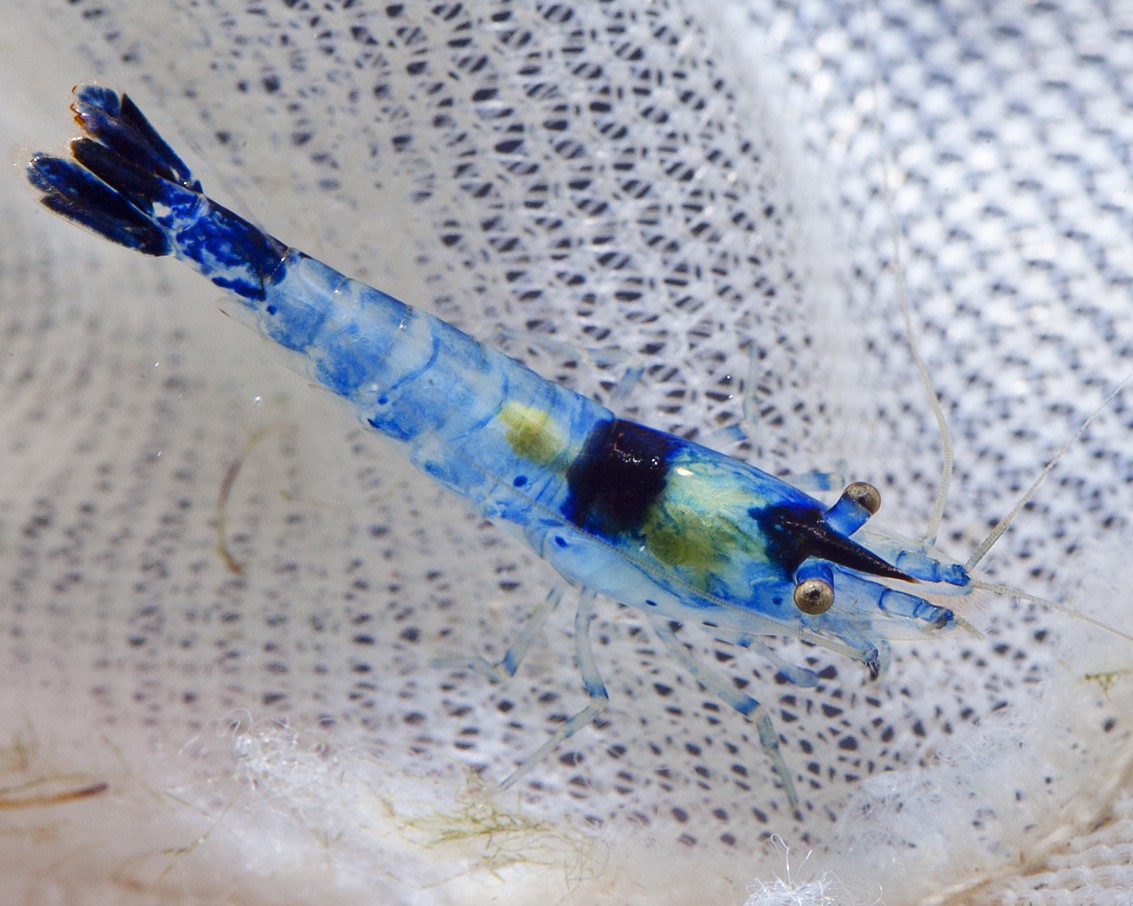
These shrimp graze continuously on algae, microorganisms, and biofilm growing on plants and surfaces. Offer small amounts of a quality shrimp food or other sinking invertebrate food several times per week, adjusting portions so food is consumed promptly. Blanched vegetables can be occasional supplements. Dried botanicals such as Indian almond leaves may provide additional grazing surfaces as they soften. Remove uneaten food to protect water quality, and avoid copper-containing medications or unnecessary treatments.
Feeding

Tank mates

The safest companions are other peaceful Neocaridina, snails, and very small, non-predatory fish. Small species such as some rasboras or otocinclus may coexist with adults, but fish can eat newly hatched shrimplets. Avoid large, boisterous, predatory, or strongly inquisitive fish, crayfish, and most larger shrimp. Keep different Neocaridina color forms separate if maintaining a predictable line, because they can interbreed and produce less predictable offspring coloration.
Tank mates

Molting and maintenance

Growth occurs through periodic shedding of the exoskeleton. A shrimp may become less active and seek cover before molting, then remain vulnerable while its new shell hardens. Provide dense plants, moss, and hiding places, and do not remove a normal shed unless it decays or traps debris; the colony commonly consumes it as a mineral source. Stable mineral levels, adequate food, and gradual maintenance are more important than trying to force a particular molt schedule.
Molting and maintenance

Breeding

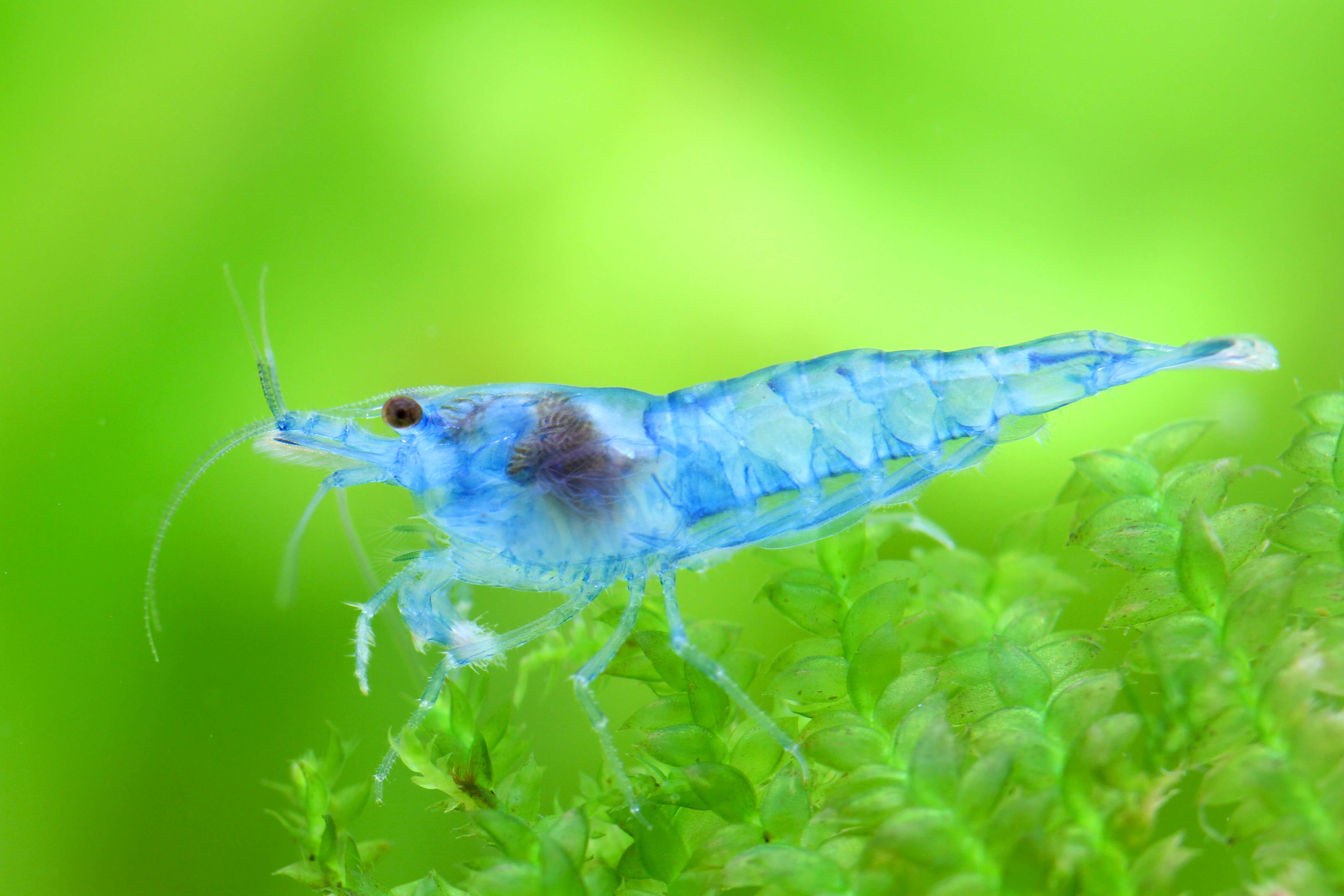
This is a freshwater-breeding shrimp, so there is no larval marine stage. After a female molts, mating may occur, and fertilized eggs are carried beneath her abdomen and fanned until they hatch as miniature shrimp. A mature, stable, planted aquarium with biofilm and gentle filtration can support breeding without special equipment. Use a sponge prefilter or covered intake to protect young shrimp. Juveniles may show weaker or different patterning, and selective culling is needed to maintain a consistent Blue Black Rili appearance.
Breeding

Shrimp info

  • Size: 2-3 cm
  • Difficulty level: Beginner
  • Temperature : 18-26 °C
  • pH: 6.5-8.0
Leave your comments
Latest on Shrimps
  • Blue Jelly Shrimp

    Blue Jelly Shrimp

    Blue Jelly Shrimp are a selectively bred blue color form of the freshwater Neocaridina davidi species, commonly kept in planted community aquariums. Their translucent blue bodies can vary in intensity, and some individuals show clear areas or darker blue markings. The supplied images are consistent with this trade name, but color names are not formal taxonomic classifications. They are peaceful, adaptable scavengers that reproduce readily when water quality, shelter, and mineral availability are stable.
  • Blue Dream Shrimp (Neocaridina davidi)

    Blue Dream Shrimp (Neocaridina davidi)

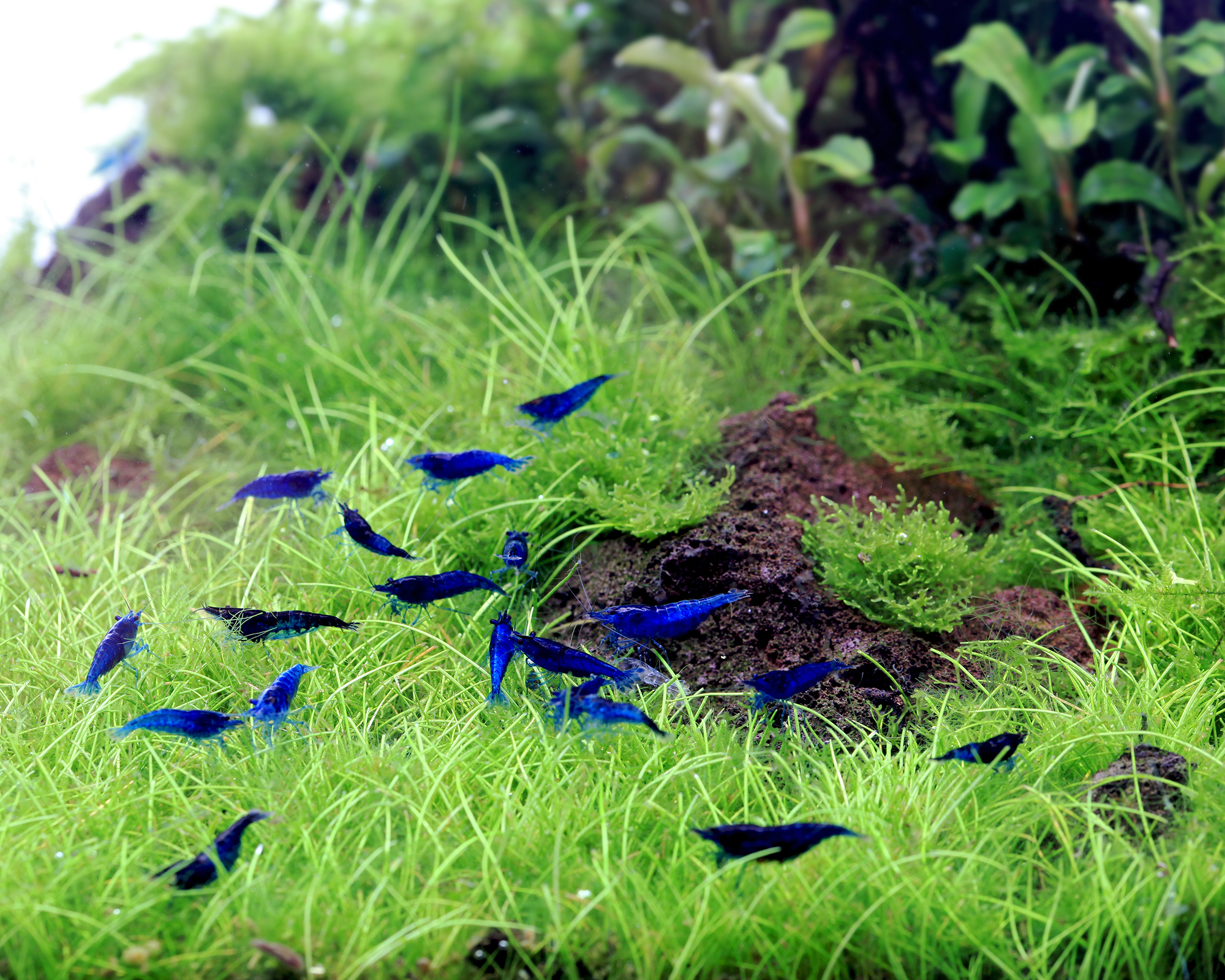
    Blue Dream Shrimp are a selectively bred blue color form of the freshwater species Neocaridina davidi. The supplied images show intensely blue individuals in a planted aquarium, but photographs alone cannot confirm a particular commercial grade or lineage. They are generally peaceful, adaptable dwarf shrimp that graze on biofilm and benefit from stable, mature aquarium conditions. A planted tank with gentle filtration, shelter, and mineral-rich water supports feeding, successful molts, and colony growth.
  • Bloody Mary Shrimp (Neocaridina davidi)

    Bloody Mary Shrimp (Neocaridina davidi)

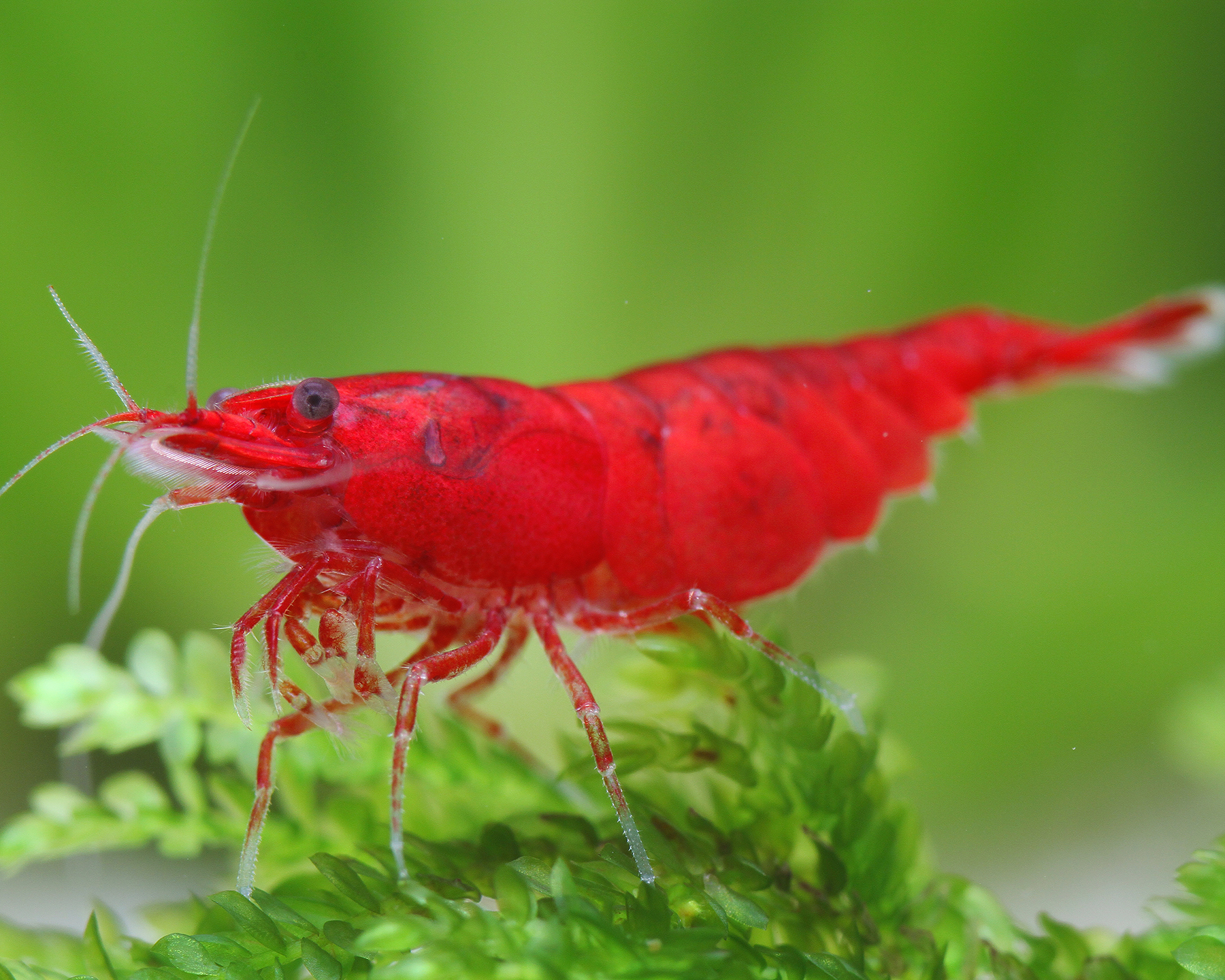
    Bloody Mary Shrimp are a selectively bred red color form of the freshwater Neocaridina davidi complex, valued for their deep, often opaque red coloration. They are small, peaceful scavengers suited to mature planted aquariums with stable chemistry and abundant biofilm. The trade name does not guarantee a formally distinct taxon, and exact lineage cannot be confirmed from the supplied images alone. They are generally manageable for beginners when water quality, acclimation, and mineral balance are handled carefully.
  • Black Sakura Shrimp

    Black Sakura Shrimp

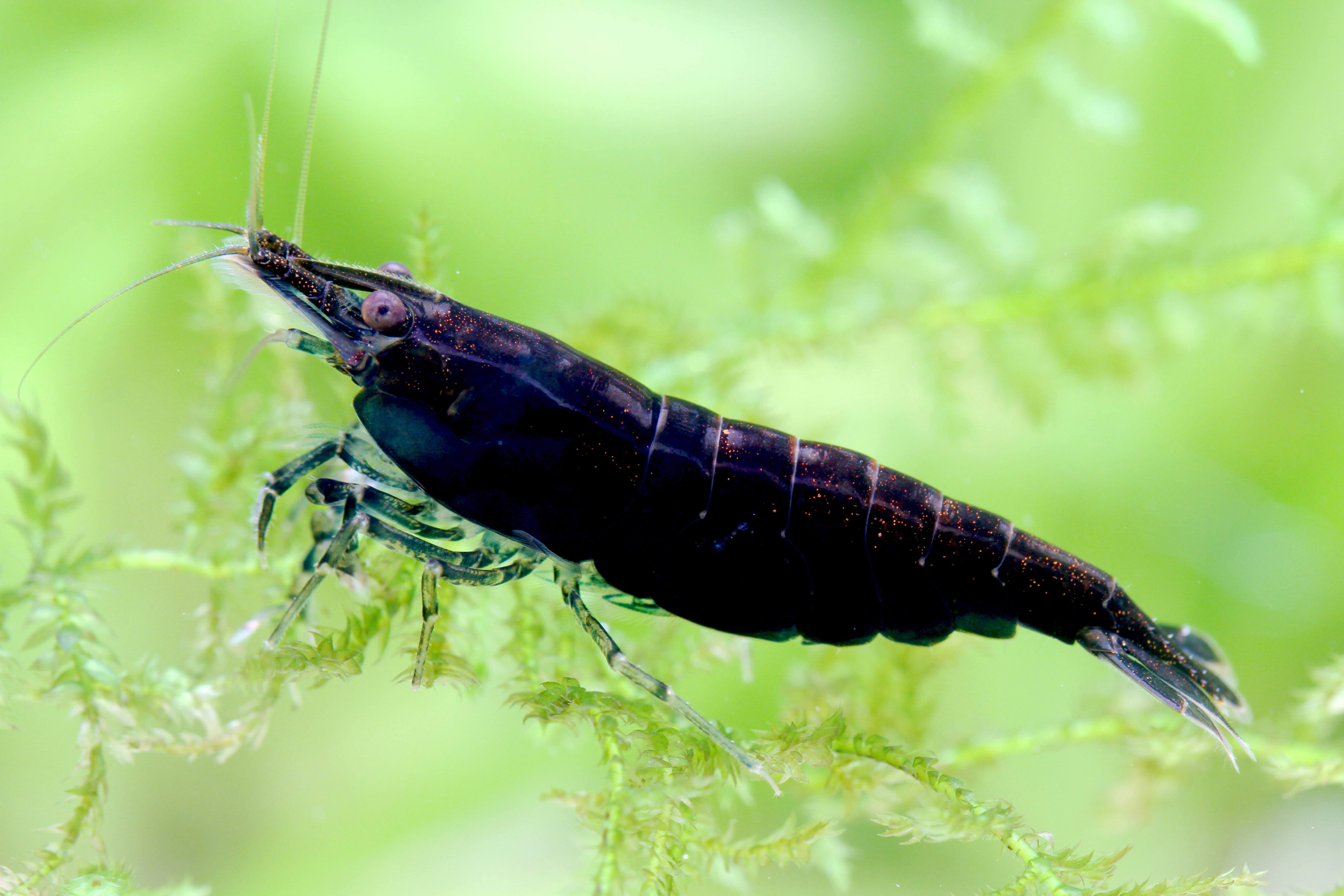
    Black Sakura Shrimp is a selectively bred dark color form commonly sold under the Neocaridina davidi trade group. The name is commercial rather than a formal taxonomic rank, so exact lineage and grading may vary between suppliers. These small freshwater shrimp graze on biofilm, are generally peaceful, and can reproduce readily in a mature planted aquarium when water conditions are stable.
  • Amano Shrimp (Caridina multidentata)

    Amano Shrimp (Caridina multidentata)

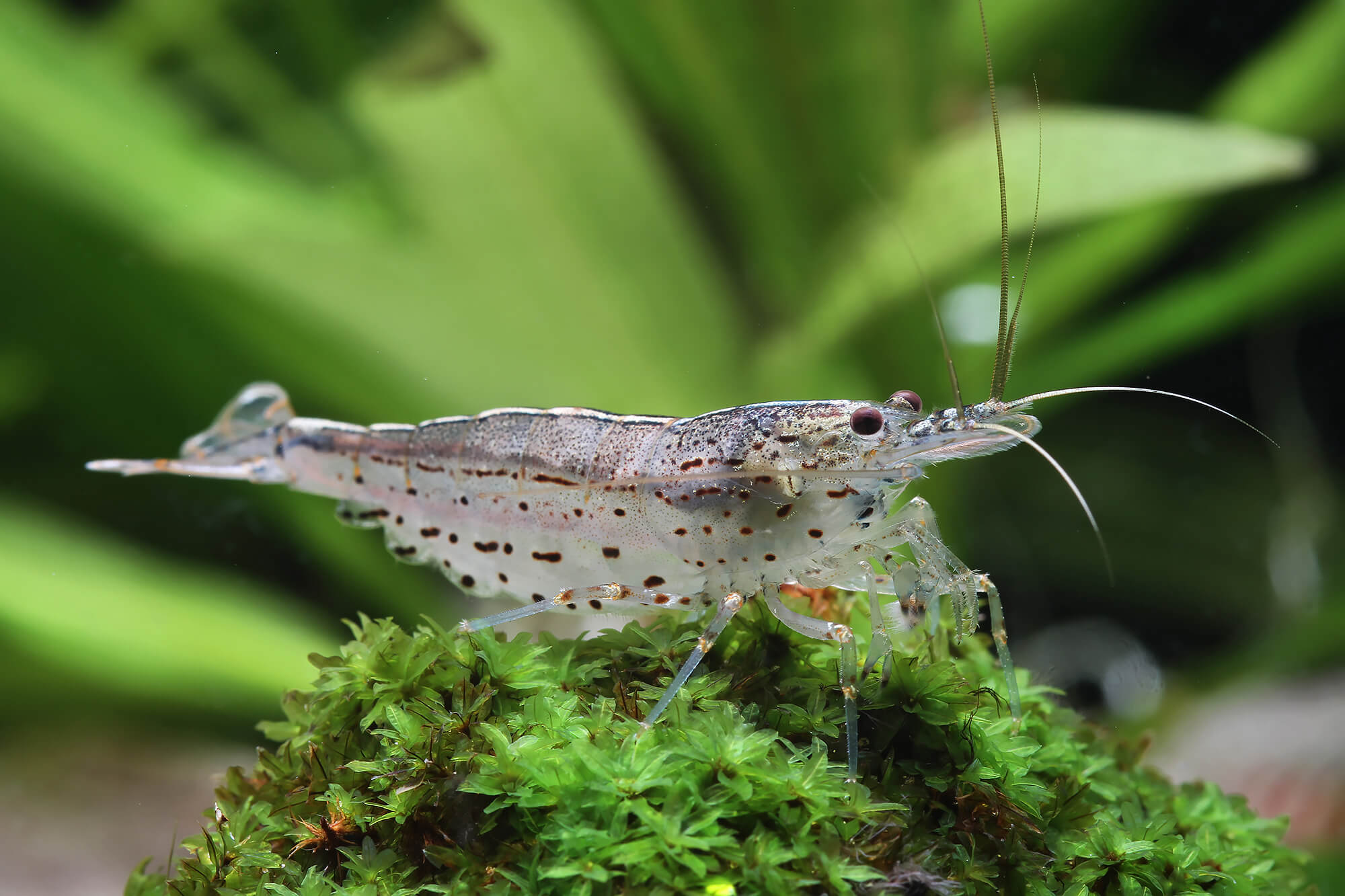
    The Amano shrimp is a translucent, algae-grazing freshwater shrimp valued for its peaceful behavior and persistent foraging. It is generally identified as Caridina multidentata, although image-based identification alone cannot confirm every specimen. Adults need mature, well-oxygenated aquariums with hiding places and stable water chemistry. Routine aquarium breeding is difficult because the larvae require brackish or marine conditions before returning to freshwater.
  • Amano Shrimp (Caridina multidentata)

    Amano Shrimp (Caridina multidentata)

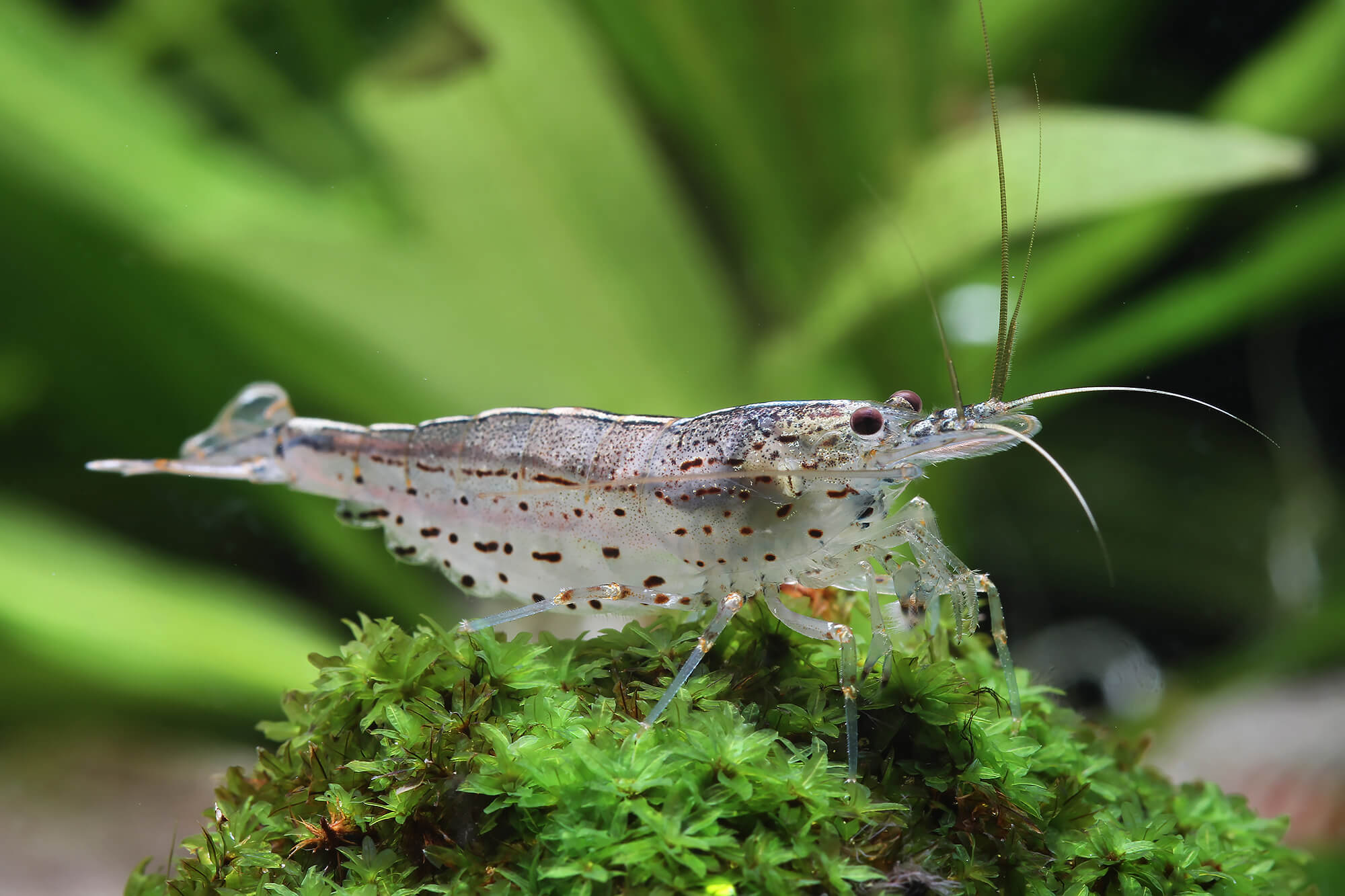
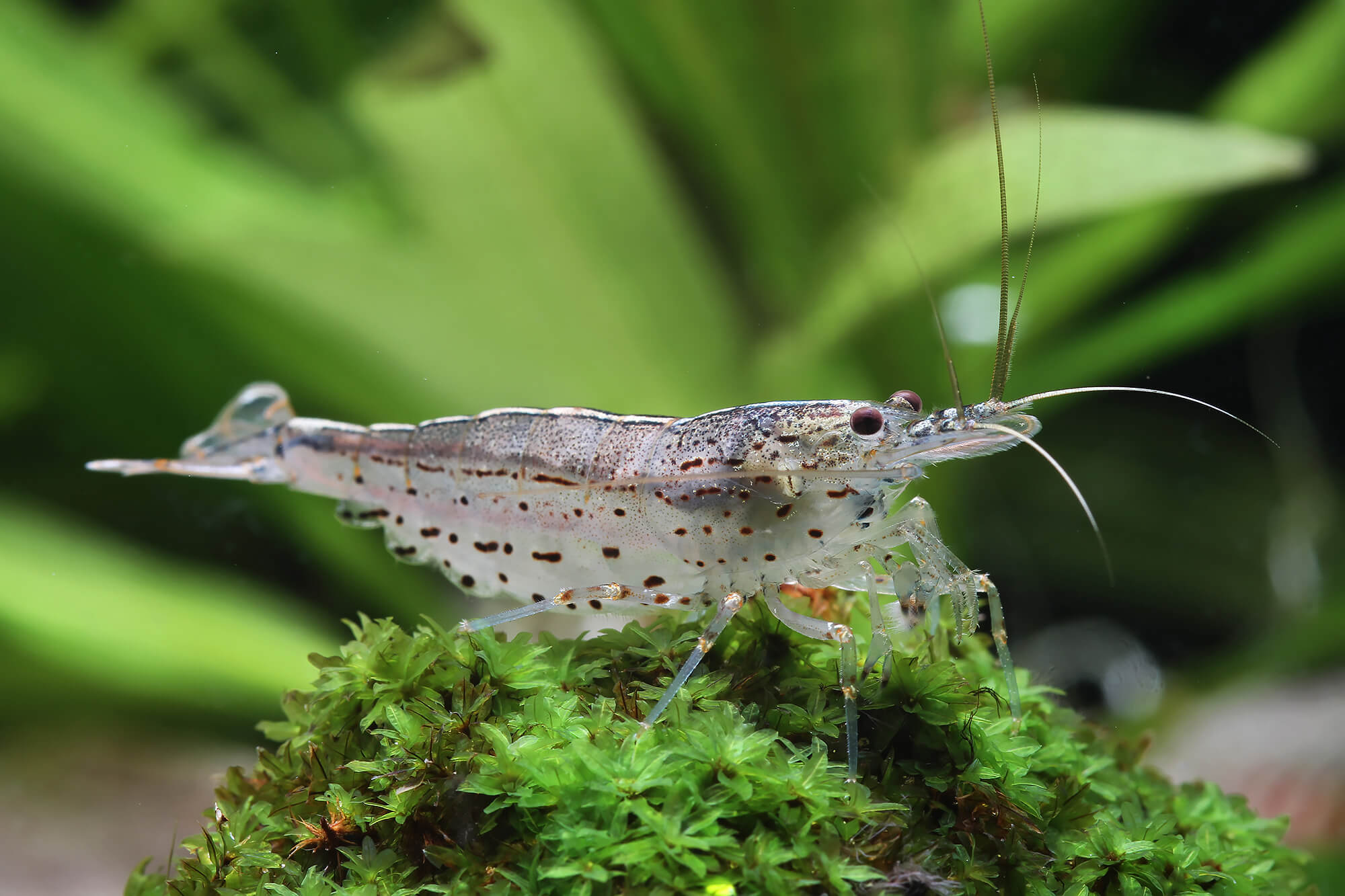
    The Amano shrimp is a translucent, adaptable freshwater algae grazer valued for its activity and peaceful behavior. It is usually identified as Caridina multidentata, formerly widely sold under the name Caridina japonica. Adults are larger and more robust than many ornamental dwarf shrimp, with dark brown to reddish speckles and markings. They suit mature planted aquariums, but successful reproduction requires a separate brackish larval stage, so a freshwater aquarium normally supports adults without producing surviving young.
  • Amano Shrimp (Caridina multidentata)

    Amano Shrimp (Caridina multidentata)

    Amano shrimp are hardy freshwater algae grazers recognized by their translucent body, dark spotting and active scavenging behavior. They are widely used in planted aquariums, where they feed on algae, biofilm and uneaten food. Adults are generally peaceful and adaptable, but successful breeding is specialized: larvae require brackish water before juveniles can be acclimated to freshwater. The supplied trade label identifies these shrimp as Amano shrimp, although individual stock identity cannot be independently verified from the label alone.
  • Zebra Shrimp (Caridina cf. babaulti)

    Zebra Shrimp (Caridina cf. babaulti)

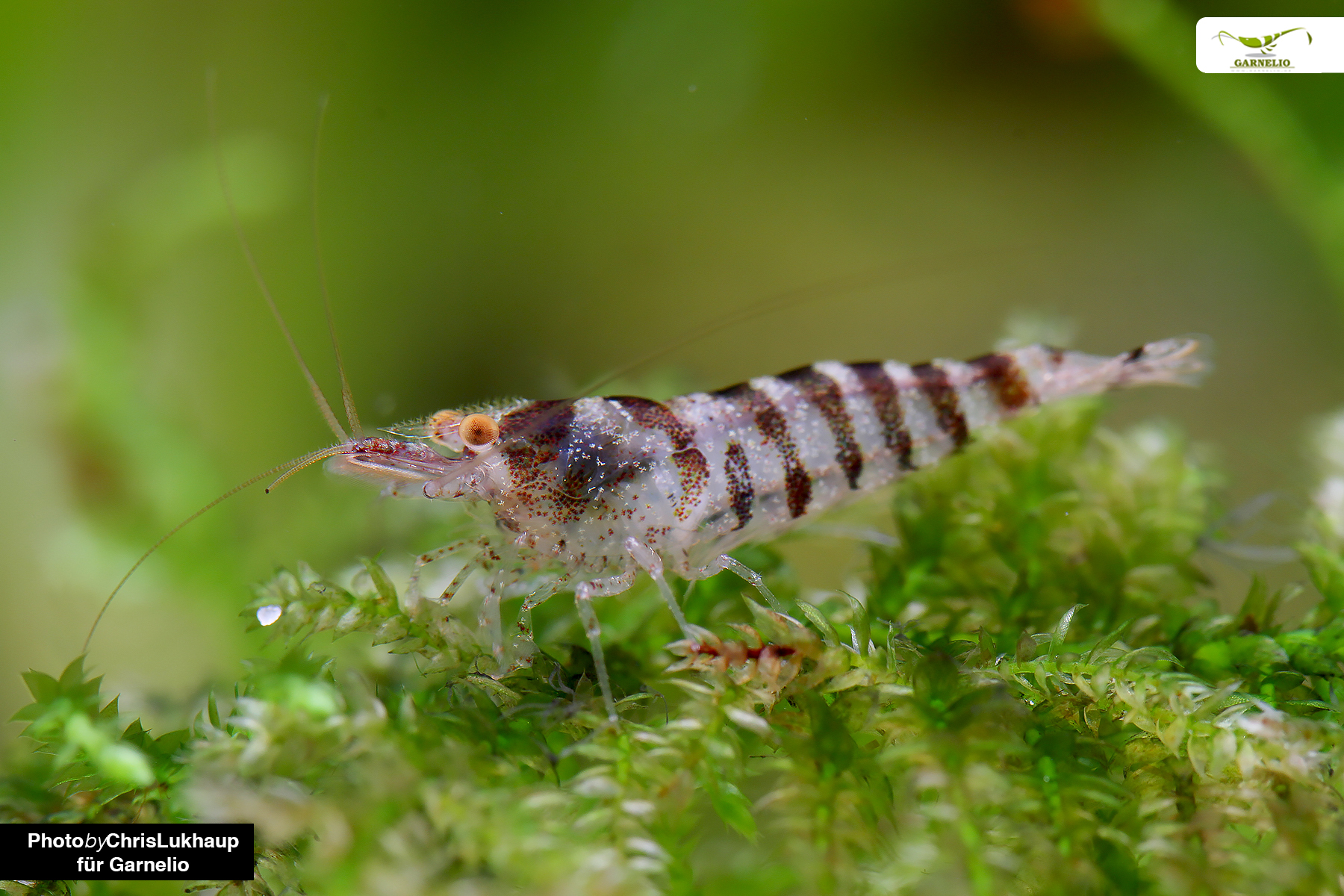
    The Zebra Shrimp is a small freshwater Caridina sold under the name Caridina cf. babaulti, with a translucent body marked by dark transverse bands. The “cf.” designation indicates that the aquarium strain has not been confirmed as the exact species Caridina babaulti. It is a peaceful, algae-grazing shrimp suited to mature planted aquariums with stable, mineralized water. The pictured form shows pale body coloration with brown to black striping, but pattern intensity can vary with genetics, mood, diet, and background.
  • Red Rhinoceros Shrimp (Caridina gracilirostris)

    Red Rhinoceros Shrimp (Caridina gracilirostris)

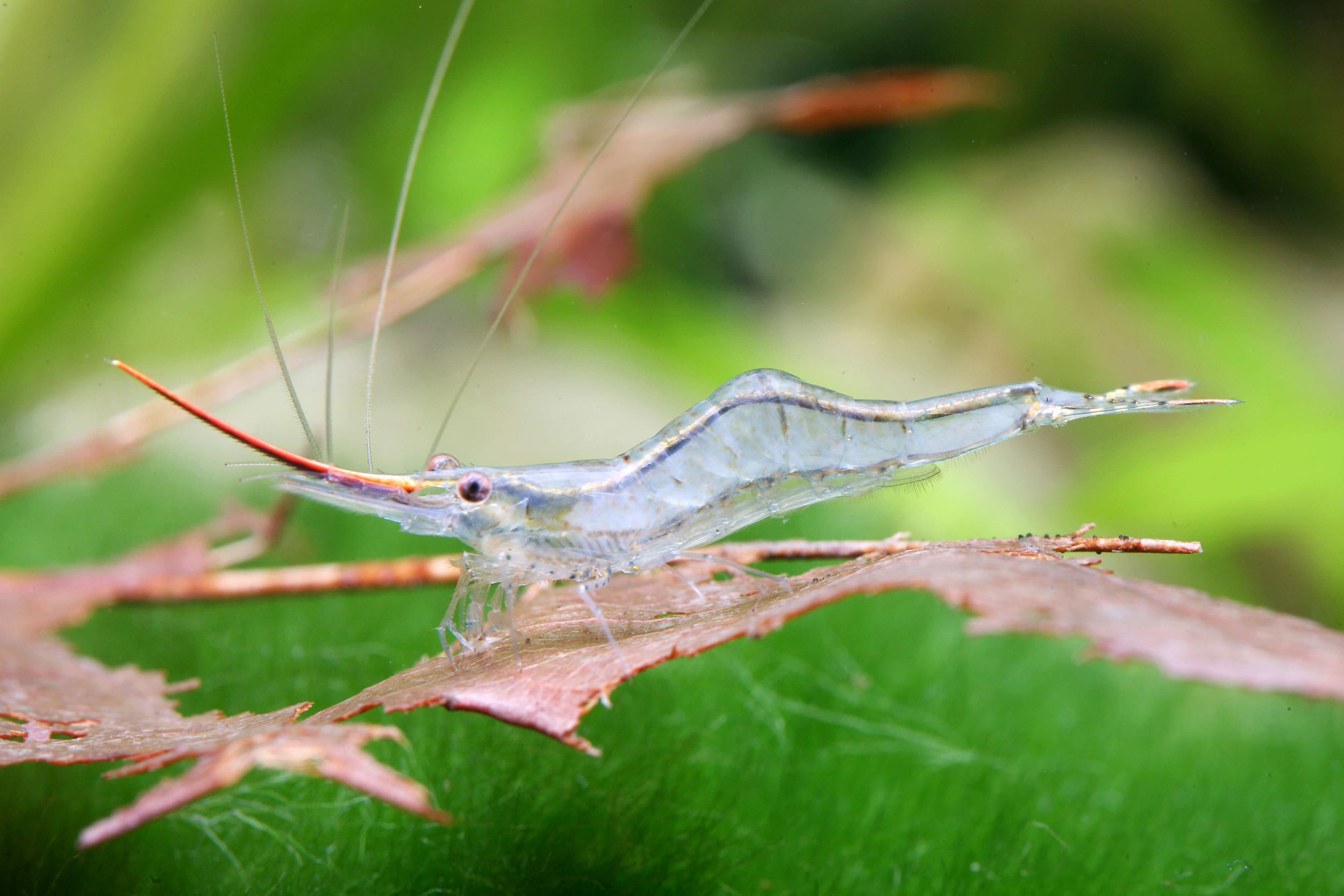
    Caridina gracilirostris is a small, translucent shrimp recognized by its elongated rostrum, often marked red or orange. It is associated with coastal freshwater, brackish and estuarine habitats, so aquarium care differs from that of fully freshwater Caridina species. Adults may be maintained in suitable freshwater or mildly brackish conditions, but successful reproduction involves free-swimming larvae and usually requires carefully managed brackish water. The supplied image appears consistent with this species, although image-based identification cannot confirm it with certainty.
  • Green Dwarf Shrimp (Caridina cf. babaulti)

    Green Dwarf Shrimp (Caridina cf. babaulti)

    The green dwarf shrimp sold as Caridina cf. babaulti is a small freshwater shrimp with variable green coloration and a peaceful, algae-grazing nature. The “cf.” designation indicates that the aquarium trade identification is provisional rather than a confirmed species-level determination. It suits mature, planted aquariums with stable, mineralized water, gentle filtration, plentiful biofilm, and no predatory tank mates.
  • Super Crystal Red Shrimp (Caridina logemanni)

    Super Crystal Red Shrimp (Caridina logemanni)

    Super Crystal Red Shrimp are a selectively bred red-and-white color form of Caridina logemanni, commonly kept in specialized freshwater aquaria. Their contrasting pattern, small size, and sensitivity to unstable conditions make them appealing but demanding shrimp. A mature, biologically established aquarium with soft, mineral-balanced water, gentle filtration, and abundant biofilm is important. The supplied source identifies these shrimp as Caridina logemanni; exact grade and lineage cannot be confirmed from the available material alone.
  • Snow White Bee Shrimp (Caridina logemanni)

    Snow White Bee Shrimp (Caridina logemanni)

    The Snow White Bee Shrimp is a selectively bred freshwater form associated with Caridina logemanni, a small bee shrimp from the Caridina cantonensis group. It has a predominantly white, often translucent body and is valued for its appearance and breeding potential. This shrimp needs mature, exceptionally stable water, soft mineral content, gentle filtration, and peaceful tank mates. The supplied images show a pale white to cream animal with warm peach tones and reddish eyes; exact grade and lineage cannot be confirmed from images alone.
  • Royal Blue Tiger OE Shrimp (Caridina mariae)

    Royal Blue Tiger OE Shrimp (Caridina mariae)

    The Royal Blue Tiger OE Shrimp is a selectively bred blue color form of Caridina mariae, commonly known as the tiger shrimp. “OE” refers to orange eyes, a visible trait in the supplied image. It is a small, peaceful freshwater shrimp suited to a mature, planted aquarium with stable, mineral-balanced water. Exact lineage and grade cannot be confirmed from the trade label and photograph alone.
  • Red Shadow Mosura Shrimp

    Red Shadow Mosura Shrimp

    Red Shadow Mosura is a selectively bred freshwater Caridina shrimp recognized for a deep red-and-white pattern and broad pale body markings. The trade name describes a color form rather than a formally established species, so it is best recorded as Caridina species or Caridina cf. cantonensis only when the breeder provides that identification. It suits mature, stable aquariums with soft, slightly acidic water, gentle filtration, biofilm, and careful maintenance. This specialized line is generally better for experienced shrimp keepers than for newly established tanks.
  • Golden Tiger Shrimp (Caridina cantonensis)

    Golden Tiger Shrimp (Caridina cantonensis)

    Golden Tiger Shrimp is a selectively bred Caridina cantonensis color form marked by a yellow to golden body and contrasting orange-red or darker tiger-like markings. The supplied image supports this general identification, but individual line names are not standardized and exact genetics cannot be confirmed from an image alone. It is a soft-water shrimp best kept in a mature, stable aquarium with gentle filtration, biofilm, suitable minerals, and peaceful tank mates.
  • Black Shadow Mosura Shrimp

    Black Shadow Mosura Shrimp

    Black Shadow Mosura is a selectively bred freshwater Caridina-type shrimp recognized by strong black-and-white patterning. The supplied label identifies it only as Caridina spec., so its exact species and line history cannot be confirmed from the available information. It is generally suited to mature, stable aquaria with soft, slightly acidic water, low mineral content, gentle filtration, and abundant biofilm. This is a specialist shrimp rather than a robust community species, and careful acclimation is important.