It’s time to help contribute for biggest aquarium gallery online

SUBMIT HEREVIEW GALLERY

Pao abei (Abe's Puffer)

Overview

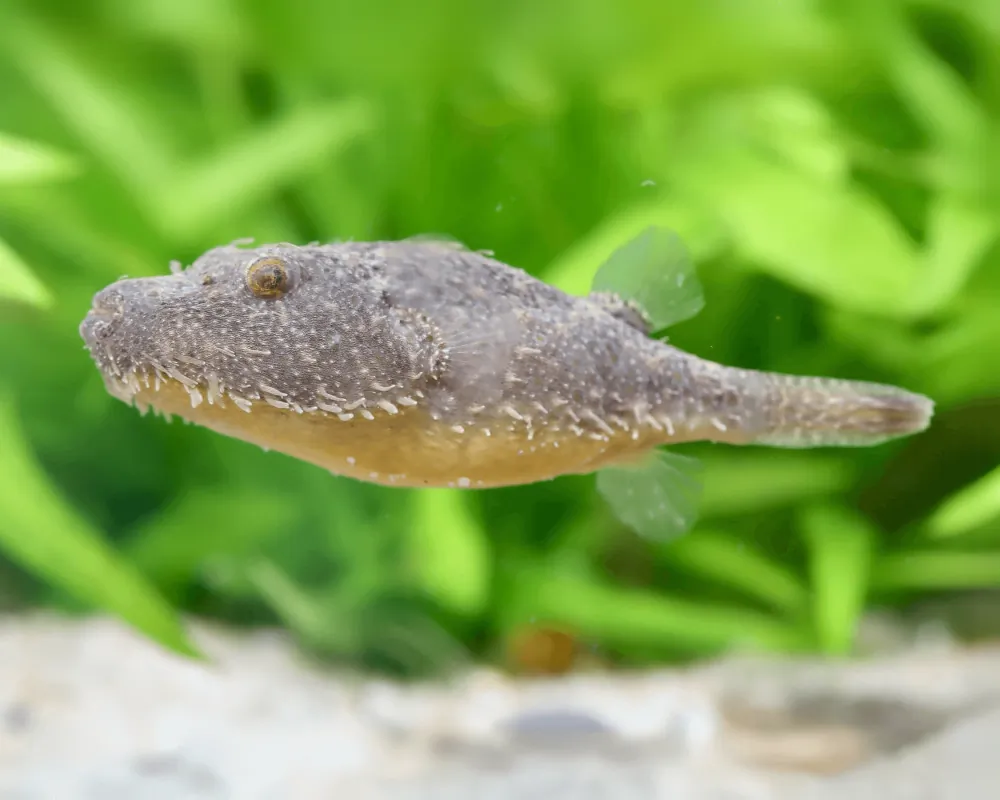
Abe's Puffer (Pao abei), formerly classified as Tetraodon abei, is a remarkable freshwater pufferfish that has captivated the aquarium hobby with its unique personality and striking appearance. Unlike many active schooling fish, this species is a calculating ambush predator that spends much of its time lurking among vegetation, waiting for an opportune moment to strike. They are incredibly intelligent, often learning to recognize their owners and begging for food. Due to their specific dietary needs and highly territorial nature, they are best suited for dedicated aquarists who can provide a specialized species-only environment.

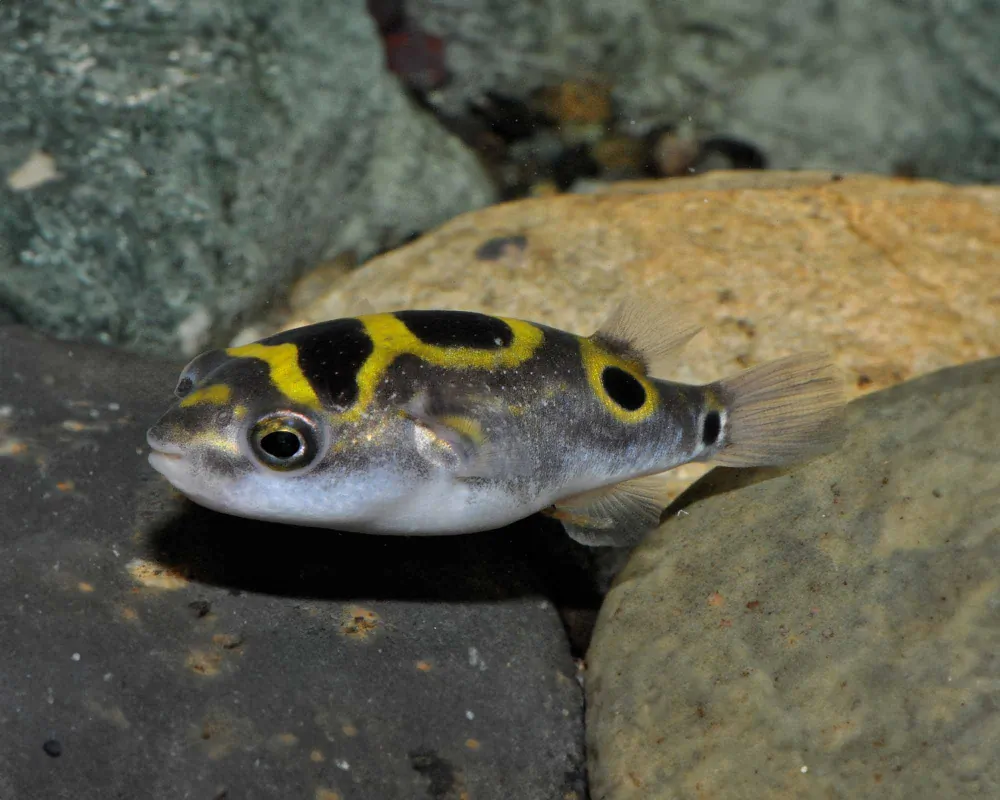
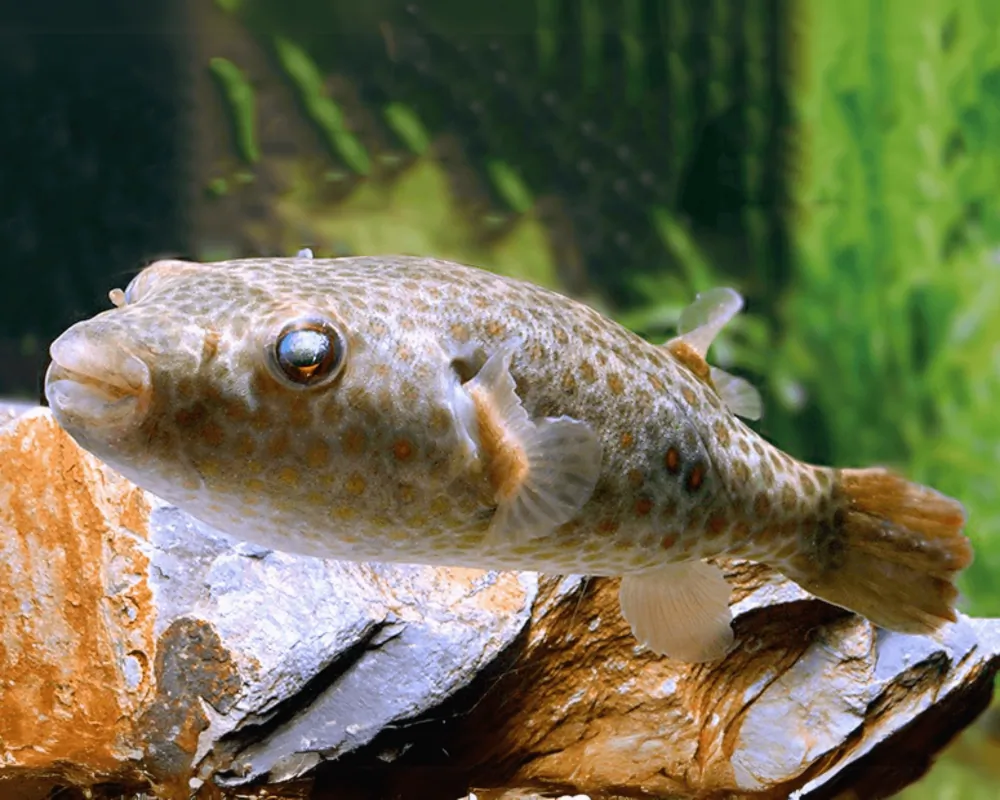
Image of abes kugelfisch pao tetraodon abei

Distribution and Habitat

This species is native to the freshwater river basins of Southeast Asia, primarily found in the Mekong, Chao Phraya, and Mae Klong basins across Thailand, Laos, and Cambodia. In the wild, Abe's Puffer inhabits slow-moving rivers, swamps, and heavily vegetated pools. They prefer environments with dense aquatic flora, submerged roots, and leaf litter, which provide ample cover for their ambush hunting strategy and protection from larger predators.

Description of Abe's Puffer

Body shape:

They possess a stout, club-shaped, and slightly oval body that is typical of pufferfish. Like all members of their family, they have the remarkable ability to inflate their stomachs with water or air when threatened, making themselves appear much larger to deter predators.

Color:

The base coloration is typically a mottled brownish-tan or dark olive, which serves as excellent camouflage in their natural habitat. Their most distinguishing feature is the scattering of bright orange, rust, or reddish spots that cover their body, giving them a beautiful, speckled appearance.

Barbels:

Like all pufferfish, Abe's Puffer does not possess any barbels.

Snout:

They have a short, blunt snout ending in a strong, beak-like mouth. This "beak" is actually formed by four fused teeth (hence the family name Tetraodontidae), which they use to crush the hard shells of their prey.

Eyes:

Their eyes are large, prominent, and capable of independent movement. This gives them excellent binocular vision to accurately judge distances when striking at prey, and adds to their highly expressive, almost dog-like demeanor.

Fins:

The fins are relatively small, translucent, and fan-like. Pufferfish lack pelvic fins and rely heavily on their pectoral fins for precise, helicopter-like hovering and maneuvering through dense vegetation.

The Tail:

The caudal fin (tail) is broad and paddle-shaped. While they are usually slow, deliberate swimmers, a flick of this strong tail allows them to produce sudden, rapid bursts of speed to ambush prey or escape danger.

Temper

Abe's Puffer is known for its highly aggressive and territorial temperament. They are fierce ambush predators that will not hesitate to attack fish much larger than themselves. Their sharp beaks can inflict serious damage, making them a true "wet pet" that commands respect.

Sociality

This species is strictly solitary and highly intolerant of conspecifics (others of its own kind) and other fish species. Keeping them in a community tank almost always results in the injury or death of tank mates. They must be kept alone in a single-specimen tank for the safety of all aquatic life.

Activity

They are generally inactive swimmers, preferring to hover near the substrate or rest quietly among plant leaves and driftwood. However, they are highly observant. When food is introduced or their owner approaches the tank, they become highly active and interactive, often pacing the glass in anticipation.

Keeping and Caring for Abe's Puffer

Tank size:

A single Abe's Puffer requires a minimum tank size of 100 liters (approximately 30 gallons). While they are not overly active, they produce a significant amount of bioload due to their messy eating habits, and the water volume helps maintain stable conditions.

Water Parameters:

Temperature

Maintain the water temperature between 24-28°C (75-82°F) to mimic their tropical Southeast Asian origins.

pH

The pH should be kept relatively neutral to slightly alkaline, ideally ranging from 6.8 to 7.8.

Hardness

They adapt well to moderate water hardness, with a general hardness (dGH) of 5-15 being ideal.

Ammonia, Nitrite, Nitrate

Like all scaleless fish, pufferfish are incredibly sensitive to poor water quality. Ammonia and Nitrite must always be strictly at 0 ppm. Nitrates should be kept as low as possible, ideally below 20 ppm, through regular water changes and heavy filtration.

Lighting

Moderate to dim lighting is preferred. Bright, intense lighting can cause stress, so floating plants or tall background plants should be used to diffuse the light.

Water flow

Gentle to moderate water flow is best. They are not strong swimmers in fast currents and prefer the sluggish waters typical of their natural swampy habitats.

Decorations and Plants

The aquarium should be heavily decorated to break up lines of sight and provide a sense of security. Use abundant live plants, driftwood tangles, rock caves, and leaf litter. Creating a complex environment prevents boredom and mimics their natural ambush zones.

Diet

Abe's Puffer is strictly carnivorous. In captivity, their diet must consist of hard-shelled foods to keep their continuously growing teeth ground down. Feed them a varied diet of ramshorn snails, bladder snails, small clams, mussels, krill, earthworms, and various insects. They generally will not accept dry flakes or pellets.

Some Feeding Tips

Do not overfeed, as pufferfish are prone to obesity and will often eat until their bellies are completely distended. Feed adults every other day, and ensure a steady supply of appropriately sized snails to prevent their teeth from overgrowing, which would eventually require manual clipping.

Breeding

Breeding Abe's Puffer in captivity is incredibly rare and difficult, primarily due to their extreme aggression toward one another. In the wild, they are cave spawners. If a pair does manage to spawn, the male takes on the responsibility of guarding the eggs fiercely until they hatch. Raising the fry requires microscopic live foods and pristine water conditions.

Conclusion

Abe's Puffer is a truly rewarding species for the specialized aquarist. While their aggressive nature means they must live alone, their incredible intelligence, unique hunting behaviors, and interactive personalities make them feel more like an aquatic puppy than a traditional fish. With a properly structured environment, pristine water, and a crunchy diet, Pao abei will thrive and fascinate its keeper for over a decade.
Fish info

Care level: Moderate - Difficult
Temperament: Aggressive
Adult size: 10 cm
Life expectancy: 10-12 years
Fish type: Pufferfish
Temperature : 24-28°C
pH: 6.8-7.8
Color Form: Brown, Orange, Tan
Leave your comments
Lastest on Fishs
  • Tetraodon schoutedeni (Congo Leopard Pufferfish)

    Moderate
    Pufferfish
    The Congo Leopard Pufferfish (Tetraodon schoutedeni) is a highly sought-after, fully freshwater puffer native to the Congo River basin. Known for its relatively peaceful demeanor compared to other puffers, this charming fish boasts a beautiful leopard-like spotted pattern, making it a highly prized addition for dedicated aquarists.
  • Hyphessobrycon erythrostigma (Cherry Spotted Tetra)

    Easy - Moderate
    Pufferfish
    Hailing from the blackwater streams of the Upper Amazon, the Cherry Spotted Tetra, widely known as the Bleeding Heart Tetra, is a captivating freshwater fish. Renowned for the striking ruby-red spot on its flank, this peaceful schooling species adds vibrant energy and elegant beauty to any planted community aquarium.
  • Marosatherina ladigesi (Celebes Sunray Fish)

    Moderate
    Pufferfish
    The Celebes Sunray Fish, often known as the Celebes Rainbowfish, is a stunning, active schooling fish native to the clear, alkaline streams of Sulawesi, Indonesia. Admired for its striking neon blue lateral stripe and the male's dramatic, elongated fin extensions, it brings a vibrant, graceful energy to peaceful community aquariums.
  • Tanichthys albonubes (Long-fin White Cloud Mountain Minnow)

    Easy
    Pufferfish
    The Long-fin White Cloud Mountain Minnow, often known as the Meteor Minnow, is a stunning, selectively bred variety of a beloved aquarium classic. Renowned for its flowing, veil-like fins and peaceful demeanor, this hardy, cold-water species is incredibly popular among both novice and experienced aquarists looking for an active schooling fish.
  • Tanichthys albonubes (Gold White Cloud Mountain Minnow)

    Easy
    Pufferfish
    The Gold White Cloud Mountain Minnow is a stunning, captive-bred color morph of the classic coldwater species native to China. Renowned for its vibrant golden-orange hue and peaceful demeanor, this hardy schooling fish is incredibly popular among beginners and a perfect choice for unheated, planted aquariums.
  • Tanichthys albonubes (White Cloud Mountain Minnow)

    Easy
    Pufferfish
    Originating from the cool mountain streams of China, the White Cloud Mountain Minnow is a lively, peaceful shoaling fish. Renowned for its hardiness and striking iridescent stripes with red-tipped fins, it is a perfect choice for beginners and unheated aquariums, adding vibrant energy to any community tank.
  • Tanichthys albonubes (Gold White Cloud Mountain Minnow)

    Easy
    Pufferfish
    The Gold White Cloud Mountain Minnow is a stunning, selectively bred variant of the classic White Cloud. Originating from the cool mountain streams of China, this peaceful, active shoaling fish is incredibly hardy. Its vibrant golden-pink hue and undemanding nature make it a perfect, popular choice for beginners and cool-water aquariums.
  • Hemigrammus pulcher (Carbuncle Tetra)

    Easy
    Pufferfish
    Hailing from the slow-moving, tannin-stained waters of the Amazon basin, the Carbuncle Tetra (Hemigrammus pulcher) is a peaceful and captivating schooling fish. Also known as the Garnet Tetra, its striking reddish-gold spot and deep-bodied profile make it a highly sought-after, easy-to-keep addition to any lush planted community aquarium.
  • Pseudomugil signifer (Butterfly Rainbowfish)

    Easy - Moderate
    Pufferfish
    The Butterfly Rainbowfish, native to the coastal streams of Eastern Australia, is a captivating nano fish prized for its striking blue eyes and elegant, butterfly-like fins. Known for their energetic yet peaceful schooling behavior, they add a lively splash of color and movement to well-planted freshwater or brackish aquariums.
  • Apteronotus albifrons (Black Ghost Knifefish)

    Moderate - Difficult
    Pufferfish
    The Black Ghost Knifefish, scientifically known as Apteronotus albifrons, is a mesmerizing nocturnal species native to the Amazon Basin. Renowned for its unique, undulating swimming style and striking black body with contrasting white bands, this scaleless fish uses a weak electrical organ to navigate and hunt, captivating advanced aquarists.
  • Puntius semifasciolatus (Gold Barb)

    Easy
    Pufferfish
    The Gold Barb, a stunning captive-bred variant of the Chinese Barb, is a highly popular and active schooling fish. Known for their brilliant golden-yellow coloration and peaceful nature, they are exceptionally hardy, making them a fantastic choice for both beginner and experienced aquarists looking to add vibrant movement.
  • Barbodes semifasciolatus (Brocade Barb)

    Easy
    Pufferfish
    The Brocade Barb, widely recognized by its captive-bred golden variant, is a hardy and active schooling fish native to Southeast Asia. With their peaceful demeanor and striking metallic coloration, they are incredibly popular among aquarists, perfect for adding vibrant movement to unheated or community aquariums.
  • Moenkhausia pittieri (Brilliant Tetra / Diamond Tetra)

    Easy
    Pufferfish
    The Brilliant Tetra, widely known as the Diamond Tetra (Moenkhausia pittieri), is a stunning freshwater fish celebrated for its iridescent, jewel-like scales. Native to Venezuela, this active and peaceful schooling fish brings a captivating sparkle to community aquariums, making it highly popular among both beginner and experienced aquarists.
  • Hyphessobrycon socolofi (Brazilian Cherry Spotted Tetra)

    Easy
    Pufferfish
    The Brazilian Cherry Spotted Tetra (Hyphessobrycon socolofi) is a captivating freshwater fish prized for its striking bright red flank spot and peaceful demeanor. Native to South American river basins, this active schooling fish adds a brilliant flash of color and lively energy, making it a highly popular choice for community aquariums.
  • Melanotaenia lacustris (Blue Rainbowfish)

    Easy - Moderate
    Pufferfish
    The Blue Rainbowfish, endemic to Lake Kutubu in Papua New Guinea, is celebrated for its stunning, shifting blue and turquoise hues. This peaceful, active schooling fish is highly sought after by aquarists. Captive-bred specimens (DNZ) are particularly hardy and adaptable, making them a vibrant addition to planted community aquariums.
  • Knodus borki (Blue Peru Tetra)

    Easy - Moderate
    Pufferfish
    The Blue Peru Tetra (Knodus borki) is a stunning, highly active schooling fish native to the Peruvian Amazon. Known for its brilliant iridescent blue lateral stripe, this peaceful yet energetic species has gained immense popularity among aquarists seeking vibrant colors and lively movement for their planted community aquariums.