It’s time to help contribute for biggest aquarium gallery online

SUBMIT HEREVIEW GALLERY

Pseudomugil furcatus (Forktail Blue-eye)

Overview

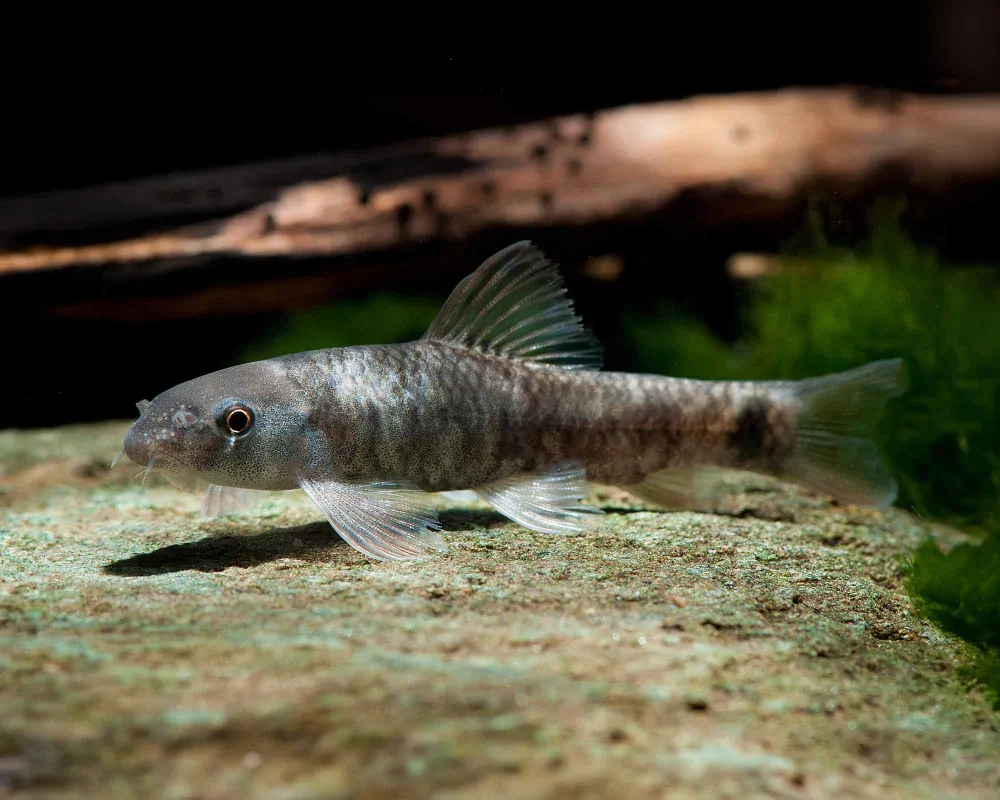
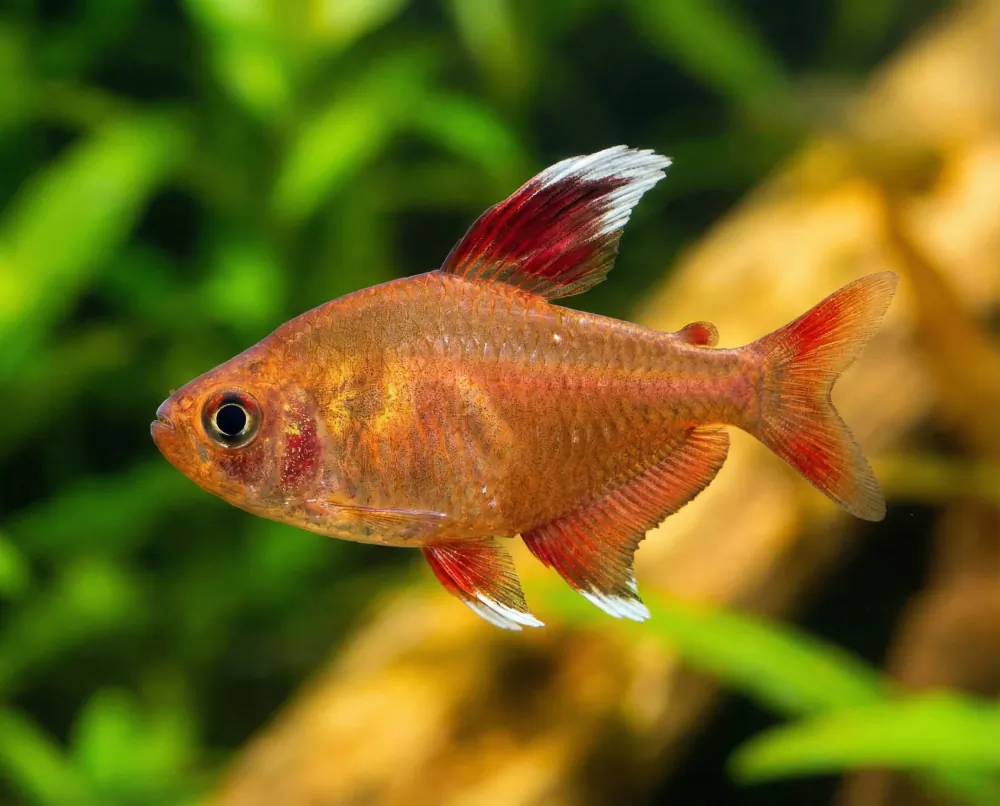
Image of fork tailed blue eye pseudomugil furcatus

The Forktail Blue-eye, scientifically known as Pseudomugil furcatus, is an incredibly energetic and visually stunning freshwater species. Belonging to the Pseudomugilidae family, these diminutive fish are highly sought after for their vivid contrasts, particularly the bright neon-blue eyes and lively yellow accents across their fins. They are a fantastic choice for aquarists looking to add movement and a flash of color to a planted nano or community tank.

Distribution and Habitat

This species is endemic to the eastern regions of Papua New Guinea, specifically found in the Peria Creek and the Kwagira River drainage. In their natural habitat, they inhabit clear, slow-to-moderately flowing rainforest streams with dense vegetation. The water in these regions is typically slightly alkaline and rich in oxygen, shaded by the dense jungle canopy above which provides a dappled lighting effect.

Description of Forktail Blue-eye

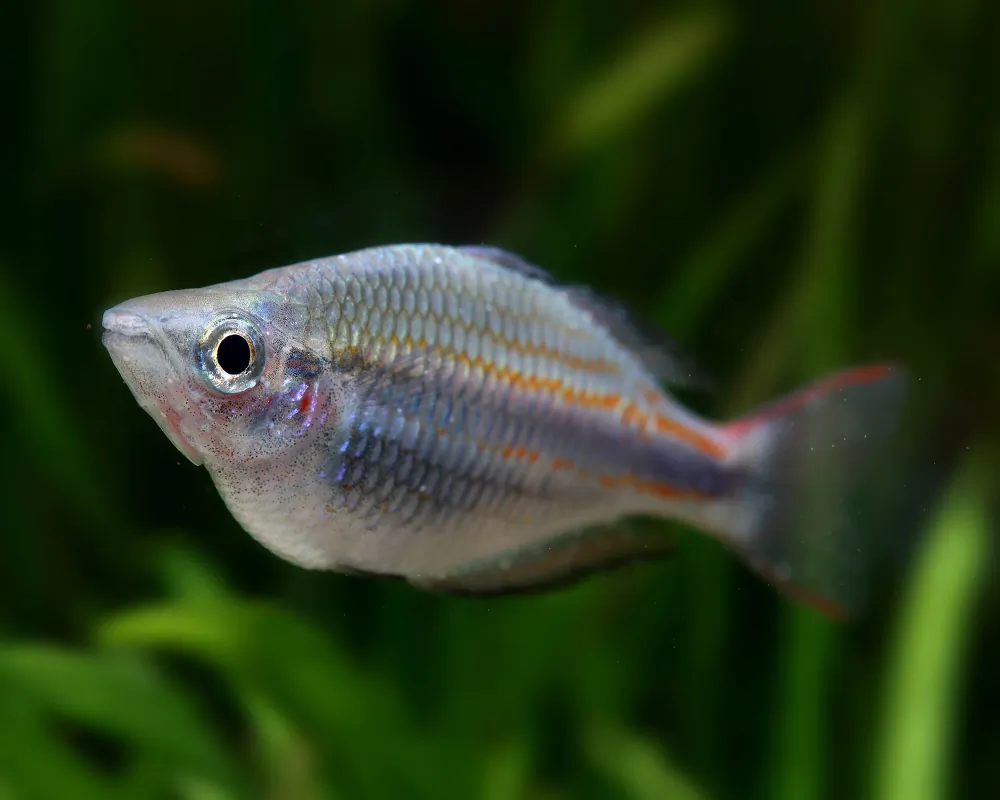
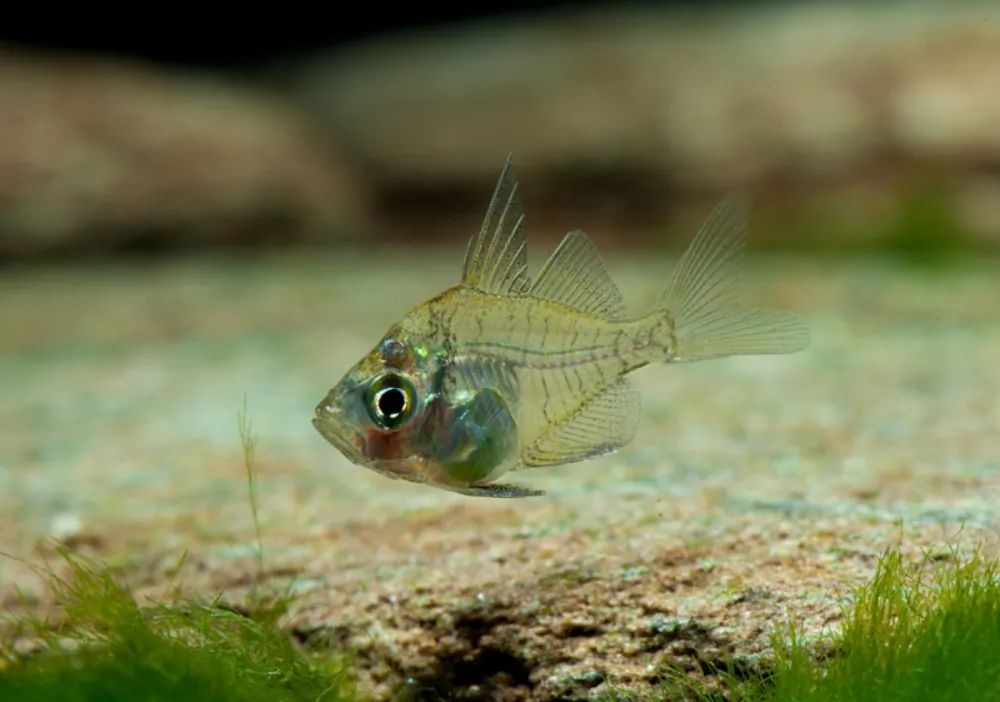
Image of fork tailed blue eye pseudomugil furcatus

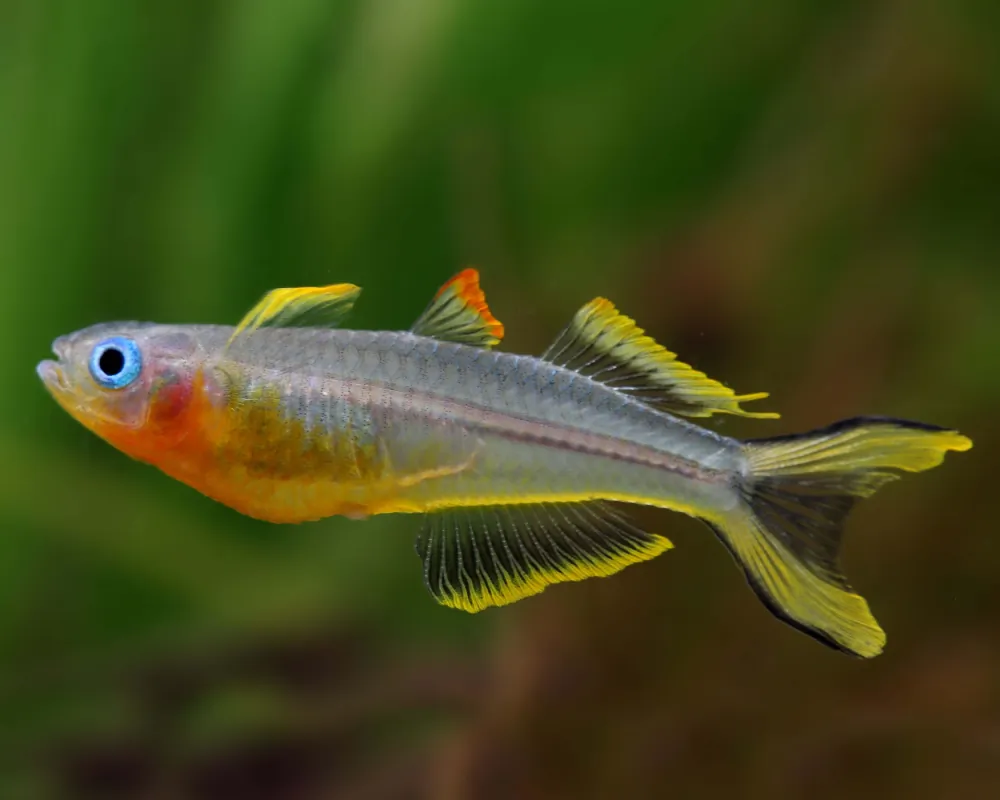
As seen in the provided images, the Forktail Blue-eye boasts a delicate yet striking appearance that makes it stand out in any aquatic setting.

Body shape:

They possess a slender, elongated, and slightly compressed body designed for swift, darting movements through the water column.

Color:

The main body is somewhat translucent to silvery-grey, often showcasing a prominent yellowish or bright orange flush along the belly and lower half of the body.

Barbels:

This species does not possess any barbels.

Snout:

The snout is relatively short with a small, slightly upward-pointing mouth, indicating their preference for feeding near the water surface.

Eyes:

Their most defining feature is their large, striking, iridescent neon-blue eyes that contrast beautifully with their yellow and orange body hues.

Fins:

The fins are highly decorative. The pectoral fins point upwards like small wings with yellow tips. The dorsal and anal fins are predominantly transparent but feature bold, bright yellow margins and occasional dark inner edges. Males have much more extended and vibrant fins than females.

The Tail:

They feature a deeply forked caudal fin (tail), which is bordered with distinct bright yellow tips and dark, almost black, inner margins.

Temper

They are known for their completely peaceful temperament. They do not bother other species and are perfectly suited for a peaceful community aquarium alongside other small, non-aggressive fish.

Sociality

Forktail Blue-eyes are highly social, schooling fish. They should be kept in groups of at least 6 to 8 individuals, though larger groups are highly recommended. In a group, males will display their best colors and flare their fins to establish hierarchy and impress females, providing a spectacular show without causing actual harm to one another.

Activity

These fish are extremely active and constantly on the move. They typically occupy the middle to top levels of the aquarium, darting around plants and playfully chasing each other throughout the day.

Keeping and Caring for Forktail Blue-eye

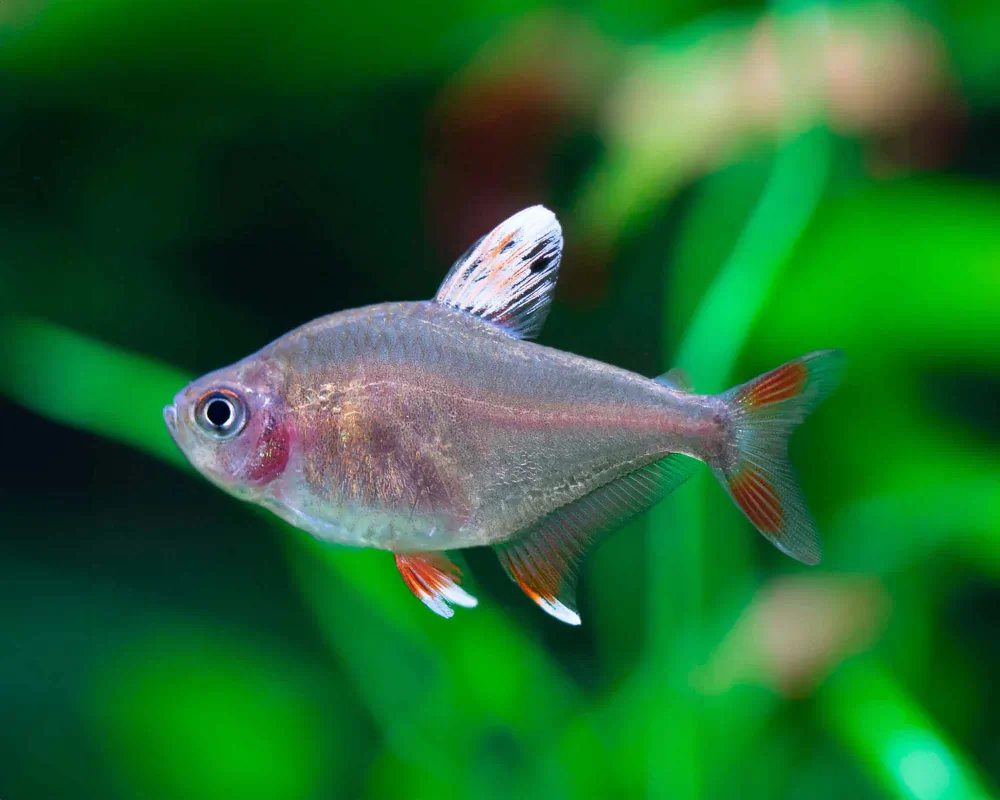
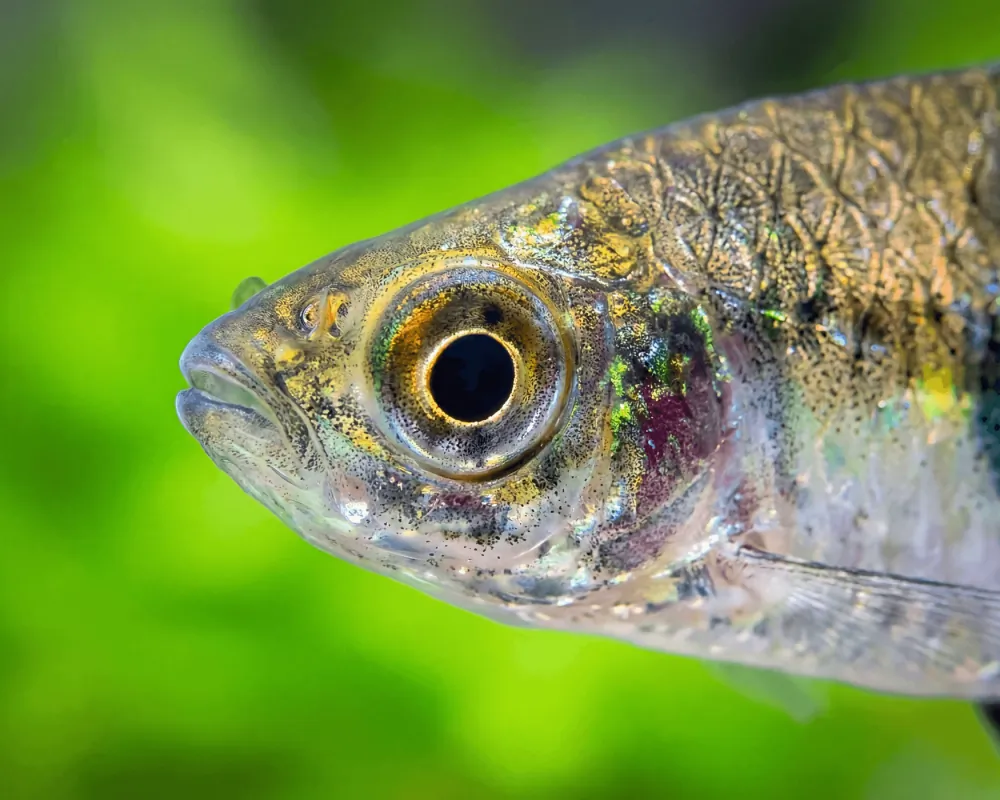
Image of fork tailed blue eye pseudomugil furcatus

While not overly difficult to keep, they do require stable water conditions and a well-maintained environment to thrive and display their best colors. Due to their active nature, they need ample swimming space despite their small size.

Tank size:

A minimum tank size of 15 to 20 gallons is recommended. The length of the tank is more important than the height, as they need horizontal swimming space to accommodate their energetic darting.

Water Parameters:

Consistency is key. They are sensitive to sudden fluctuations in water chemistry and require a mature, fully cycled aquarium.

Temperature

They prefer warmer tropical waters, ideally kept between 24°C and 27°C (75°F - 81°F).

pH

Unlike many other tropical fish, they naturally prefer slightly alkaline conditions. A pH range of 7.0 to 8.0 is ideal.

Hardness

They do best in moderately hard water, with a general hardness (GH) of 5 to 15 dGH.

Ammonia, Nitrite, Nitrate

Ammonia and Nitrite must always be at 0 ppm. Nitrates should be kept as low as possible, ideally below 20 ppm, through regular water changes.

Lighting

Moderate lighting is best. If the lighting is too bright, floating plants can be used to diffuse it, replicating the dappled sunlight of their native jungle streams.

Water flow

They appreciate a moderate water flow. A filter that provides a gentle to moderate current will mimic their natural riverine habitat and encourage their playful swimming behavior.

Decorations and Plants

A heavily planted tank is highly recommended. Use a dark substrate to make their colors pop. Provide dense thickets of stem plants and mosses for cover, but ensure you leave plenty of open swimming space in the upper and middle water column.

Diet

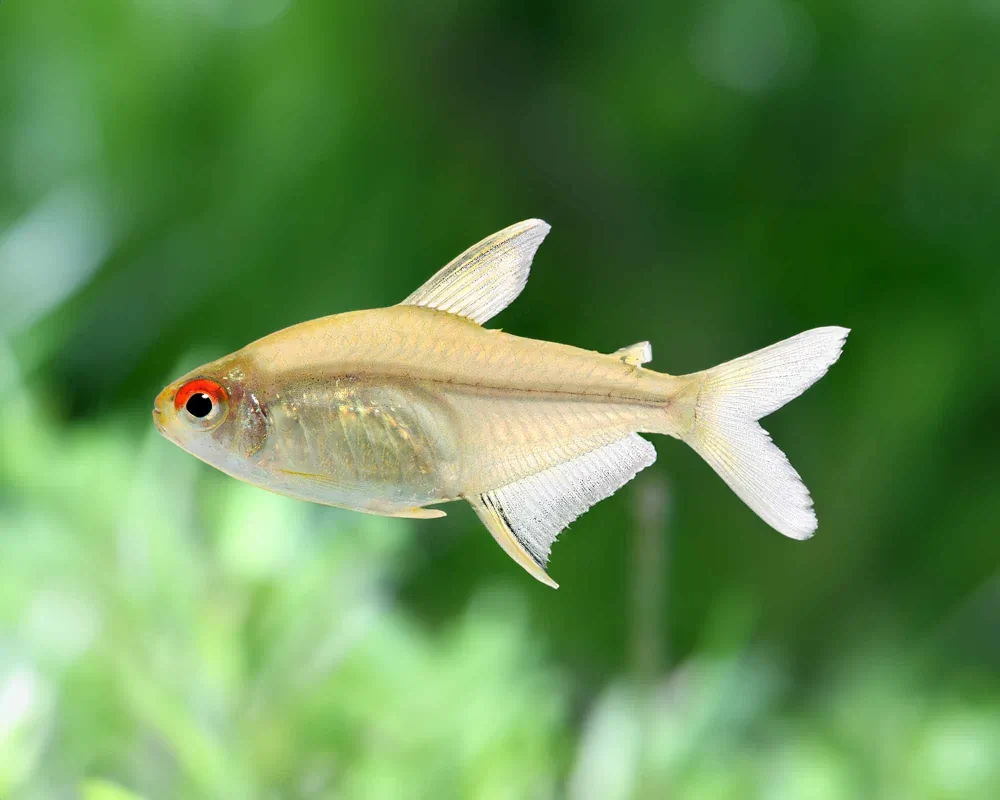
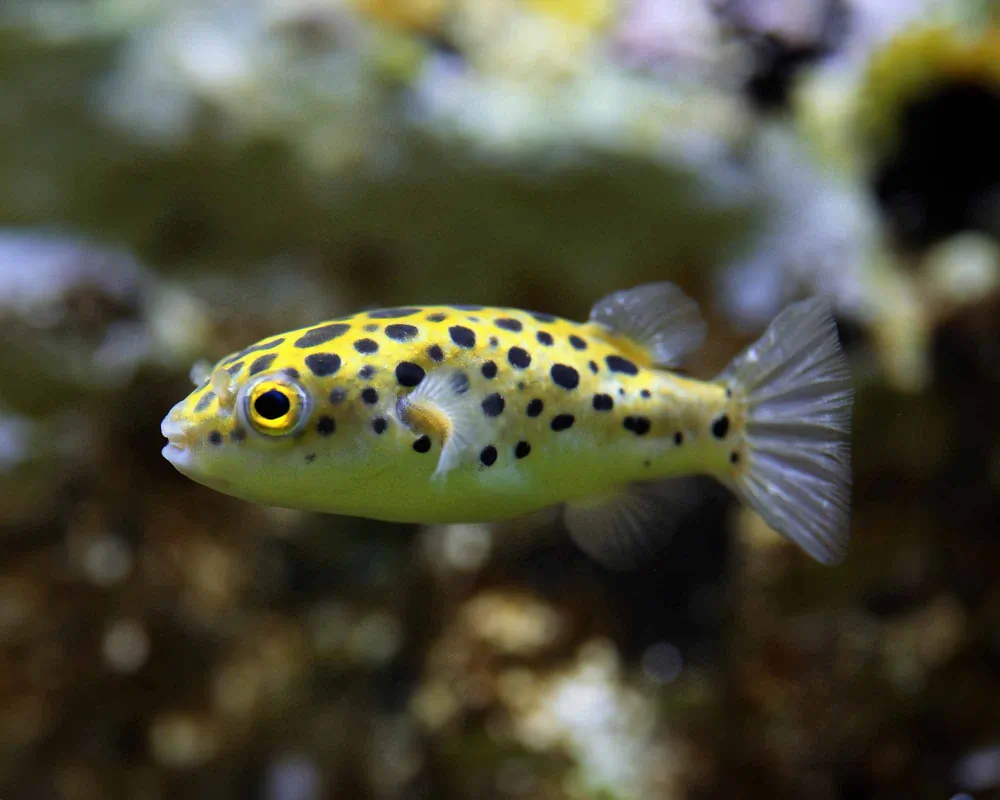
Image of fork tailed blue eye pseudomugil furcatus

In the wild, they are micro-predators, feeding on tiny insects, zooplankton, and invertebrate larvae. In the aquarium, they are omnivorous and will readily accept high-quality dry foods, but their diet should be supplemented with live or frozen foods to maintain their vibrant colors and overall health. Excellent choices include baby brine shrimp, daphnia, cyclops, and micro-worms.

Some Feeding Tips

Because they have very small, upward-pointing mouths, ensure all food is appropriately sized. Micro-pellets or crushed high-quality flakes are ideal. It is best to feed them small amounts two times a day rather than one large meal.

Breeding

Breeding the Forktail Blue-eye is relatively straightforward in a dedicated setup. They are continuous egg scatterers. To breed them, provide a small tank with slightly alkaline water, gentle filtration (like a sponge filter), and plenty of spawning mops or dense clumps of Java Moss. Condition the breeders with live foods. Females will deposit a few adhesive eggs daily among the moss or mops. Because the adults may eat the eggs, it is best to remove the spawning medium to a separate hatching container every few days. The fry are incredibly tiny upon hatching (around 10-15 days later) and require infusoria or specialized liquid fry food until they are large enough to accept baby brine shrimp.

Conclusion

The Forktail Blue-eye is an absolute gem for the freshwater aquarium. With their mesmerizing blue eyes, vibrant yellow accents, and lively personalities, they bring an unparalleled dynamic energy to a planted tank. By providing them with clean, slightly alkaline water and a proper schooling group, aquarists will be rewarded with a spectacular, constantly moving display.

Fish info

Care level: Moderate
Temperament: Peaceful
Adult size: 5-6 cm
Life expectancy: 2-3 years
Fish type: Rainbowfish
Temperature : 24-27°C
pH: 7.0-8.0
Color Form: Blue, Clear, Orange, Silver, Yellow
Leave your comments
Lastest on Fishs
  • Tetraodon nigroviridis (Green Spotted Puffer)

    Difficult
    Rainbowfish
    Hailing from the coastal estuaries of Southeast Asia, the Green Spotted Puffer is a highly intelligent and interactive fish. Famous for its vibrant green-yellow coloration and distinct black spots, this brackish-water species demands specialized care but rewards dedicated aquarists with its unique, puppy-like personality and fascinating hunting behaviors.
  • Leporinus affinis (Banded Leporinus)

    Moderate
    Rainbowfish
    The Banded Leporinus (Leporinus affinis) is a striking, torpedo-shaped freshwater fish native to the vibrant rivers of South America. Known for its bold black and yellow stripes, this active and intelligent species adds a dynamic presence to large aquariums, captivating aquarists with its unique head-down swimming behavior and energetic personality.
  • Epalzeorhynchos frenatum (Green Fringe Lark / Rainbow Shark)

    Moderate
    Rainbowfish
    The Green Fringe Lark, widely known as the Rainbow Shark, is a striking freshwater cyprinid native to Southeast Asia. Famous for its vibrant red fins contrasting against a dark body, this semi-aggressive bottom-dweller brings dynamic activity to large aquariums, though its territorial nature requires careful tank mate selection.
  • Tetraodon mbu (Mbu Pufferfish)

    Expert Only
    Rainbowfish
    The Mbu Pufferfish, native to the Congo River basin, is a true freshwater giant known for its striking maze-like patterns and highly intelligent, interactive personality. Due to their massive adult size and specialized diet, they are highly sought after but require expert care and enormous aquariums to thrive.
  • Osteoglossum bicirrhosum (Golden Arowana)

    Expert Only
    Rainbowfish
    The Golden Arowana, a rare color variant of the South American Silver Arowana (Osteoglossum bicirrhosum), is a breathtaking centerpiece for giant aquariums. Known for its predatory prowess and incredible jumping ability, this surface-dwelling giant demands pristine water, massive tank space, and expert care, making it highly prized among advanced aquarists.
  • Brachydanio rerio (Golden Zebra Danio)

    Easy
    Rainbowfish
    The Golden Zebra Danio is a striking, active color morph of the classic Zebra Danio. Originating from selective breeding of wild populations in South Asia, this energetic schooling fish is highly popular among aquarists for its hardiness, peaceful nature, and beautiful golden stripes, making it perfect for community tanks.
  • Aplocheilus lineatus (Golden Striped Pike)

    Easy
    Rainbowfish
    The Golden Striped Pike, a stunning gold morph of the Striped Panchax, is a hardy and vibrant top-dwelling killifish. Originating from India but widely captive-bred in Europe, this active predator boasts a striking metallic yellow body. Its peaceful yet opportunistic nature makes it a fascinating addition to community aquariums.
  • Hemigrammus bleheri (Golden Redhead Tetra)

    Moderate
    Rainbowfish
    Hailing from the blackwater rivers of South America, the Golden Redhead Tetra is a striking variant of the classic Rummy-nose Tetra. Renowned for its brilliant ruby-red facial coloration and shimmering golden body, this peaceful schooling fish adds vibrant energy and captivating beauty to any well-planted community aquarium.
  • Chonerhinus modestus (Golden Pufferfish)

    Moderate - Difficult
    Rainbowfish
    The Golden Pufferfish (Chonerhinus modestus), also known as the Bronze Puffer, is a highly active and captivating species native to Southeast Asia. Known for its striking metallic gold coloration, this intelligent but aggressive freshwater puffer requires a dedicated aquarist to manage its specialized diet and fin-nipping tendencies.
  • Megalomphodus roseus (Golden Phantom Tetra)

    Easy
    Rainbowfish
    The Golden Phantom Tetra (Megalomphodus roseus), native to the shaded forest streams of South America, is a captivating and peaceful schooling fish. Known for its distinct black shoulder spot and subtle golden-yellow hues, this active tetra adds a lively, shimmering dynamic to any planted community aquarium.
  • Gymnocorymbus ternetzi (Golden Mourning Tetra)

    Easy
    Rainbowfish
    The Golden Mourning Tetra, a captivating color morph of the popular Black Skirt Tetra, originates from South America. Known for its shimmering, translucent golden hue and hardy nature, this peaceful schooling fish is incredibly popular among both beginner and experienced aquarists seeking an active and resilient community tank addition.
  • Epalzeorhynchos frenatum (Albino Rainbow Shark)

    Moderate
    Rainbowfish
    The Albino Rainbow Shark is a striking freshwater fish renowned for its pale, creamy body and vivid orange-red fins. Originating from Southeast Asia, this semi-aggressive bottom-dweller brings dynamic energy to a well-sized community aquarium. Its shark-like appearance and active scavenging behavior make it a long-standing favorite among aquarists.
  • Nematobrycon palmeri (Golden Emperor Tetra)

    Easy
    Rainbowfish
    The Golden Emperor Tetra is a stunning, captive-bred color morph of the classic Emperor Tetra. Known for its radiant golden hues, striking blue eyes, and graceful finnage, this peaceful schooling fish adds a touch of elegance to any planted aquarium. It is hardy, active, and perfect for community setups.
  • Hemigrammus rodwayi (Gold Tetra)

    Easy
    Rainbowfish
    The Gold Tetra (Hemigrammus rodwayi) is a striking, peaceful freshwater fish native to the rivers of South America. Known for its unique, metallic golden sheen—caused by a harmless skin parasite in the wild—it is a popular, active schooling fish that adds brilliant color to community aquariums.
  • Boraras merah (Gold Spotted Dwarf Danio)

    Moderate
    Rainbowfish
    Hailing from the peat swamps of southern Borneo, the Gold Spotted Dwarf Danio (Boraras merah) is a captivating micro-fish. Loved for its fiery red coloration and peaceful nature, it is a highly popular choice for nano aquariums, bringing vibrant energy and schooling behavior to densely planted blackwater setups.
  • Haludaria fasciata (Glowing Coal Barb)

    Easy - Moderate
    Rainbowfish
    The Glowing Coal Barb, also known as the Melon Barb, is a stunning, highly active cyprinid native to the rivers of southern India. Renowned for its fiery pinkish-red hues and striking black vertical bands, this schooling fish brings a burst of energy and vibrant color to any peaceful community aquarium.