Overview

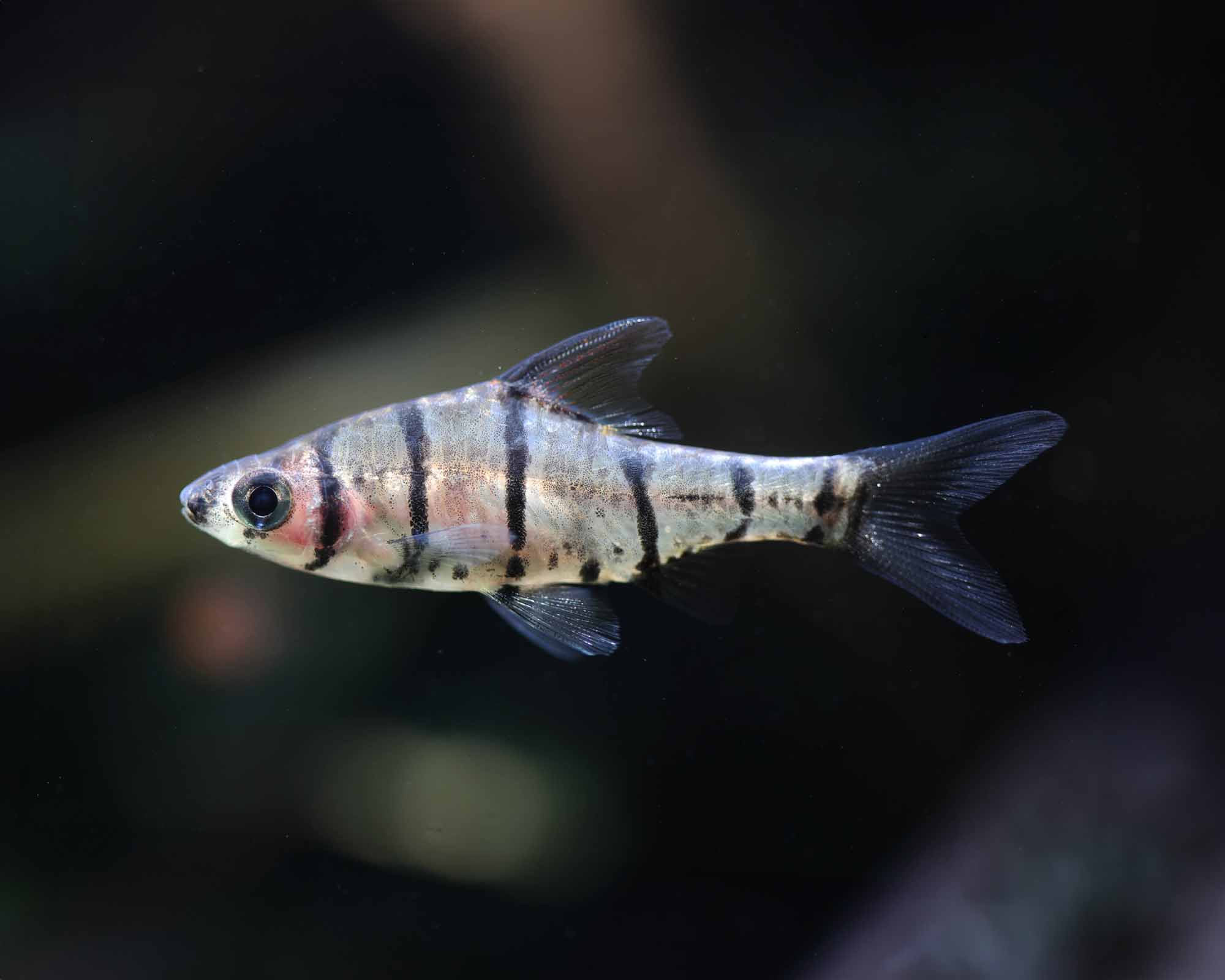
The Eight-banded Barb (Eirmotus octozona) is a small, relatively rare cyprinid that brings a unique and delicate aesthetic to the freshwater aquarium. Because of their shy nature and specific water requirements, they are best suited for aquarists who can provide a dedicated, well-maintained environment. When kept properly in a group, their schooling behavior and distinct banding make them a fascinating centerpiece for smaller tanks.
Distribution and Habitat
This species is native to Southeast Asia, with populations primarily found in southern Thailand, Peninsular Malaysia, and parts of Indonesia (Borneo and Sumatra). They naturally inhabit slow-moving blackwater streams, peat swamps, and forest pools. These habitats are characterized by soft, highly acidic water stained brown by decaying organic matter, such as fallen leaves, submerged roots, and branches.
Description of Eight-banded Barb
Body shape:
They possess a small, somewhat laterally compressed, and deep-bodied torpedo shape typical of many small barbs, allowing them to navigate efficiently through dense vegetation.
Color:
The base body color is a pale, semi-transparent silver or light tan. Their most defining feature is the series of eight distinct, vertical black bands running from the snout to the caudal peduncle.
Barbels:
Like many members of the cyprinid family, they possess very small, barely noticeable sensory barbels near the mouth to help locate food.
Snout:
The snout is relatively short and slightly pointed, equipped with a small terminal mouth designed for picking micro-prey from the water column and surfaces.
Eyes:
They have proportionally large eyes, which are crossed by the very first vertical black band, helping to camouflage the eye from potential predators.
Fins:
The fins are mostly translucent. The dorsal fin is tall and sometimes exhibits faint dark markings or a slight reddish hue near the base, as seen in adult specimens.
The Tail:
The caudal fin (tail) is deeply forked and completely clear, aiding in quick, darting movements when the fish feels threatened.
Temper
The Eight-banded Barb is exceptionally peaceful but can be quite timid and easily outcompeted for food. They are easily stressed by aggressive or overly boisterous tank mates.
Sociality
They are a highly social, schooling species. To ensure they feel secure and display their best natural behaviors and colors, they must be kept in a group of at least 8 to 10 individuals.
Activity
They are generally active in the middle to lower levels of the aquarium. While they spend much of their time gently hovering or exploring the substrate and plant leaves, they will quickly dart into hiding if startled.
Keeping and Caring for Eight-banded Barb

Tank size:
A minimum tank size of 60 liters (15 gallons) is recommended for a proper school. A longer footprint is preferred to give them adequate horizontal swimming space.
Water Parameters:
Temperature
They thrive in warm tropical waters, with an ideal temperature range of 22-26°C (72-79°F).
pH
Being native to blackwater environments, they prefer acidic water. Maintain the pH between 5.0 and 7.0 for optimal health.
Hardness
Water should be very soft, ideally between 1 and 10 dGH.
Ammonia, Nitrite, Nitrate
Ammonia and Nitrite must always be at 0 ppm. Nitrates should be kept as low as possible, ideally below 20 ppm, through regular water changes.
Lighting
Lighting should be dim to moderate. Floating plants can be used to diffuse bright lights, which helps reduce stress and encourages the fish to venture out into the open.
Water flow
Water flow should be gentle and sluggish, mimicking their natural slow-moving swamp and forest pool habitats.
Decorations and Plants
A dark, sandy substrate mixed with dried leaf litter (such as Indian Almond leaves), driftwood branches, and dense plantings of shade-tolerant species (like Cryptocoryne, Java Fern, and Anubias) will create a perfect biotope. The tannins released by the wood and leaves will also condition the water to their liking.
Diet
In the wild, they are micropredators feeding on tiny insects, worms, and zooplankton. In the aquarium, they are unfussy and will accept high-quality crushed flakes or micro-pellets. This should be heavily supplemented with small live or frozen foods such as Daphnia, baby brine shrimp (Artemia), and bloodworms to maintain peak coloration and health.
Some Feeding Tips
Because they possess small mouths and can be timid, ensure that the food particles are small enough for them to consume and that faster tank mates do not steal all the food before it reaches them. Feed small amounts 1 to 2 times daily.
Breeding
Breeding the Eight-banded Barb can be somewhat challenging. They are egg-scatterers that provide no parental care. To breed them, set up a separate, dimly lit spawning tank with very soft, acidic water and cover the bottom with a spawning mop or fine-leaved plants like Java Moss. Condition the adults with high-quality live foods. Once eggs are scattered, the adult fish should be removed immediately to prevent them from eating the eggs. The fry are extremely tiny and will require infusoria or paramecium until they are large enough to accept newly hatched brine shrimp.
Conclusion
The Eight-banded Barb is a beautiful, understated gem of the aquarium hobby. While they require a bit more attention to water parameters and careful selection of tank mates, their peaceful schooling nature and striking barcode-like pattern make them a highly rewarding species for a dedicated blackwater or planted aquarium setup.
 - pair - 1.webp)
Leave your comments