It’s time to help contribute for biggest aquarium gallery online

SUBMIT HEREVIEW GALLERY

Brevibora dorsiocellata (Emerald Eye Rasbora)

Overview

The Emerald Eye Rasbora (Brevibora dorsiocellata), often called the Glow-eyed Rasbora, is a beautiful, small schooling fish belonging to the Cyprinidae family. They are highly sought after in the aquarium hobby for the stunning, reflective green patch over their eyes that appears to glow under aquarium lighting. They are excellent additions to peaceful community and planted tanks.

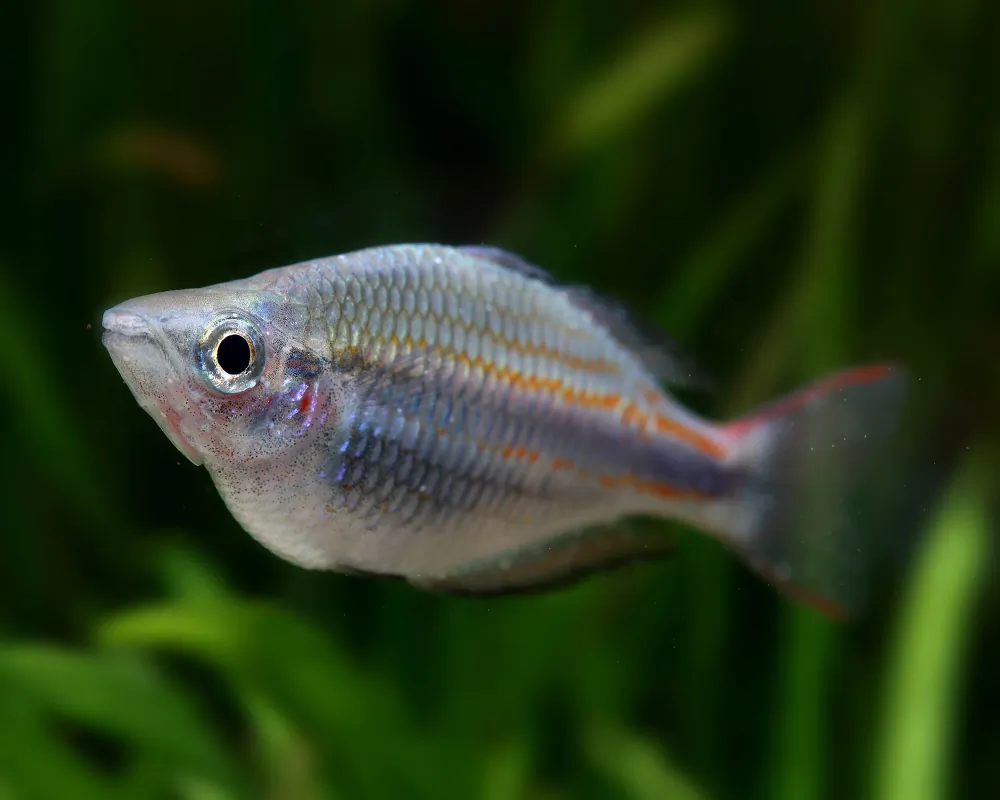
Image of glow eyed danio rasbora dorsiocellata

Distribution and Habitat

This species is native to Southeast Asia, specifically found in the Malay Peninsula and the Greater Sunda Islands of Borneo and Sumatra. They inhabit slow-moving rivers, peat swamps, and forest streams. These waters are typically tinted with tannins from decaying organic matter, making them soft and acidic, heavily shaded by the dense forest canopy above.

Description of Emerald Eye Rasbora

Body shape:

They possess a slender, streamlined, and slightly elongated body typical of many rasboras, designed for swift swimming in mid-water areas.

Color:

The body is predominantly silvery to slightly translucent or clear, with a subtle iridescent sheen. The most distinctive markings are the bright, glowing green-blue upper part of the eye and a prominent black spot on the dorsal fin.

Barbels:

Unlike some cyprinids, they do not possess prominent barbels.

Snout:

The snout is relatively short and slightly pointed, with a terminal mouth adapted for feeding on small invertebrates in the water column.

Eyes:

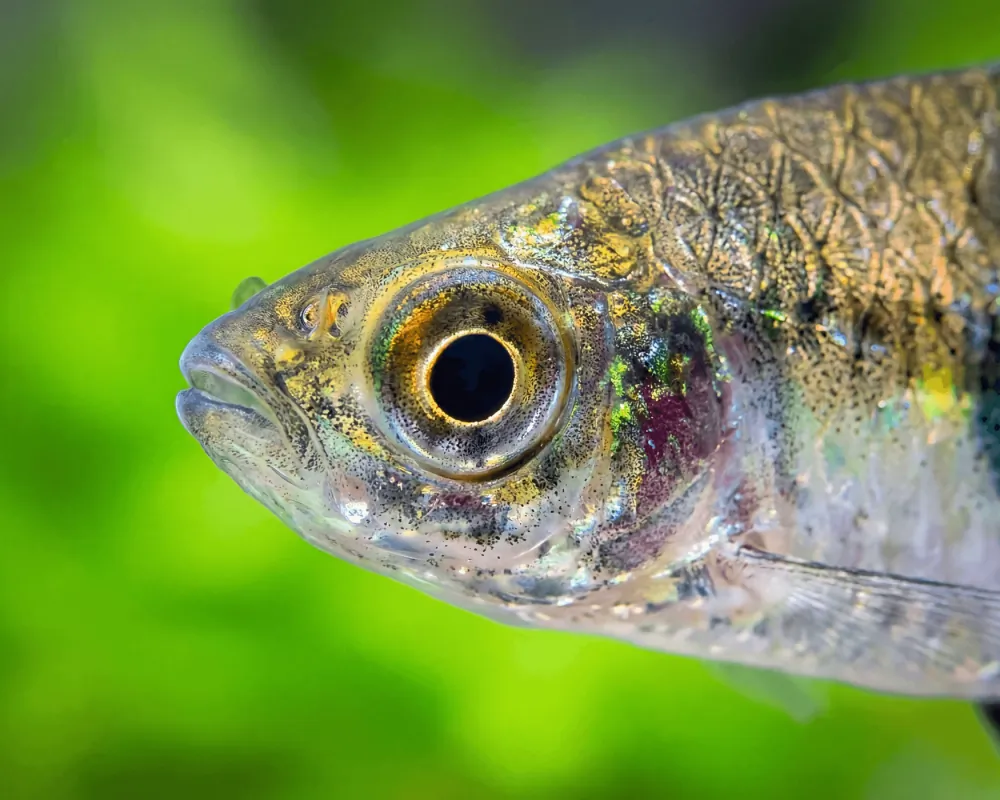
Their eyes are their namesake feature. The upper half of the iris contains a highly reflective, iridescent green/yellow patch that shines brilliantly, especially in dimly lit or tannin-stained water.

Fins:

The fins are mostly translucent. The dorsal fin features a striking, bold black blotch, often edged with white or pale yellow, which they frequently flick while swimming.

The Tail:

The caudal (tail) fin is deeply forked and clear, aiding in their agile and darting swimming movements.

Image of glow eyed danio rasbora dorsiocellata

Temper

These rasboras are incredibly peaceful and non-aggressive, making them a perfect candidate for a community aquarium with other similarly sized, docile species.

Sociality

They are a highly gregarious schooling species. They should always be kept in groups of at least 8 to 10 individuals. A larger school not only reduces their stress but also encourages a much tighter schooling behavior and better coloration.

Activity

They are highly active, mid-level swimmers. They spend the majority of their time darting around the open swimming spaces of the aquarium, often tightly grouped together.

Keeping and Caring for Emerald Eye Rasbora

Caring for these fish is generally straightforward, provided their water quality is maintained. They thrive in setups that mimic their natural, slightly acidic, and tannin-rich habitats.

Image of glow eyed danio rasbora dorsiocellata

Tank size:

A minimum tank size of 15 to 20 gallons is recommended to provide adequate swimming space for a proper school.

Water Parameters:

Temperature

They prefer tropical temperatures ranging from 20-25°C (68-77°F).

pH

A slightly acidic to neutral pH is ideal, typically between 5.0 and 7.5.

Hardness

Soft water is preferred, with a general hardness (GH) of 1-10 dGH.

Ammonia, Nitrite, Nitrate

Ammonia and Nitrite must always be 0 ppm. Nitrates should be kept as low as possible, ideally below 20 ppm, through regular water changes.

Lighting

Dim or subdued lighting is best. This not only mimics their natural shaded habitat but also makes their glowing eyes stand out significantly more.

Water flow

They prefer gentle to moderate water flow, similar to the slow-moving streams they originate from.

Decorations and Plants

A densely planted tank with plenty of open swimming space in the center is ideal. Driftwood, leaf litter (like Indian Almond leaves), and floating plants help create the perfect environment and provide beneficial tannins.

Diet

They are micropredators in the wild, feeding on small insects, worms, and zooplankton. In the aquarium, they are omnivorous and will readily accept high-quality crushed flakes, micro-pellets, and small live or frozen foods such as daphnia, baby brine shrimp, and cyclops.

Some Feeding Tips

Because of their small mouths, ensure all food is appropriately sized. Feed them small amounts 2-3 times a day, only what they can consume in a couple of minutes.

Breeding

Breeding is possible but requires a dedicated setup. They are egg-scatterers that show no parental care. To breed them, set up a dimly lit breeding tank with soft, acidic water and a mesh or spawning mop at the bottom to protect the eggs from being eaten. After spawning, the parents should be removed immediately. The fry are extremely tiny and will require infusoria or paramecium until they are large enough to accept microworms or baby brine shrimp.

Conclusion

The Emerald Eye Rasbora is a spectacular, active, and peaceful schooling fish. Their unique glowing eyes and tight schooling behavior make them a mesmerizing focal point in any planted or biotope aquarium. With straightforward care requirements, they are an excellent choice for both novice and experienced aquarists looking to add life and sparkle to their tanks.
Fish info

Care level: Easy
Temperament: Peaceful
Adult size: 3-4 cm
Life expectancy: 3-5 years
Fish type: Cyprinid
Temperature : 20-25°C
pH: 5.0-7.5
Color Form: Clear, Green, Silver
Leave your comments
Lastest on Fishs
  • Garra rufa (Kangal Nibble Fish)

    Moderate
    Cyprinid
    Famous worldwide as the "Doctor Fish" used in spa treatments, the Kangal Nibble Fish is a fascinating, active bottom-dweller native to the Middle East. In the aquarium, they are prized for their peaceful nature, constant grazing on algae, and unique, highly engaging behaviors.
  • Melanotaenia trifasciata (Banded Rainbowfish)

    Easy - Moderate
    Cyprinid
    The Banded Rainbowfish, also known as the Jewel Rainbowfish, is a stunning, active schooling fish native to Northern Australia. Renowned for its dazzling, location-specific color variations and peaceful nature, it brings vibrant energy to any large community aquarium. Captive-bred specimens (DNZ) are particularly hardy and adaptable to home aquariums.
  • Hyphessobrycon bentosi (White Fin Ornate Tetra)

    Easy
    Cyprinid
    The White Fin Ornate Tetra, a stunning captive-bred variant of the classic Jewel Tetra, is prized for its striking white-tipped fins and rosy-silver body. Native to the Amazon basin, this peaceful, schooling species brings active charm and vibrant contrast to heavily planted community aquariums.
  • Hyphessobrycon bentosi (Jewel Tetra)

    Easy
    Cyprinid
    Originating from the Amazon basin, the Jewel Tetra (Hyphessobrycon bentosi) is a captivating, peaceful schooling fish. Known for its striking finnage and energetic behavior, it thrives in planted aquariums. Its hardiness and striking appearance make it a highly popular choice for both beginner and experienced aquarists alike.
  • Hyphessobrycon bentosi (Jewel Tetra)

    Easy
    Cyprinid
    The Jewel Tetra (Hyphessobrycon bentosi), often captive-bred for optimal health, is a stunning freshwater fish native to the Amazon basin. Known for its deep, rosy-red body and striking white-tipped fins, this peaceful schooling fish adds vibrant color and lively, yet gentle, activity to any planted community aquarium.
  • Pseudomugil ivantsoffi (Ivantsoff's Blue Eye)

    Moderate
    Cyprinid
    Hailing from the pristine rainforest streams of West Papua and Papua New Guinea, Ivantsoff's Blue Eye is a captivating micro-predator. Known for its energetic schooling behavior and stunning neon-blue eyes contrasting with a vibrant golden-orange body, this peaceful nano fish is highly sought after by planted aquarium enthusiasts.
  • Carinotetraodon travancoricus (Pea Puffer)

    Moderate
    Cyprinid
    Endemic to the Western Ghats of India, the Pea Puffer (Carinotetraodon travancoricus) is a highly popular, fully freshwater micro-predator. Despite their tiny size, these intelligent fish boast massive personalities. Known for their helicopter-like swimming and insatiable appetite for pest snails, they make captivating additions to heavily planted, species-only aquariums.
  • Parambassis ranga (Indian Glass Perch)

    Moderate
    Cyprinid
    The Indian Glass Perch, native to South Asia, is a captivating schooling fish famous for its remarkably transparent body that reveals its internal organs. Peaceful but somewhat shy, this unique species adds a fascinating, ghostly elegance to freshwater and slightly brackish aquariums, making it highly popular among dedicated aquarists.
  • Ctenolucius hujeta (Hujeta Pike Characin)

    Moderate
    Cyprinid
    The Hujeta Pike Characin, or Freshwater Barracuda, is a fascinating predatory fish native to South America. Known for its elongated, gar-like body and stealthy hunting behavior, it is a popular rarity among advanced aquarists. Despite its fearsome appearance, it is relatively peaceful with appropriately sized tank mates.
  • Dermogenys pusillus (Half Billed Pike)

    Moderate
    Cyprinid
    The Half Billed Pike, or Wrestling Halfbeak, is a fascinating surface-dwelling livebearer native to Southeast Asia. Known for its unique elongated lower jaw and the males' combative 'wrestling' behavior, this slender fish adds dynamic top-level activity to planted or slightly brackish aquariums, captivating aquarists with its distinctive appearance.
  • Hyphessobrycon hyanuary (Costello Tetra)

    Easy
    Cyprinid
    The Costello Tetra, scientifically known as Hyphessobrycon hyanuary, is a peaceful and active schooling fish native to the Amazon basin. Known for its subtle greenish-gold lateral stripe and distinctive black tail spot, this hardy tetra is a popular and undemanding choice for community aquariums.
  • Pethia canius (Green Dwarf Barb)

    Easy
    Cyprinid
    The Green Dwarf Barb (Pethia canius) is a captivating, peaceful micro-fish native to the densely vegetated waters of India and Bangladesh. Known for its shimmering golden-green scales and distinct black spots, this active schooling cyprinid adds life and vibrant color to any well-planted nano or community aquarium.
  • Tetraodon nigroviridis (Green Spotted Puffer)

    Difficult
    Cyprinid
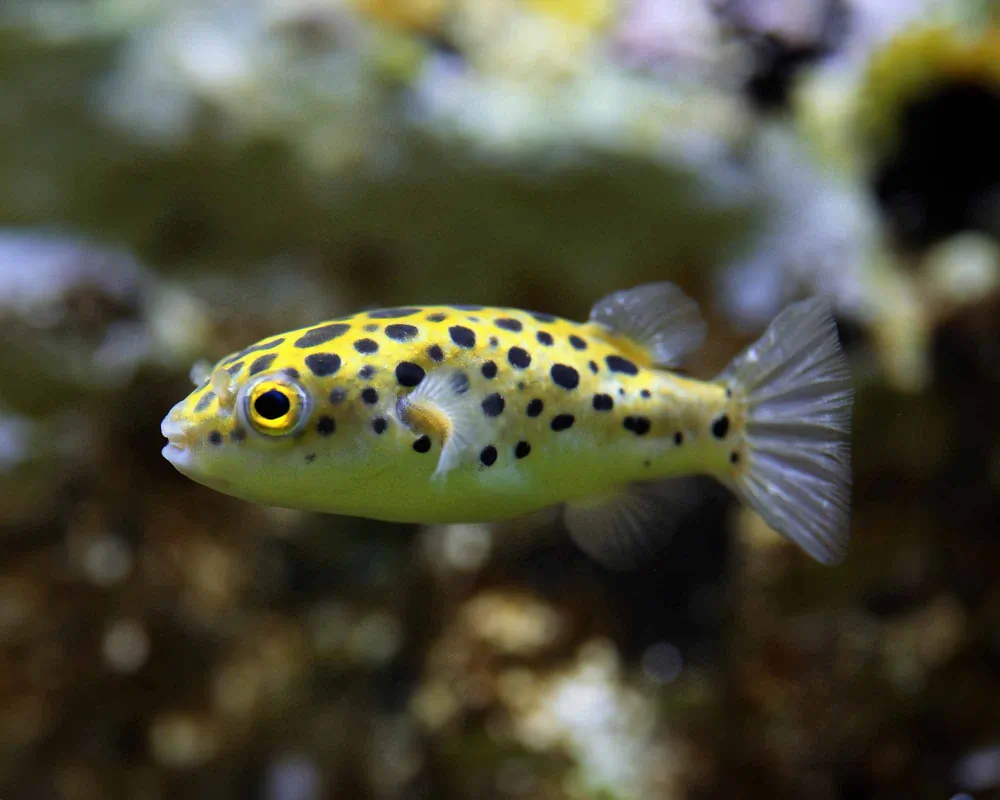
    Hailing from the coastal estuaries of Southeast Asia, the Green Spotted Puffer is a highly intelligent and interactive fish. Famous for its vibrant green-yellow coloration and distinct black spots, this brackish-water species demands specialized care but rewards dedicated aquarists with its unique, puppy-like personality and fascinating hunting behaviors.
  • Leporinus affinis (Banded Leporinus)

    Moderate
    Cyprinid
    The Banded Leporinus (Leporinus affinis) is a striking, torpedo-shaped freshwater fish native to the vibrant rivers of South America. Known for its bold black and yellow stripes, this active and intelligent species adds a dynamic presence to large aquariums, captivating aquarists with its unique head-down swimming behavior and energetic personality.
  • Epalzeorhynchos frenatum (Green Fringe Lark / Rainbow Shark)

    Moderate
    Cyprinid
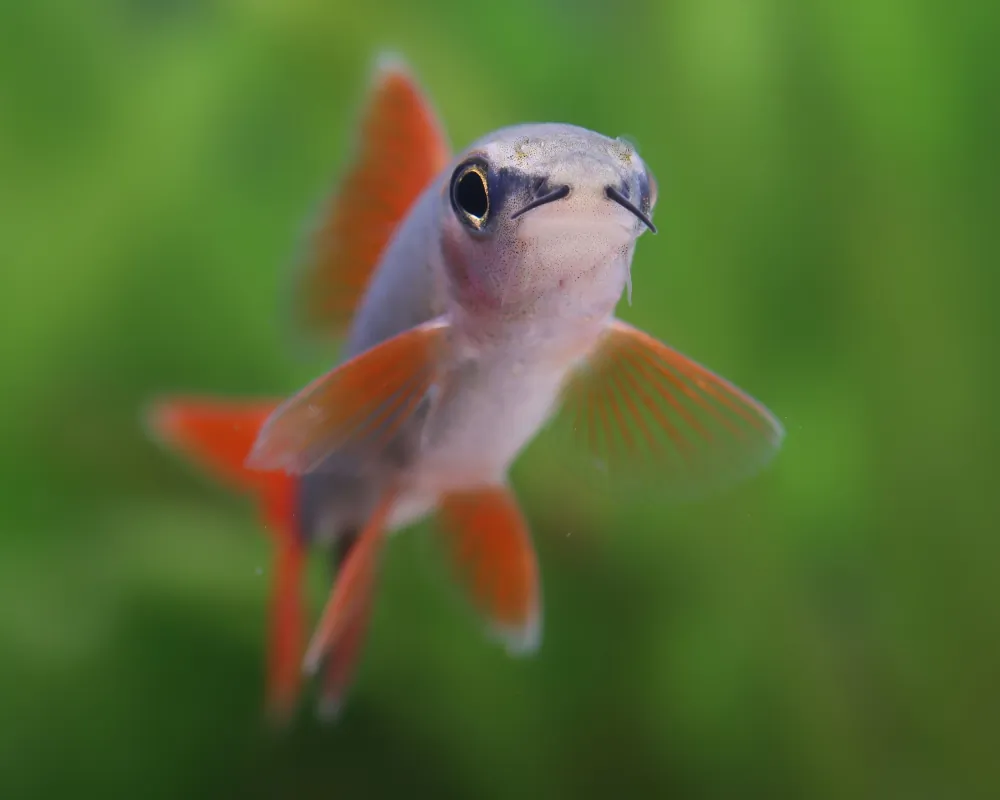
    The Green Fringe Lark, widely known as the Rainbow Shark, is a striking freshwater cyprinid native to Southeast Asia. Famous for its vibrant red fins contrasting against a dark body, this semi-aggressive bottom-dweller brings dynamic activity to large aquariums, though its territorial nature requires careful tank mate selection.
  • Tetraodon mbu (Mbu Pufferfish)

    Expert Only
    Cyprinid
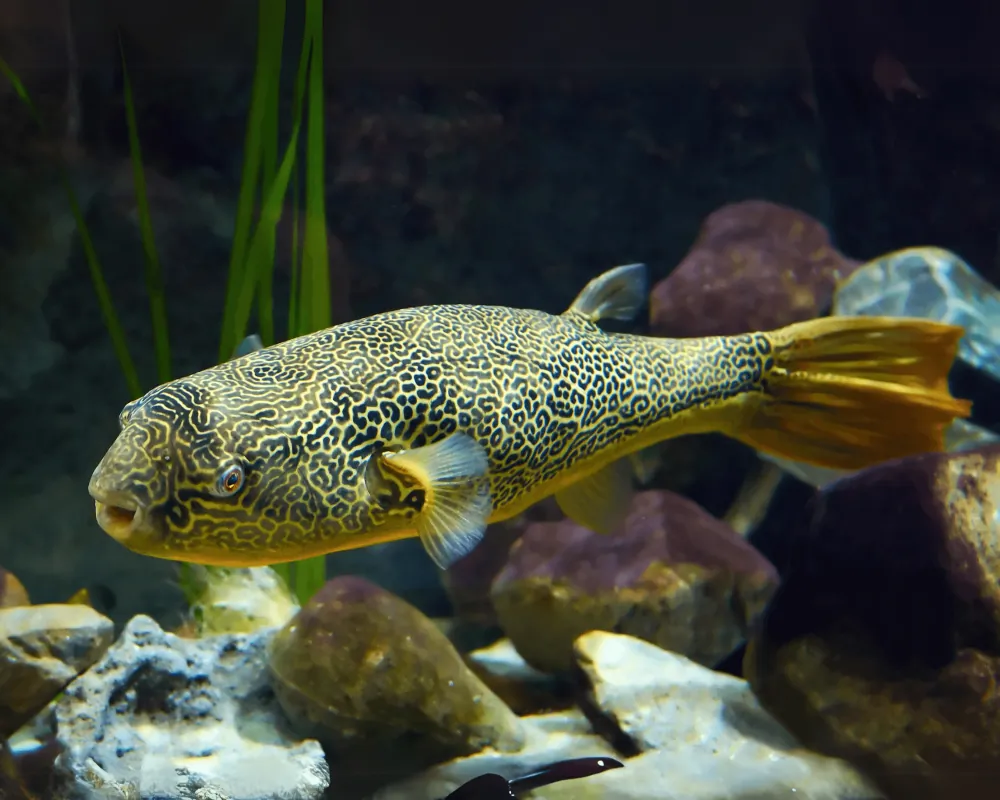
    The Mbu Pufferfish, native to the Congo River basin, is a true freshwater giant known for its striking maze-like patterns and highly intelligent, interactive personality. Due to their massive adult size and specialized diet, they are highly sought after but require expert care and enormous aquariums to thrive.