It’s time to help contribute for biggest aquarium gallery online

SUBMIT HEREVIEW GALLERY

Betta splendens (Yellow Dragon Halfmoon Betta)

Overview

The Yellow Dragon Halfmoon Betta is a spectacular designer morph of the traditional Betta splendens. It is highly sought after for its unique combination of traits: the "dragon" scaling, which presents as thick, opaque, metallic white or platinum scales covering the body, and the "halfmoon" tail, which spreads to a full 180-degree angle. The striking contrast between the armored white body and the vivid yellow finnage makes this fish a true living jewel in the home aquarium.
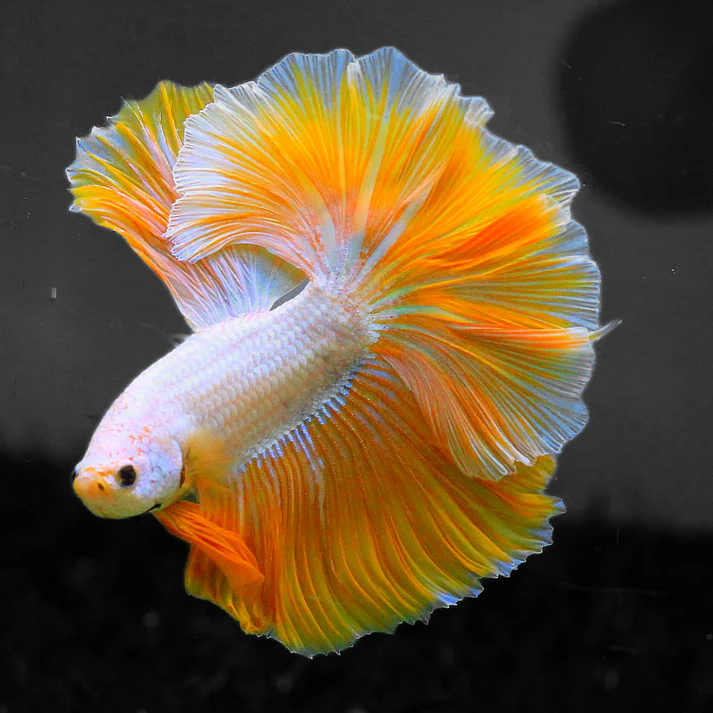
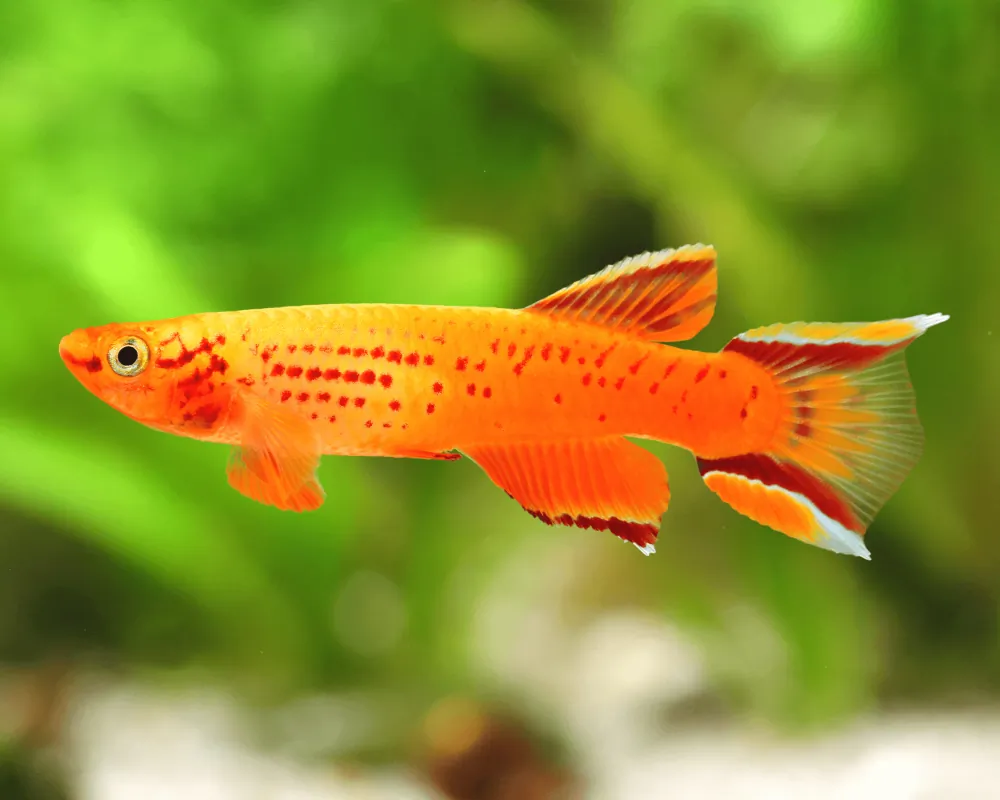
Image of yellow dragon halfmoon betta fish

Distribution and Habitat

While the Yellow Dragon Halfmoon Betta is a product of generations of selective captive breeding and does not exist in the wild, its wild ancestors originate from the Mekong basin in Southeast Asia, primarily in Thailand, Cambodia, and Vietnam. Wild bettas inhabit shallow, sluggish waters such as rice paddies, swamps, and slow-moving streams. These environments are often densely vegetated and low in oxygen, which led to the evolutionary development of their labyrinth organ, allowing them to breathe atmospheric air.

Description of Yellow Dragon Halfmoon Betta

This betta variety is defined by its dramatic finnage and distinct scale mutation. The dragon scale trait gives the fish a heavily armored appearance, while the halfmoon fins create a stunning, sail-like display when the fish flares.
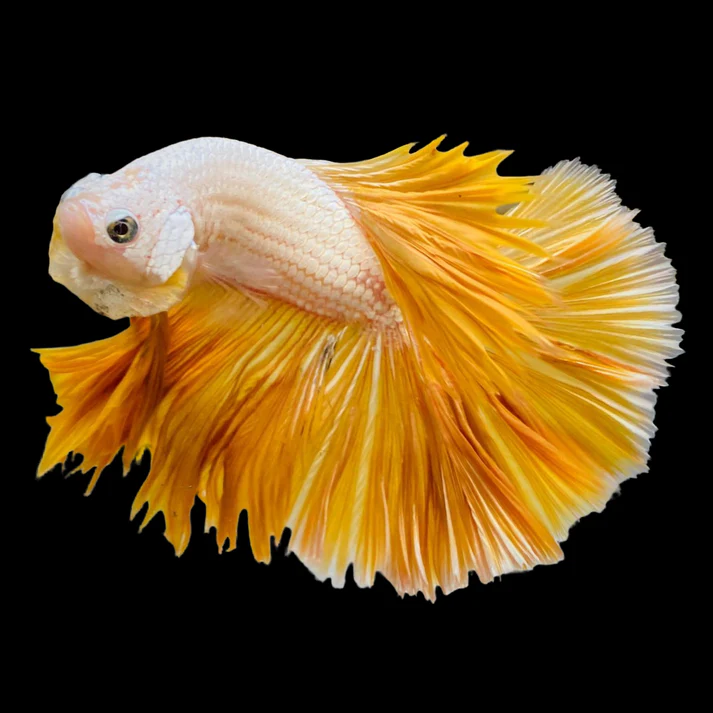
Image of yellow dragon halfmoon betta fish

Body shape:

They possess a streamlined, torpedo-shaped body that appears slightly more robust than standard bettas due to the thick, raised nature of the dragon scales.

Color:

The body is covered in opaque, metallic white or platinum "dragon" scales, which sharply contrast with the bright, vibrant yellow coloration of the dorsal, anal, and caudal fins.

Barbels:

Bettas do not possess barbels.

Snout:

They have an upturned mouth (superior mouth), which is perfectly adapted for their natural behavior of feeding on insects at the water's surface.

Eyes:

The eyes are dark and prominent, sometimes partially framed by the thick dragon scaling that extends toward the face.

Fins:

The dorsal, anal, and ventral fins are exceptionally long, flowing, and predominantly bright yellow. The ventral fins often display delicate white tips.

The Tail:

The hallmark of the halfmoon variety is its caudal fin, which spreads into a perfect 180-degree "D" shape when fully flared, characterized by straight, crisp edges.

Temper

Like all Betta splendens, the Yellow Dragon Halfmoon is highly territorial. Males are notoriously aggressive toward other male bettas and will fight, often to the death, if housed together. They can also exhibit aggression toward fish with similar flowing fins or bright colors, mistaking them for rival males.

Sociality

Male bettas should be kept solitary in their own tanks. However, in larger aquariums (15 gallons or more), they can sometimes be kept in a community setting with peaceful, dull-colored, short-finned fish that occupy different water levels, such as bottom-dwelling corydoras or small rasboras. Careful observation is always required when introducing tank mates.
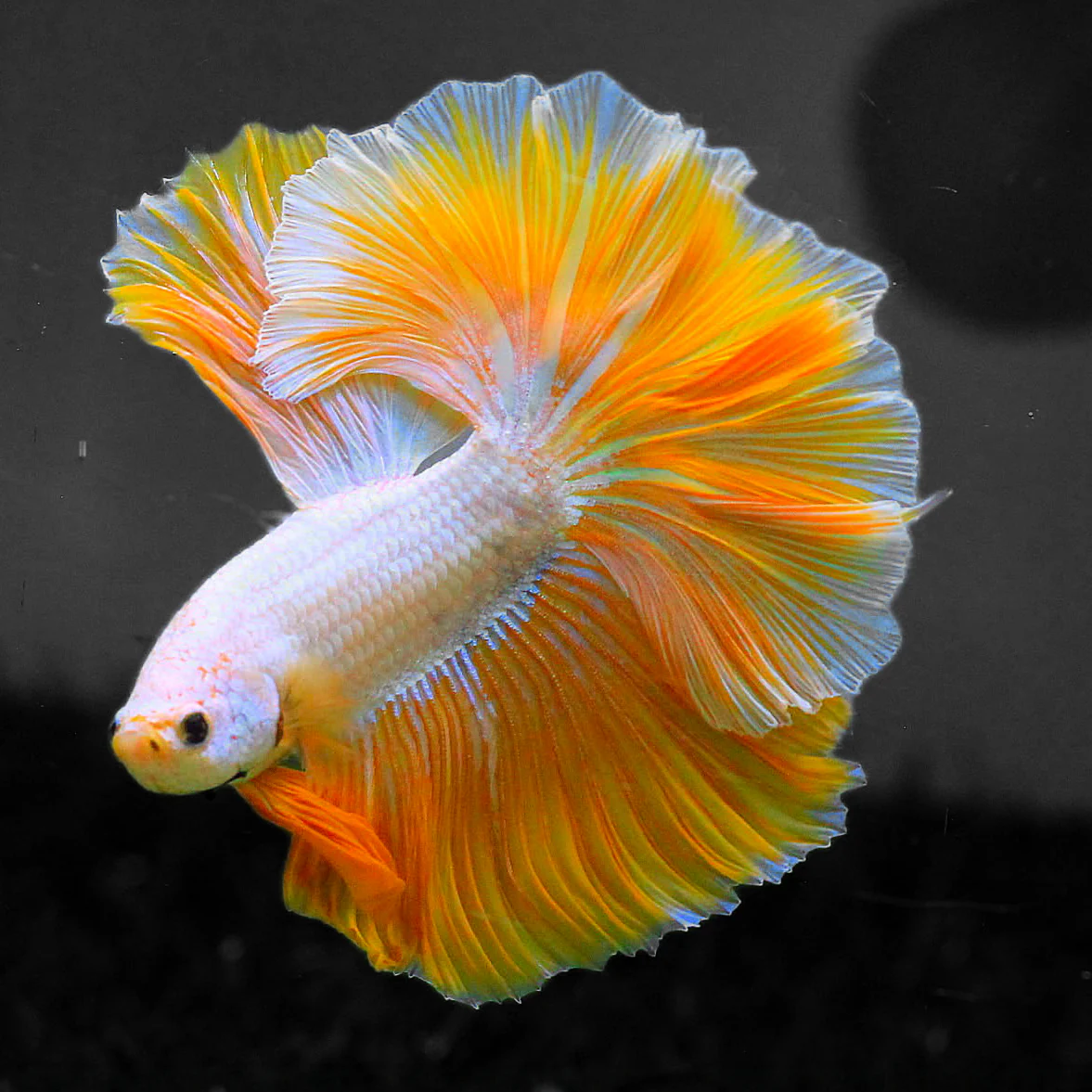
Image of yellow dragon halfmoon betta fish

Activity

They are generally active and curious fish, constantly patrolling their territory. However, the heavy finnage of the halfmoon variety can cause them to tire easily. They require plenty of resting spots near the water surface, such as broad leaves or betta hammocks, to lounge and breathe effortlessly.

Keeping and Caring for Yellow Dragon Halfmoon Betta

Caring for a Yellow Dragon Halfmoon Betta requires attention to water quality and habitat structure. Their long, delicate fins are prone to tearing and fin rot if the environment is not properly maintained or if sharp decorations are present.

Tank size:

A minimum tank size of 5 gallons (19 liters) is highly recommended to provide adequate swimming space and stable water parameters.

Water Parameters:

Temperature

They are tropical fish and require a stable heater set between 24-28°C (75-82°F).

pH

The ideal pH range is slightly acidic to neutral, between 6.5 and 7.5.

Hardness

They prefer soft to moderately hard water, ideally between 3 and 4 dGH.

Ammonia, Nitrite, Nitrate

Ammonia and Nitrite must always be at 0 ppm. Nitrates should be kept strictly below 20 ppm through regular water changes.

Lighting

Moderate to low lighting is preferred. Floating plants can be used to diffuse bright aquarium lights and mimic their naturally shaded habitats.

Water flow

Water flow must be kept very low. Strong currents will exhaust a halfmoon betta and can damage their delicate fins. A sponge filter is often the best choice.

Decorations and Plants

Use only live plants (like Anubias or Java Fern) or silk plants. Avoid plastic plants or rough rocks that can snag and tear their fins. Provide hiding caves and resting places near the surface.
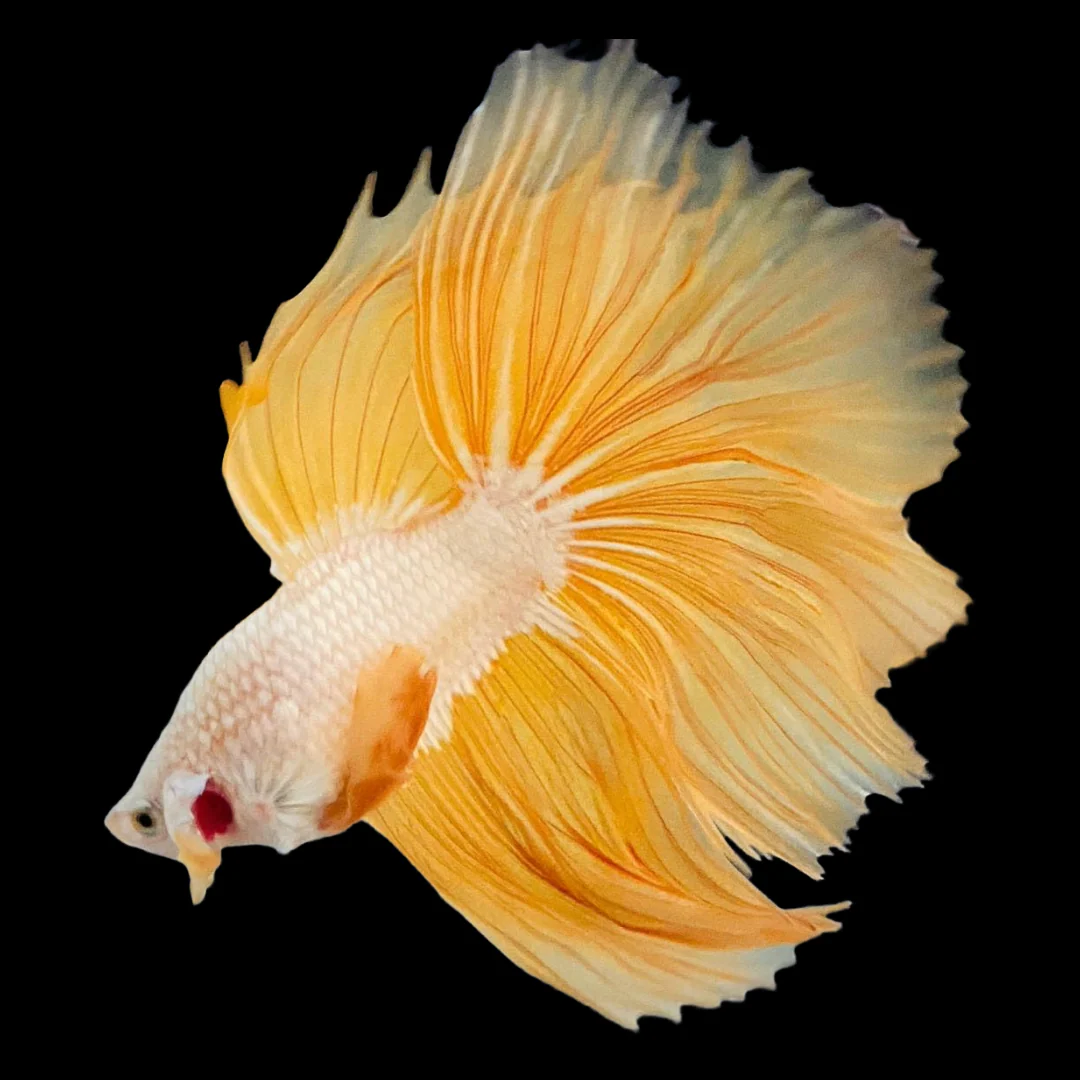
Image of yellow dragon halfmoon betta fish

Diet

Bettas are primarily carnivorous. Their diet should consist of high-quality, protein-rich betta pellets or flakes. This should be supplemented with frozen or live foods such as bloodworms, daphnia, and brine shrimp to ensure optimal health and vibrant coloration.

Some Feeding Tips

Feed small amounts 1 to 2 times daily—only what they can consume in a couple of minutes (usually 2-3 pellets per feeding). Bettas are prone to bloating and constipation, so a fasting day once a week is highly recommended.

Breeding

Breeding bettas is a complex process that requires a separate breeding tank and dedicated conditioning of the male and female. The male builds a bubble nest at the water's surface. Once the female releases eggs during an elaborate "embrace," the male fertilizes them, catches them in his mouth, and places them in the nest. The female must be removed immediately after spawning to prevent the male from attacking her. The male will fiercely guard the nest until the fry become free-swimming.

Conclusion

The Yellow Dragon Halfmoon Betta is a spectacular specimen that brings a splash of brilliant yellow and striking metallic white to any appropriately sized aquarium. While their long fins require a bit of extra care regarding water flow and tank decor, their engaging personalities and undeniable beauty make them one of the most rewarding fish for both beginners and experienced aquarists alike.

Fish info

Care level: Easy - Moderate
Temperament: Semi-aggressive
Adult size: 5-7 cm
Life expectancy: 3-5 years
Fish type: Labyrinth Fish
Temperature : 24-28°C
pH: 6.5-7.5
Color Form: Platinum, White, Yellow
Leave your comments
Lastest on Fishs
  • Hyphessobrycon flammeus (Flame Tetra)

    Easy
    Labyrinth Fish
    The Flame Tetra, or Red of Rio, is a captivating freshwater fish originating from the coastal rivers of Brazil. Renowned for its fiery red posterior and peaceful nature, this hardy schooling fish is incredibly popular among both novice and experienced aquarists, bringing vibrant color and active movement to community aquariums.
  • Crossocheilus siamensis (Siamese Algae Eater)

    Easy - Moderate
    Labyrinth Fish
    The Siamese Algae Eater (Crossocheilus siamensis) is a highly sought-after freshwater fish renowned for its insatiable appetite for nuisance algae, including the dreaded black beard algae. Originating from Southeast Asia, this active and relatively peaceful cyprinid is a staple in planted aquariums, offering both utility and energetic charm.
  • Paracheirodon innesi (Neon Tetra)

    Easy
    Labyrinth Fish
    Native to the blackwater streams of the Amazon basin, the Neon Tetra is a dazzling, peaceful schooling fish. Renowned for its vibrant blue and red stripes, it brings incredible life and color to freshwater aquariums, making it an enduring favorite among both beginner and experienced aquarists.
  • Hyphessobrycon herbertaxelrodi (Black Neon Tetra)

    Easy
    Labyrinth Fish
    The Black Neon Tetra is a captivating and hardy schooling fish native to the Paraguay basin in Brazil. Known for its striking black and iridescent greenish-white lateral stripes, this peaceful species is highly popular among aquarists for adding dynamic contrast and lively movement to planted community aquariums.
  • Hemigrammus erythrozonus (Glowlight Tetra)

    Easy
    Labyrinth Fish
    The Glowlight Tetra (Hemigrammus erythrozonus) is a vibrant, peaceful schooling fish native to the Essequibo River in Guyana. Known for the striking iridescent red-orange stripe running along its translucent body, this hardy species is highly popular among aquarists of all levels for adding a luminous touch to community tanks.
  • Trigonostigma espei (Lambchop Rasbora)

    Easy
    Labyrinth Fish
    The Lambchop Rasbora, scientifically known as Trigonostigma espei, is a captivating and peaceful schooling fish. Renowned for its brilliant copper-orange hues and distinctive black "lambchop" marking, this active cyprinid has become a favorite among aquascapers and nano-aquarium enthusiasts seeking a vibrant addition to their planted community tanks.
  • Boraras maculatus (Dwarf Rasbora)

    Moderate
    Labyrinth Fish
    Hailing from the slow-moving, blackwater streams of Southeast Asia, the Dwarf Rasbora (Boraras maculatus) is a captivating micro-fish. Renowned for its vibrant red-orange hue and striking black spots, this peaceful, schooling species is incredibly popular among aquascapers and nano-tank enthusiasts seeking active, colorful additions to their planted aquariums.
  • Betta splendens (Purple Gold Betta Male)

    Easy - Moderate
    Labyrinth Fish
    The Purple Gold Betta Male is a stunning variant of Betta splendens, prized for its breathtaking metallic gold body and rich purple-hued fins. Originally from the shallow waters of Southeast Asia, this labyrinth fish is highly sought after by aquarists for its vibrant colors, bold personality, and captivating territorial displays.
  • Betta splendens (Platinum Crowntail Betta)

    Easy - Moderate
    Labyrinth Fish
    The Platinum Crowntail Betta is a breathtaking freshwater fish celebrated for its pure, iridescent white coloration and dramatic, spike-like fin rays. Originating from Southeast Asia, these labyrinth fish are highly territorial but incredibly popular among aquarists for their striking, crown-like appearance and interactive personalities.
  • Betta splendens (Orange Crowntail Betta Male)

    Easy - Moderate
    Labyrinth Fish
    The Orange Crowntail Betta is a striking variant of the beloved Betta splendens, renowned for its dramatic, spiky finnage and vibrant orange coloration. Originating from Southeast Asia, these labyrinth fish are highly popular among aquarists for their bold personalities, captivating displays, and relative ease of care in small setups.
  • Betta splendens (Orange Betta Male)

    Easy
    Labyrinth Fish
    The Orange Betta Male is a striking variation of the popular Betta splendens. Originating from the shallow, slow-moving waters of Southeast Asia, these labyrinth fish are celebrated for their vibrant, fiery coloration and flowing fins. While highly territorial, their captivating beauty makes them a stunning centerpiece for solitary aquariums.
  • Betta splendens (Halfmoon Copper Betta Male)

    Easy - Moderate
    Labyrinth Fish
    Originating from the shallow waters of Southeast Asia, the Halfmoon Copper Betta is a breathtaking centerpiece for any aquarium. Renowned for its stunning 180-degree tail spread and striking metallic copper scales, this highly popular, intelligent labyrinth fish brings vibrant energy, interactive behavior, and unparalleled beauty to the home hobbyist.
  • Betta splendens (Blood Orange Halfmoon Betta Male)

    Easy - Moderate
    Labyrinth Fish
    The Blood Orange Halfmoon Betta Male, a stunning variant of Betta splendens, captivates aquarists with its vibrant red-orange hues and magnificent 180-degree caudal fin spread. Hailing from the slow-moving waters of Southeast Asia, these labyrinth fish are renowned for their solitary yet engaging personalities and territorial nature, making them a centerpiece in any dedicated aquarium.
  • Betta splendens (Black Starfire Plakat Betta Male)

    Easy - Moderate
    Labyrinth Fish
    The Black Starfire Plakat Betta Male is a stunning variant of the popular Siamese Fighting Fish, *Betta splendens*. Originating from the shallow, slow-moving waters of Southeast Asia, these captivating fish are renowned for their vibrant colors and striking finnage. This particular morph features a short-finned 'Plakat' body adorned with a mesmerizing 'Starfire' pattern of iridescent speckles against a deep black base, making it a highly sought-after centerpiece for any aquarium.
  • Betta splendens (24K Gold Betta Male)

    Easy - Moderate
    Labyrinth Fish
    The 24K Gold Betta Male is a stunning, selectively bred variety of the Siamese Fighting Fish, renowned for its dazzling metallic gold coloration. Hailing from the slow-moving waters of Southeast Asia, these labyrinth fish captivate aquarists with their elaborate finnage and vibrant hues. While males are famously territorial, their individual beauty and engaging personalities make them a cornerstone of the freshwater aquarium hobby.
  • Glass Knifefish - Detailed Guide

    Moderate
    Labyrinth Fish
    Eigenmannia virescens - Glass Knifefish was first described by Valenciennes in 1836. Originally this species received the name Sternachus virescens, this name is currently seen as a synonym. Other synonyms are: Sternopygus tumifrons and Sternopygus lineatus. The name of the genus Eigenmannia refers to the scientist Eigenmann.