Overview
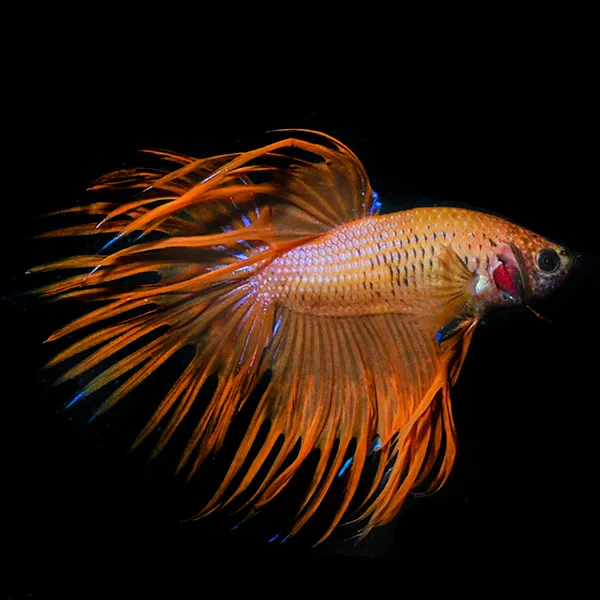
The Orange Crowntail Betta Male is a highly sought-after freshwater fish known for its intense, fiery orange coloration and spectacular fin structure. As a labyrinth fish, it possesses a specialized organ that allows it to breathe atmospheric air, a unique adaptation to its native environment. Its hardy nature makes it a favorite for both beginners and experienced aquarists.
Distribution and Habitat
In the wild, Betta splendens is native to the Mekong basin of Southeast Asia, specifically found in Thailand, Cambodia, and Vietnam. They naturally inhabit shallow, sluggish, or standing waters such as rice paddies, swamps, slow-moving streams, and drainage ditches. These environments are typically densely vegetated and have low oxygen levels, which the betta overcomes using its labyrinth organ.
Description of Orange Crowntail Betta Male
Body shape:
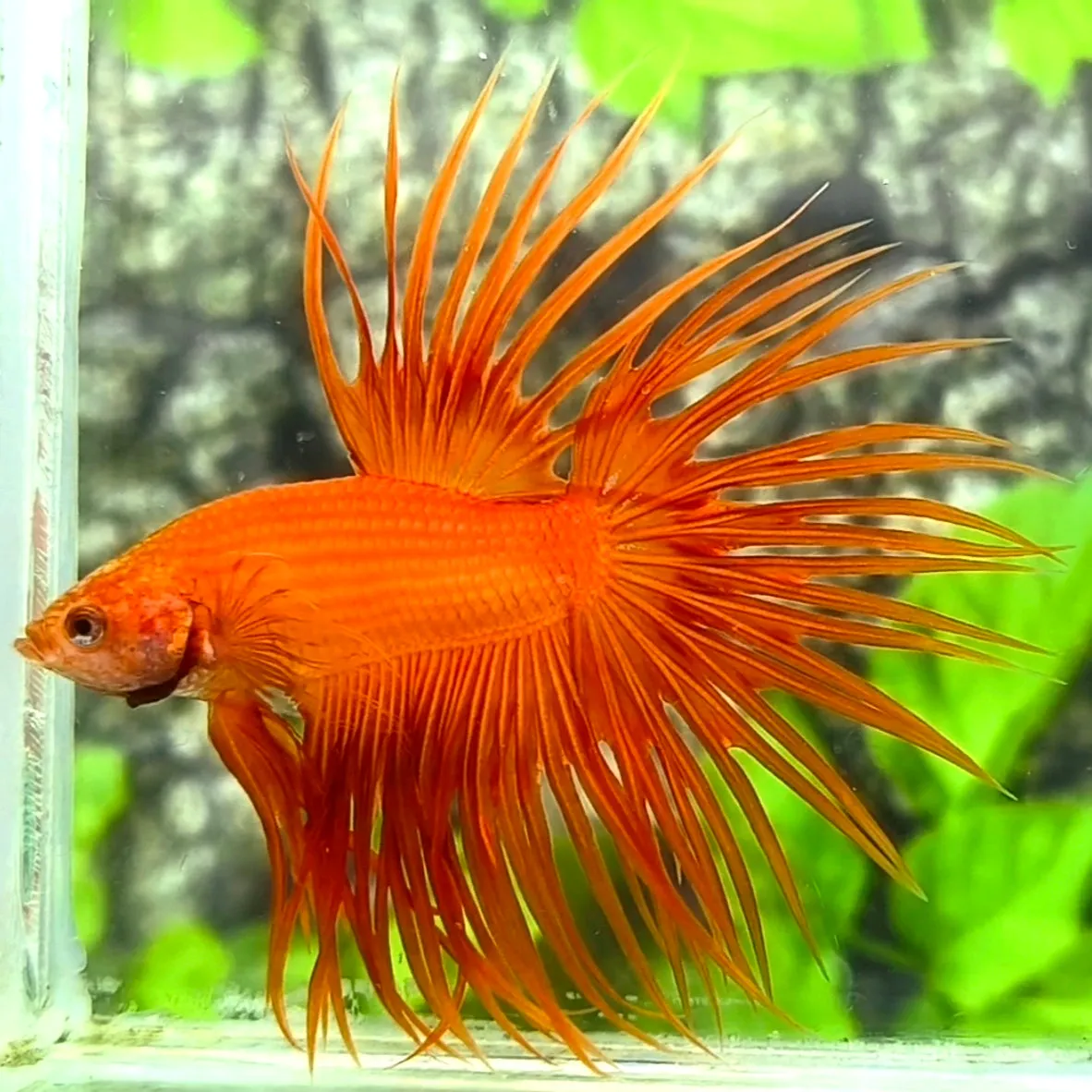
They possess a sleek, torpedo-like, elongated body that allows them to glide effortlessly through the water. Their anatomy is perfectly evolved for navigating dense plant life in their natural habitat.
Color:
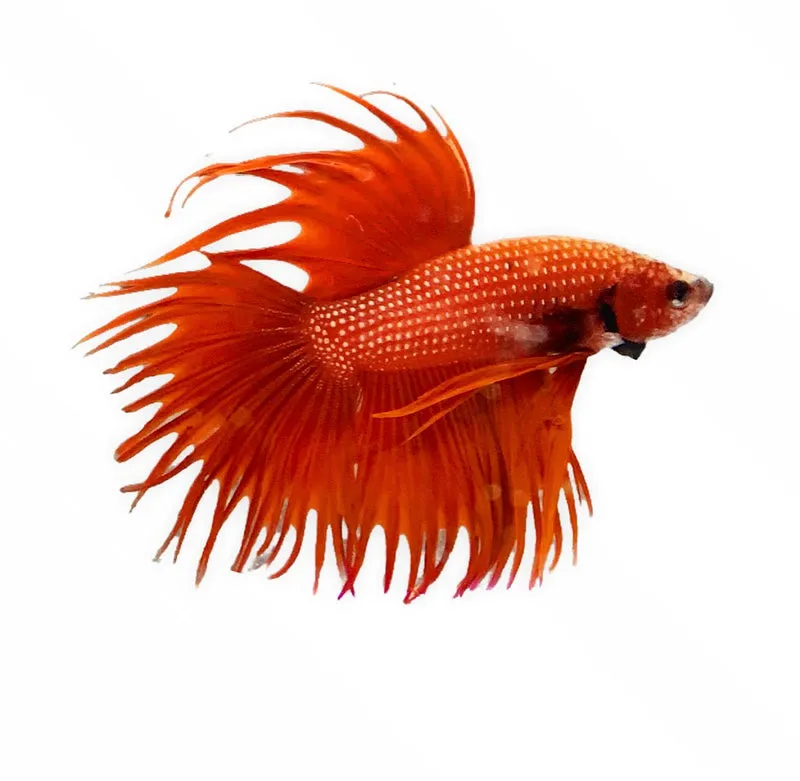
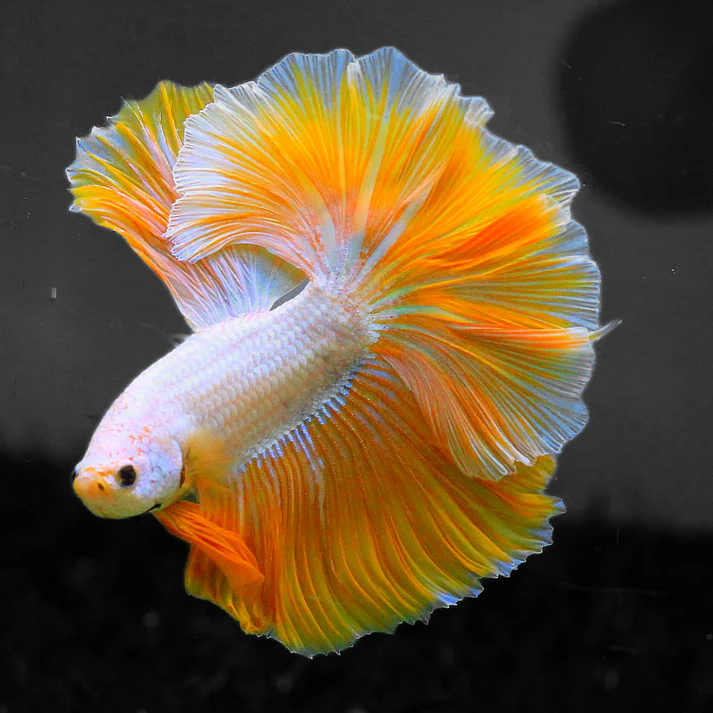
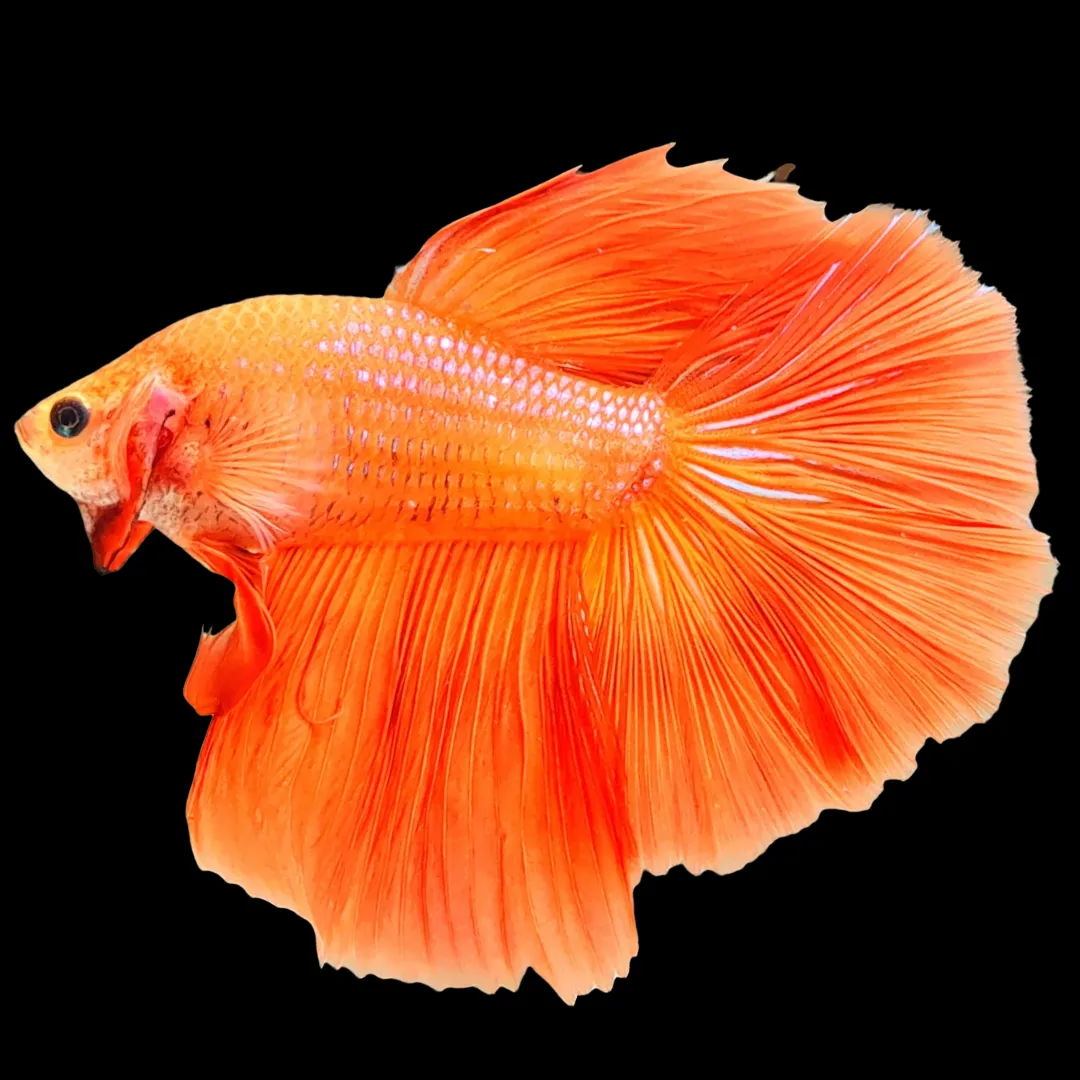
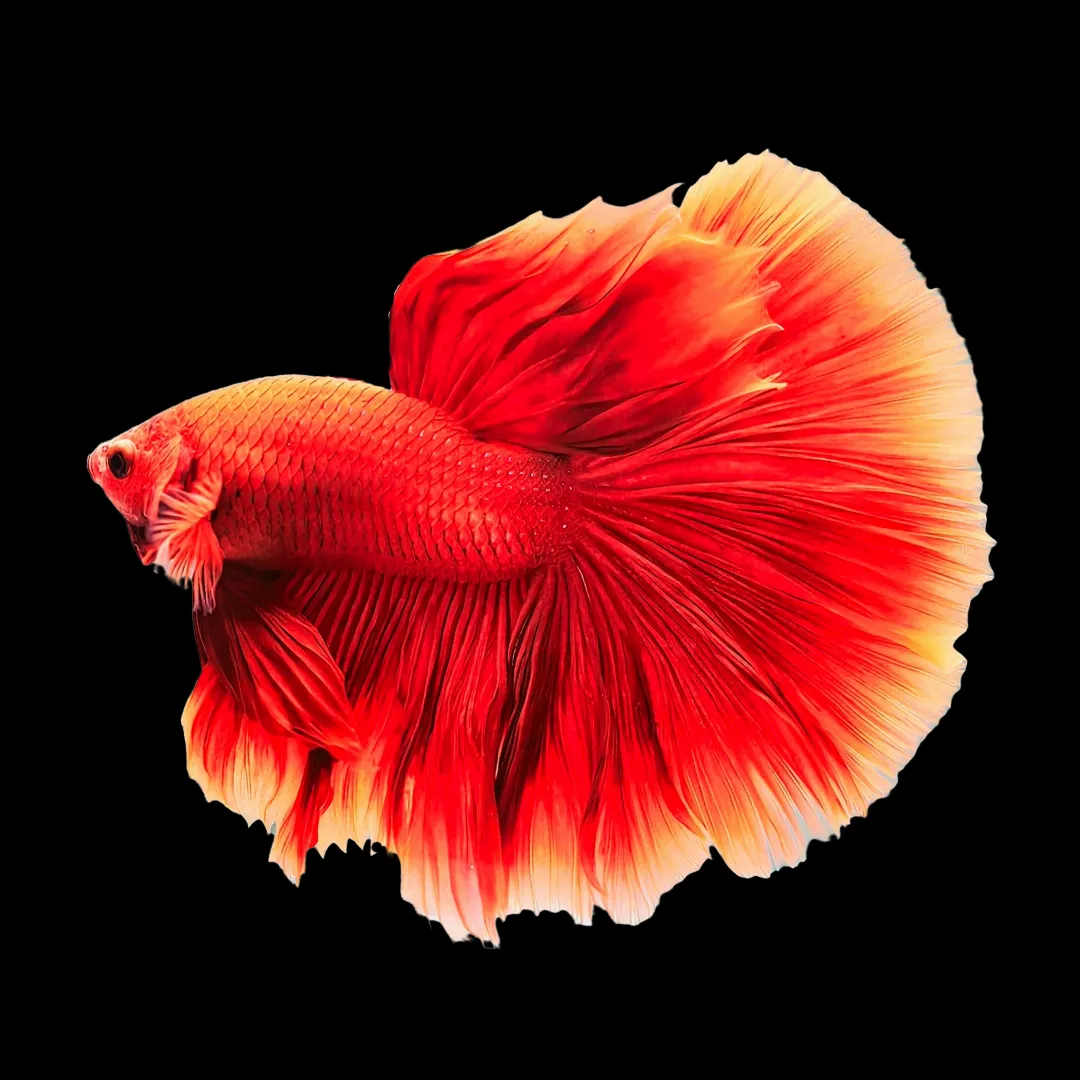
This specific morph boasts a brilliant, solid orange hue that covers its body and fins. Depending on the lighting and the fish's mood, the orange can range from a soft tangerine to a deep, fiery amber.
Barbels:
Bettas do not possess true barbels. However, their elongated pelvic fins can sometimes be mistaken for them, serving a sensory purpose in navigating their surroundings.
Snout:
They have a distinct, upturned mouth. This superior mouth orientation is specifically adapted for surface feeding, allowing them to easily snatch insects from the water's surface.
Eyes:
Their eyes are dark, prominent, and highly observant, giving them excellent vision to spot tiny prey and monitor their territory for potential rivals.
Fins:
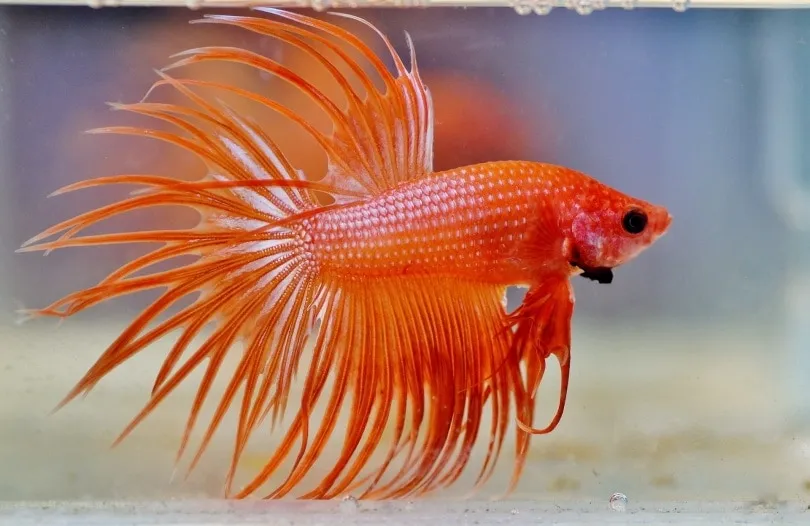
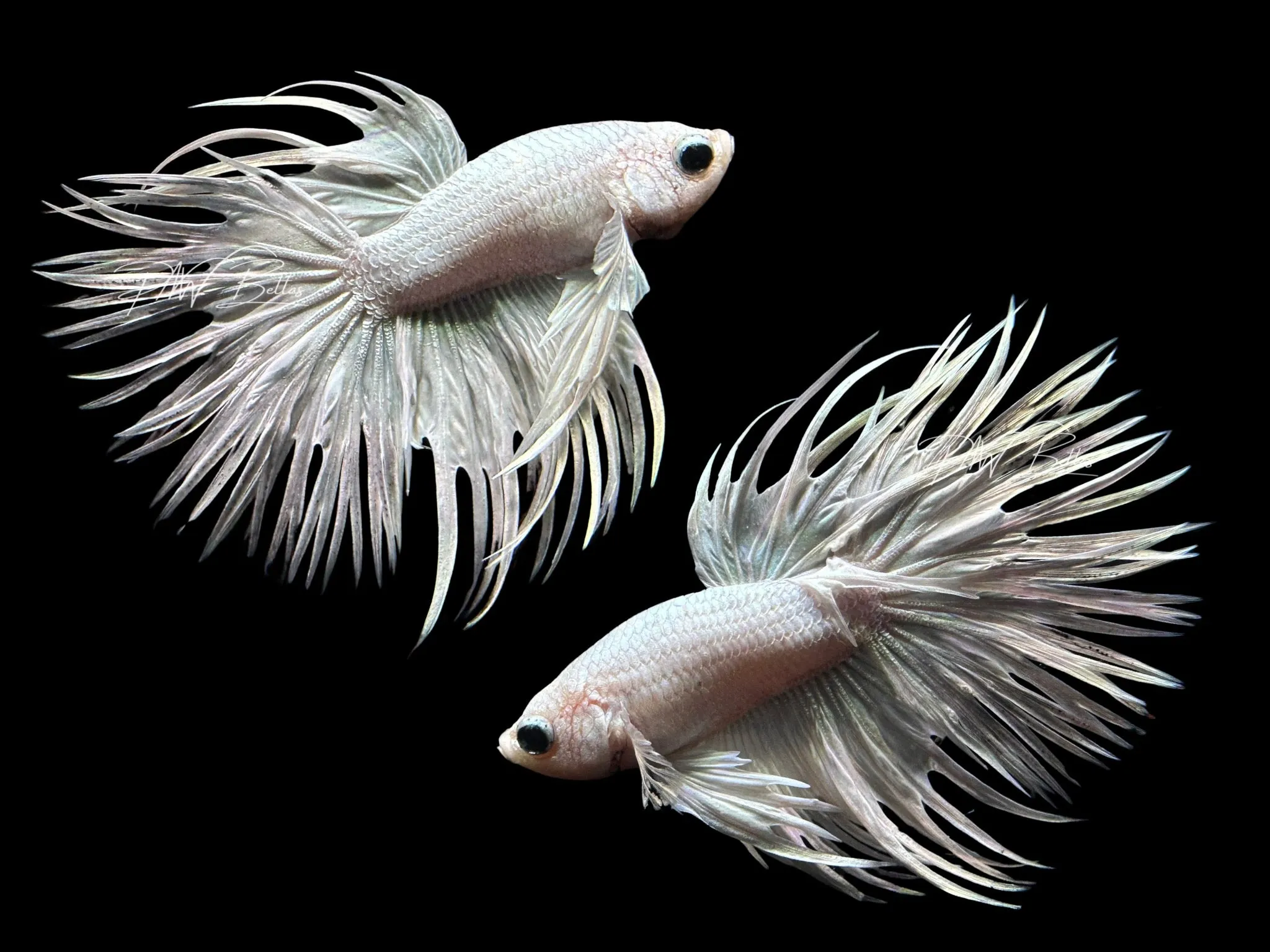
The defining feature of the Crowntail is the significant reduction in webbing between the fin rays. This gives the dorsal, anal, and pelvic fins a deeply fringed, spiky appearance.
The Tail:
The caudal (tail) fin displays the classic "crown" look. The rays extend far beyond the fin membrane, creating dramatic, individual spikes that fan out majestically when the male flares.
Temper
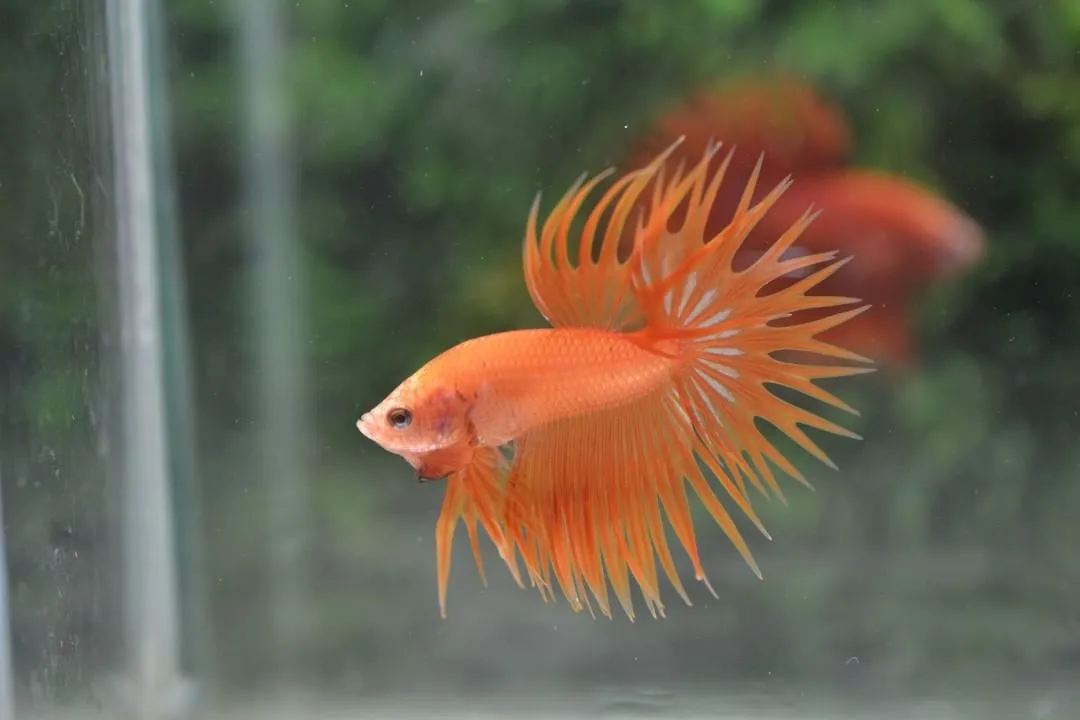
Male Bettas are famously territorial and aggressive, especially towards other male bettas or fish with similar bright colors and long fins. If another male is spotted, they will flare their gills and fins in an intimidation display, which often leads to physical combat if neither retreats.
Sociality
Due to their aggressive nature, male Orange Crowntail Bettas must be kept solitary in their own tank or carefully introduced into a community tank with peaceful, short-finned, and dull-colored fish (like Corydoras or small tetras). They should never be housed with other male bettas or fin-nipping species.
Activity
They are moderately active swimmers. Throughout the day, they will patrol their territory, investigate their surroundings, and periodically rest on broad leaves or hammocks near the water surface to easily gulp air.
Keeping and Caring for Orange Crowntail Betta Male
Tank size:
A minimum of 5 gallons (about 19 liters) is required for a single male. Larger tanks are always better as they provide more stable water parameters and more room to explore.
Water Parameters:
Temperature
Bettas are tropical fish and require a stable temperature between 24-28°C (75-82°F). A reliable aquarium heater is essential.
pH
They thrive in slightly acidic to neutral water, with an ideal pH range of 6.5 to 7.5.
Hardness
Soft to moderate water hardness is preferred, ideally between 5 and 15 dGH.
Ammonia, Nitrite, Nitrate
Water must be kept pristine to prevent fin rot, especially for Crowntails. Ammonia and Nitrite must strictly be at 0 ppm, and Nitrate should be kept below 20 ppm through regular water changes.
Lighting
Low to moderate lighting is best. Bright lights can cause stress unless the tank is well-shaded with floating plants.
Water flow
Water flow must be kept very gentle. The long, spiky fins of the Crowntail create drag, making it exhausting for them to swim in strong currents.
Decorations and Plants
Live plants like Anubias, Java Fern, and floating plants are highly recommended. If using artificial decor, ensure only silk plants are used, as plastic plants and sharp rocks can easily tear their delicate fins.
Diet
Bettas are strict carnivores. In the aquarium, their diet should consist of a high-quality betta-specific pellet or flake, supplemented heavily with protein-rich treats like frozen or live bloodworms, brine shrimp, and daphnia.
Some Feeding Tips
Overfeeding is a common issue that leads to bloating and water fouling. Feed 2-3 small pellets twice a day, and fast the fish one day a week to allow its digestive system to clear. Soak dried foods briefly before feeding to prevent expansion in the stomach.
Breeding
Breeding Bettas is an intricate process. The male builds a bubble nest at the water's surface using saliva-coated air bubbles. Once a female is introduced and accepted, they engage in a "nuptial embrace" where the male wraps around the female to fertilize the eggs as she releases them. The male then catches the sinking eggs, places them in the nest, and fiercely guards them until the fry hatch and become free-swimming.
Conclusion
The Orange Crowntail Betta Male is a magnificent centerpiece for a nano aquarium. With its fiery coloration and unique, crown-like finnage, it offers incredible visual appeal. By providing a warm, clean, and low-flow environment, aquarists can enjoy the bold personality and stunning beauty of this remarkable labyrinth fish for years.





Leave your comments