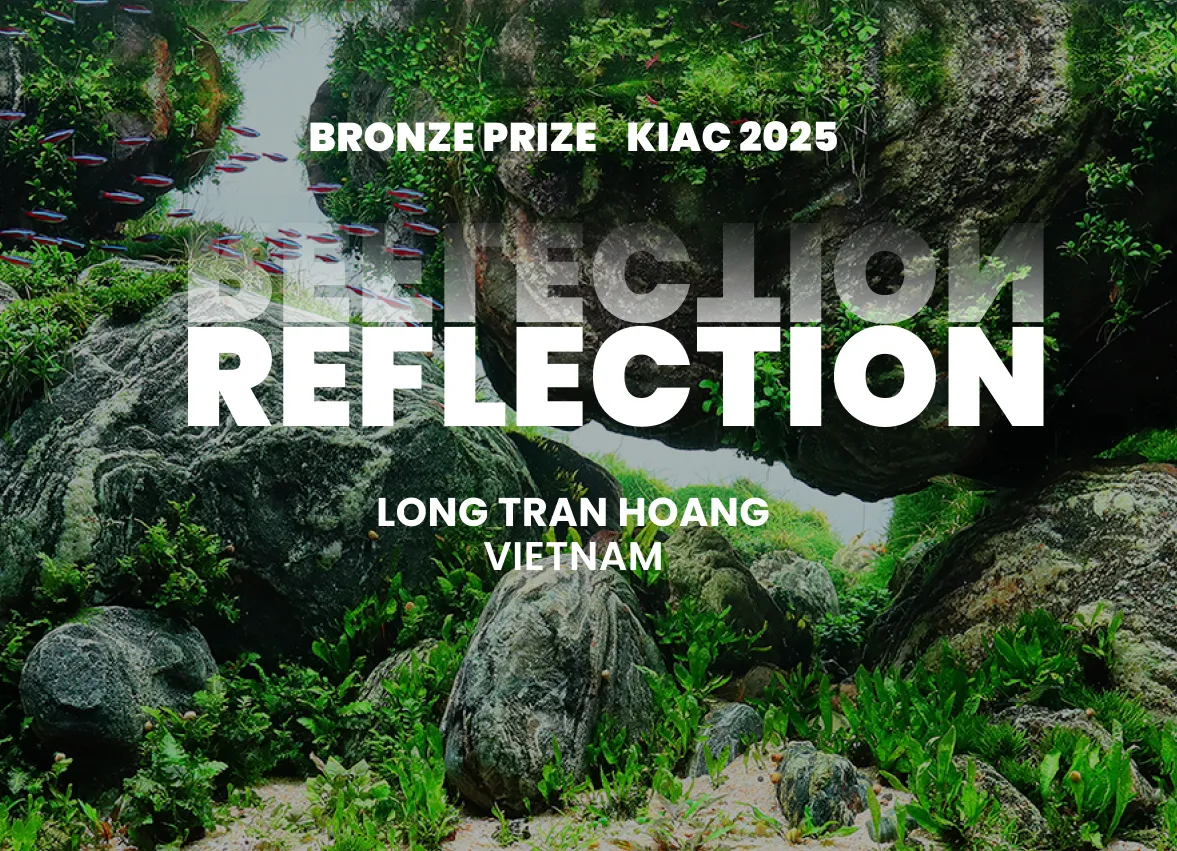
Here is an in-depth analysis of this masterpiece:
1. Hardscape: The Boldness of "Anti-Gravity" Structure
The first visual impact of "Reflection" comes from the stone arrangement. The author utilizes large, rounded boulders with strong weathering textures (reminiscent of Hakkai or sedimentary river stones).
What commands respect is the Hardscape arrangement technique. Instead of placing the stones firmly on the substrate according to standard gravitational rules, Long Tran Hoang has constructed a massive suspended arch structure in the upper section. Rocks that appear to weigh tons seem to "float," creating a magnificent cavernous dome.
This structure creates an intriguing visual tension: the viewer senses the immense weight of the stone, yet perceives them as drifting weightlessly. This is a highly advanced bonding and structural technique that not every artist dares to risk.

2. Depth and The Art of Reflection
True to its name, "Reflection," the work fully exploits the boundary between the water surface and the underwater space.
Pushing the large stone masses right up to the water surface is a clear artistic intention. The reflection of the rocks on the surface creates a visual illusion, seamlessly connecting the emotional flow and making the tank appear to have no vertical limit. It evokes images of coastal cliffs or submerged caves, where nature mirrors itself in absolute stillness.
3. Plants and Lighting: Softness Neutralizing Roughness
To balance the cold, rough texture of the boulders, the author used a lush and smooth layer of vegetation.
-
The use of creeping foreground plants and mosses (likely Monte Carlo, Weeping moss, or Riccardia) weaving through the rock crevices softens the rigid lines.
-
The bright light green color is distributed intelligently, preventing the layout from feeling too dark or heavy, despite the massive volume of rock.
The negative space in the center and towards the rear acts as a "breathing window" for the layout. Light radiating from the back cuts through the rock gaps, creating a deep, abyssal depth effect, drawing the viewer’s eye deep into the cave.
4. The Biological Flow
The school of fish (appearing to be Neon or Cardinal Tetras) with their reflective blue and red stripes serves as the final brushstroke completing the painting. They swim in a school within the central void, creating dynamic movement that contrasts with the static nature of the stone. The color contrast between the fish and the green/grey tones of the layout brings the work to life.
CONCLUSION
"Reflection" by Long Tran Hoang is an exemplary model of the contemporary Nature Aquarium style blended with the audacity of installation art. Without relying on excessive minute details, the work triumphs through a tight Layout and a breakthrough Concept.
The World Top 4 position and the Bronze Prize are well-deserved recognitions for the Vietnamese author's courage in constructing such novel structures. Congratulations to Long Tran Hoang for contributing to elevating Vietnamese aquascaping to the level of world-class art.







Leave your comments