AquaLibs presents AquaRank Discover the world’s leading aquascapers

Explore transparent rankings built from published results across the world’s leading aquascaping contests.

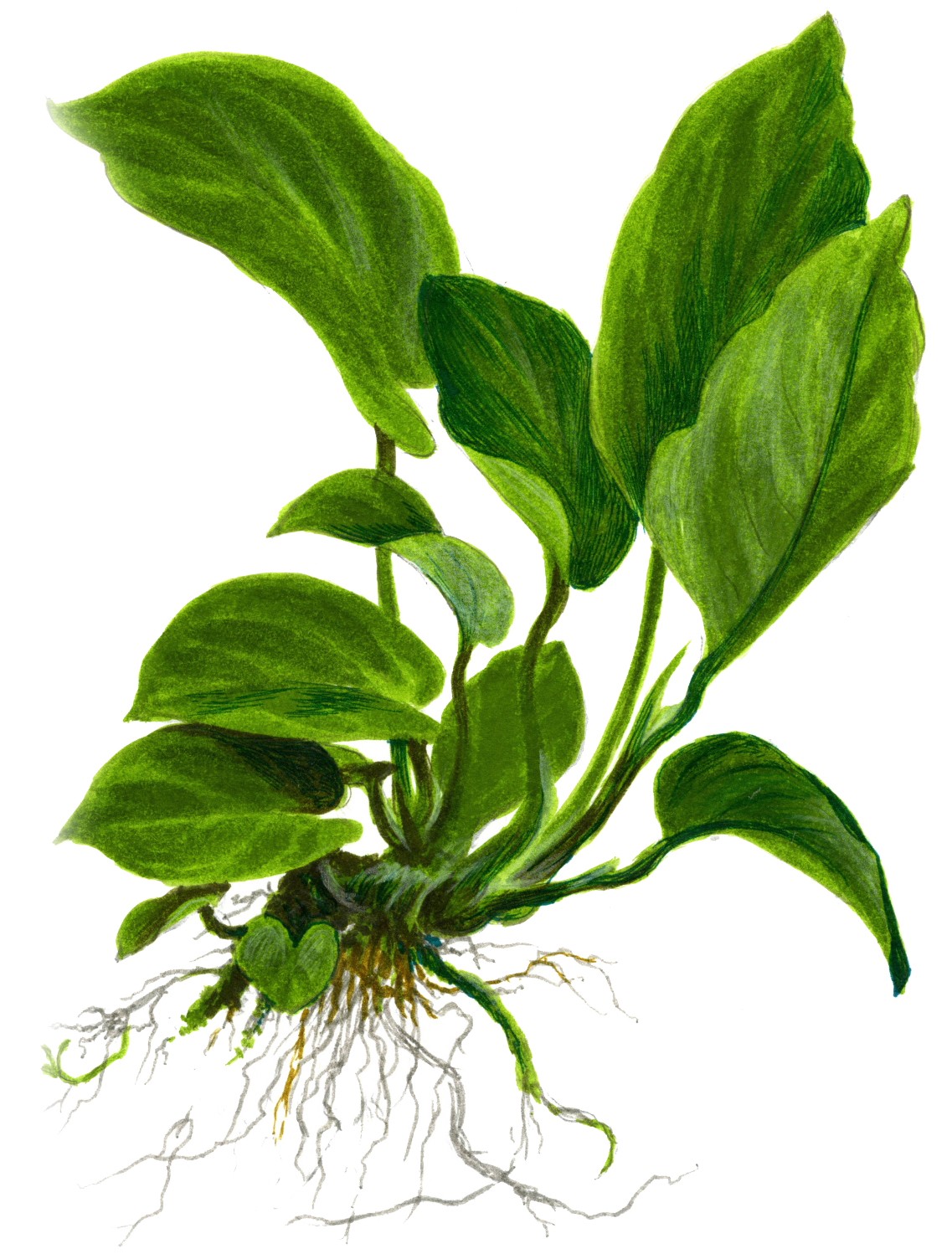
Anubias barteri var. caladiifolia
  • Excellent plant for beginners
  • Heart-shaped leaves, thrives at low light
  • May be attached to pieces of rock and wood

The Caladium-leaf Anubias is native to rainforest streams of Cameroon and Nigeria, it is the biggest Anubias barteri variety. It differs from other barteri varieties by its markedly heart-shaped, up to 24 cm long leaves, otherwise it is very similar to Anubias barteri var. barteri.

As well as other Anubias, A. barteri var. caladiifolia is a robust, slowly growing epiphyte that has has low light demands. It can also be planted in the ground, however the rhizome should remain above the substrate level.

This big Anubias looks well on the hardscape of bigger aquascapes; in smaller tanks it can be used as solitary plant in the background. It is also well suited for the creation of paludariums and aqua-terrariums with the appearance of a shady streambank in the jungle.

Anubias barteri var. caladiifolia is the largest variety of the species Anubias barteri. It is found in several countries in West Africa, and similar to other varieties of A. barteri, it forms vast populations on the banks and in shallow-water zones of rapidly-flowing rivers and rivulets as well as as waterfalls in tropical rainforests. The plants are either rooted in the ground or grow attached to rocks, in sunny to shaded locations.

The leaf blades of this variety grow to a length of up to 24 cm, narrow to wide ovate, and in older plants they develop a distinctly heart-shaped basis. The leaf stalks can grow over 40 cm long, the leaf margin is smooth or slightly undulate.

Several different forms of var. caladiifolia are in cultivation. In trade you can e.g. find a plant with wide heart-shaped leaves that is carried under the name A. barteri var. caladiifolia "1705" (these numbers are used by an Australian in vitro lab).
 

Plant info

  • Colors: Green, Dark green
  • Difficulty: Easy
  • Origin: Cultivar
  • Usage: Middleground
  • Type: Rhizomatous
  • Growth rate: Slow
  • Height: 10 - 15+
  • Light demand: Low
  • CO2: Low
Leave your comments
Latest on Plants
  • Helanthium tenellum 'Green' (Green Dwarf Chain Sword)

    Helanthium tenellum 'Green' (Green Dwarf Chain Sword)

    Easy
    Foreground
    Helanthium tenellum 'Green' is a small, grass-like rosette plant used mainly in the foreground of freshwater aquariums. It spreads through slender runners and can form a low, connected carpet when planted in suitable substrate. The supplied source identifies it as the green cultivar, although cultivation conditions can make its leaf width and height variable. It is generally adaptable, but stronger light, adequate nutrients and added carbon support denser growth.
  • Najas guadalupensis 'Guppy Grass' (Guppy Grass)

    Najas guadalupensis 'Guppy Grass' (Guppy Grass)

    Easy
    Supporting plants
    Guppy Grass is a fast-growing, delicate submerged stem plant identified here as Najas guadalupensis 'Guppy Grass'. It produces narrow, flexible green leaves along branching stems and forms dense cover for small fish and fry. It is generally undemanding, grows floating or planted, and can quickly fill open water. The exact horticultural distinction of the quoted form cannot be confirmed from the supplied material alone.
  • Helanthium bolivianum 'Quadricostatus' (Dwarf Chain Sword)

    Helanthium bolivianum 'Quadricostatus' (Dwarf Chain Sword)

    Easy
    Foreground
    Helanthium bolivianum 'Quadricostatus' is a small rosette plant used mainly in the foreground of planted aquariums. It produces narrow, bright-green leaves and can spread by runners to form a low carpet or grouped ground cover. The supplied source identifies it as this cultivar; aquarium plants sold under similar chain-sword names can be difficult to distinguish without a verified specimen, so the identification is treated as probable rather than definitive.
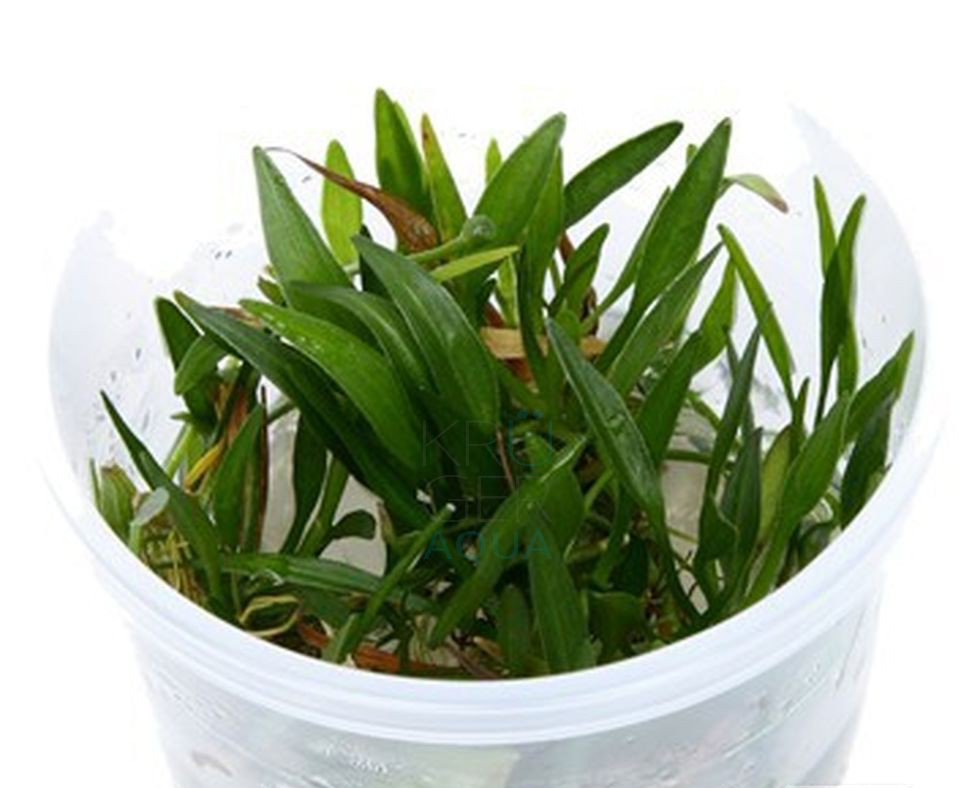
  • Cryptocoryne wendtii 'Green' (Green wendtii water trumpet)

    Cryptocoryne wendtii 'Green' (Green wendtii water trumpet)

    Easy
    Middleground
    Cryptocoryne wendtii 'Green' is a cultivated green form of the adaptable wendtii water trumpet. It develops a compact rosette of narrow to moderately broad, gently textured leaves and is suitable for many freshwater community aquariums. It grows from a rooted crown and generally performs best when left undisturbed in a nutrient-containing substrate. The identification follows the supplied label; cultivar boundaries within commercially sold Cryptocoryne wendtii forms can be difficult to verify from photographs alone.
  • Utricularia graminifolia (Grassy water hose)

    Utricularia graminifolia (Grassy water hose)

    Advanced
    Foreground
    Utricularia graminifolia is a small aquatic bladderwort valued for its fine, grass-like foliage and low carpet-forming habit. It is a carnivorous plant with minute bladder traps, but these do not pose a practical risk to aquarium fish or shrimp. This species is best suited to established, stable aquariums where strong light, carbon dioxide and consistent nutrition support dense growth.
  • Eleocharis acicularis (Dwarf Hairgrass)

    Eleocharis acicularis (Dwarf Hairgrass)

    Medium
    Foreground
    Eleocharis acicularis is a fine-leaved sedge used as a foreground carpeting plant in freshwater aquariums. It spreads through slender runners and can form a low, grass-like cover when given suitable light, nutrients, and stable conditions. The supplied 1 2 GROW! material is labelled E. acicularis; confirmation of the exact commercial form from photographs alone is limited.
  • Glossostigma elatinoides (Baby Tears)

    Glossostigma elatinoides (Baby Tears)

    Advanced
    Foreground
    Glossostigma elatinoides is a small, fast-growing aquatic plant from Australia and New Zealand that is widely used to create a low foreground carpet. Its delicate, opposite leaves spread along the substrate when supplied with strong light, carbon dioxide, nutrients, and suitable planting conditions. It is best suited to established aquariums because insufficient light or unstable carbon availability can lead to sparse growth and upward-reaching stems.
  • Taxiphyllum sp. 'Flame' (Flame moss)

    Taxiphyllum sp. 'Flame' (Flame moss)

    Easy
    On rock or root
    Flame moss is a distinctive aquatic moss sold under the trade name Taxiphyllum sp. 'Flame'. Its narrow, upright shoots twist and curl as they grow, creating a flame-like texture rather than a flat carpet. The exact species identity and geographic origin are not reliably established from the supplied material, so this article treats it as a cultivated Taxiphyllum form with conservative care guidance.
  • Elatine hydropiper (Water Pepper)

    Elatine hydropiper (Water Pepper)

    Advanced
    Foreground
    Elatine hydropiper is a very small, low-growing aquatic plant used to form a dense foreground carpet. The supplied label identifies the plant as E. hydropiper, and the appearance is consistent with that use, although a definitive identification would require botanical examination. It is best suited to established aquariums with strong light, nutrient-rich substrate, stable conditions, and reliable carbon dioxide supplementation.
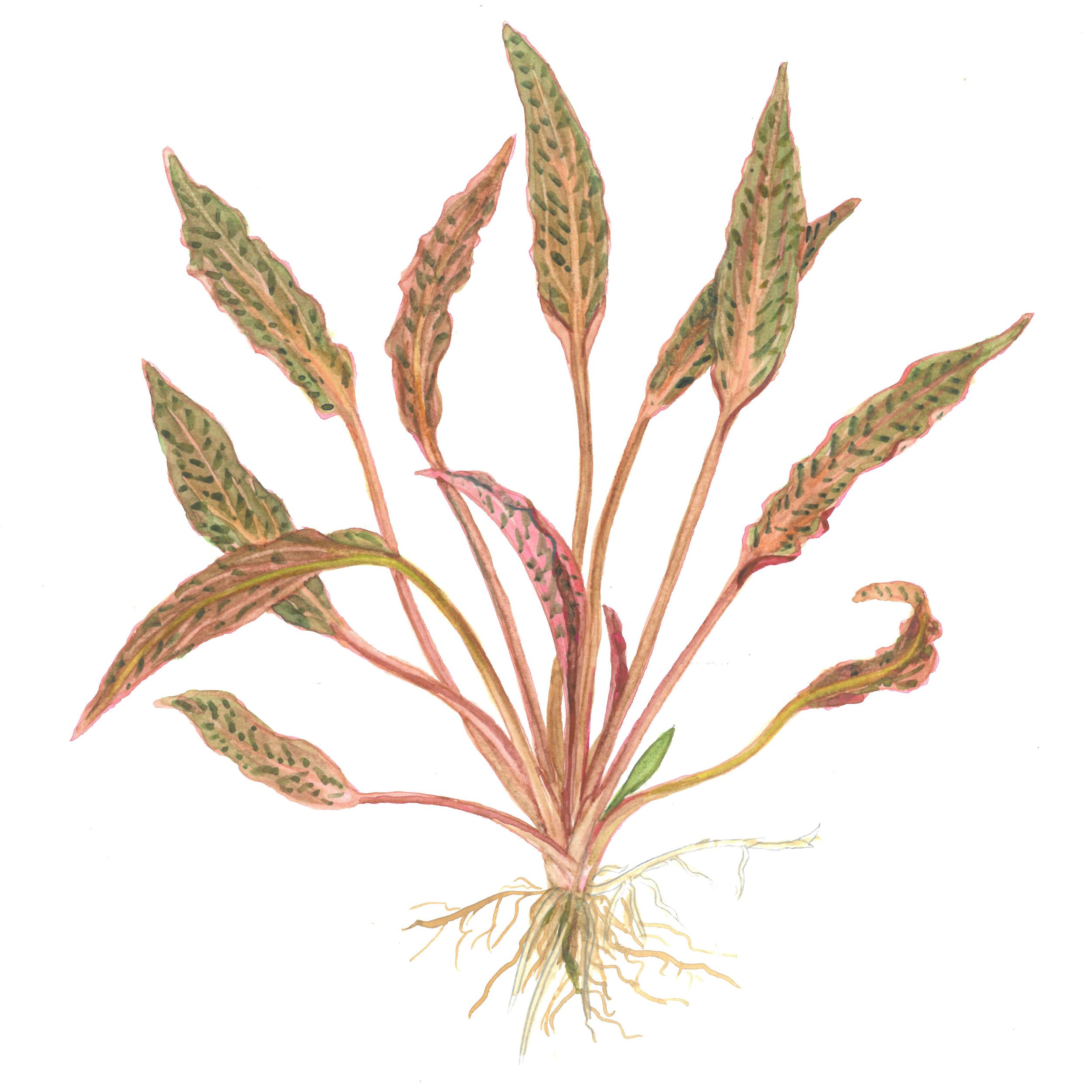
  • Echinodorus 'Reni'

    Echinodorus 'Reni'

    Easy
    Middleground
    Echinodorus 'Reni' is a distinctive aquarium cultivar known for its compact growth habit and striking coloration. Its leaves transition through shades of reddish-brown to dark green, making it an excellent centerpiece plant for smaller aquariums. This rosette plant is relatively undemanding and adapts well to various water conditions, provided it receives sufficient nutrients through the substrate.
  • Hemianthus callitrichoides (Dwarf Pearlwort)

    Hemianthus callitrichoides (Dwarf Pearlwort)

    Advanced
    Foreground
    Hemianthus callitrichoides is widely recognized as one of the smallest aquarium plants available, making it a staple for creating lush, low-growing carpets in aquascapes. Native to Cuba, this delicate plant features tiny, rounded leaves that spread across the substrate. It requires significant attention to light and nutrients to thrive and maintain its characteristic dense, ground-hugging growth habit.
  • Marsilea hirsuta (Dwarf Cloverleaf)

    Marsilea hirsuta (Dwarf Cloverleaf)

    Easy
    Foreground
    Marsilea hirsuta is a popular aquatic fern often utilized as a foreground carpet plant in aquascaping. It is characterized by its clover-like leaves, which can vary in appearance depending on whether the plant is grown submersed or emersed. This hardy species is well-regarded for its adaptability, making it a suitable choice for both beginners and experienced aquarists looking for a lush, green carpet.
  • Cryptocoryne wendtii (Cryptocoryne wendtii Mi Oya)

    Cryptocoryne wendtii (Cryptocoryne wendtii Mi Oya)

    Cryptocoryne wendtii Mi Oya is a robust and highly adaptable aquatic plant originating from Sri Lanka. It is favored by aquarists for its distinctive, hammered leaf texture and rich, brownish-red coloration. This variety is an excellent choice for the middleground of an aquarium, providing a striking contrast against green foliage and creating a natural, established aesthetic.
  • Cryptocoryne undulatus 'Red' (Red Undulated Cryptocoryne)

    Cryptocoryne undulatus 'Red' (Red Undulated Cryptocoryne)

    Cryptocoryne undulatus 'Red' is a striking aquarium plant known for its distinct, wavy-edged foliage and deep reddish-brown coloration. This cultivar is highly valued for its ability to adapt to various water conditions, making it an excellent choice for both beginners and experienced aquascapers looking to add a vibrant focal point to their midground aquarium layouts.
  • Hydrocotyle tripartita (Cloverleaf)

    Hydrocotyle tripartita (Cloverleaf)

    Hydrocotyle tripartita is a popular, fast-growing aquatic plant known for its distinctive three-lobed, clover-like leaves. Often used in aquascaping to create lush carpets or dense, bright green bushes, this species is highly adaptable. It thrives in well-lit aquariums and responds positively to CO2 supplementation, making it an excellent choice for both beginners and experienced aquarists looking for rapid growth.
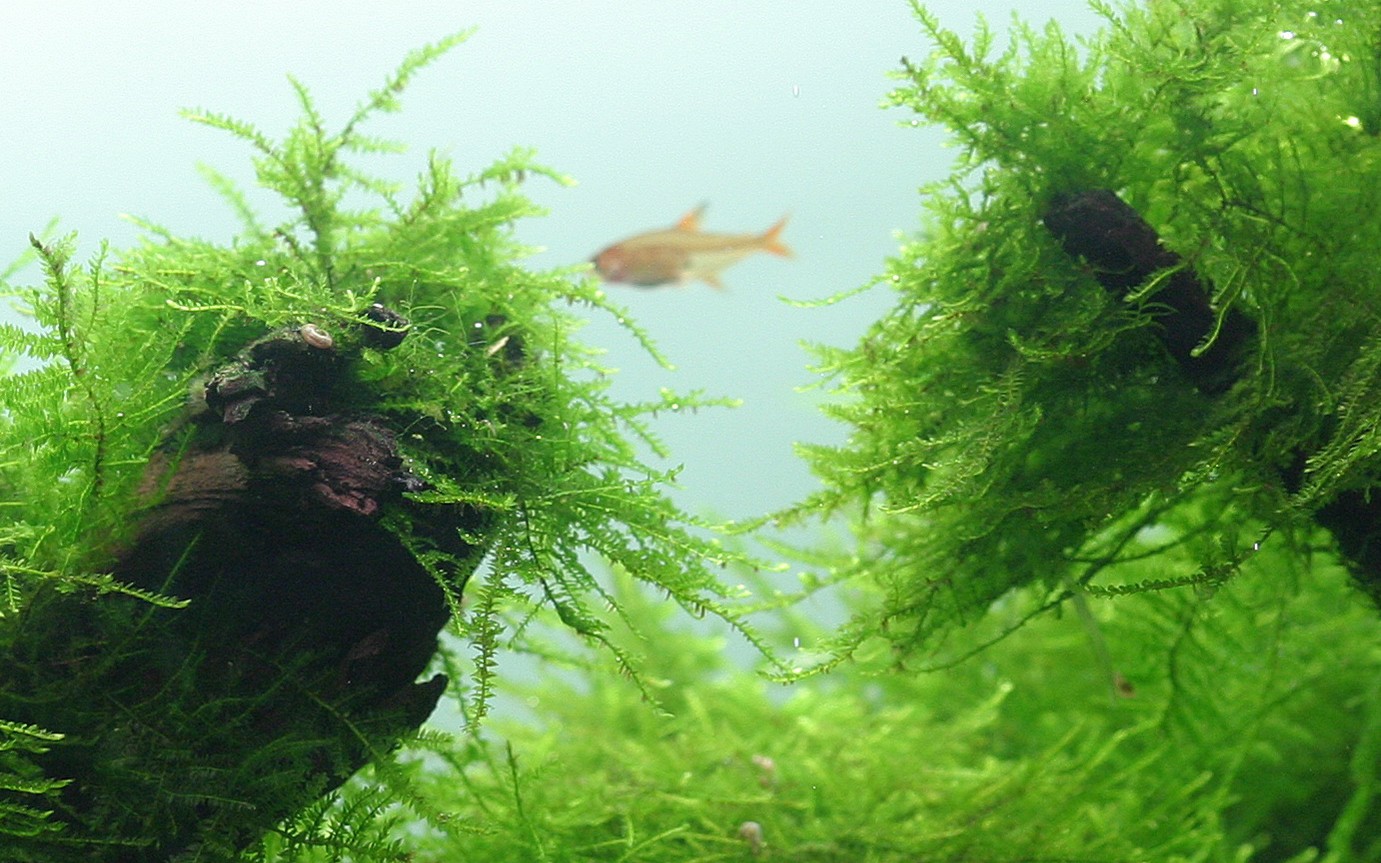
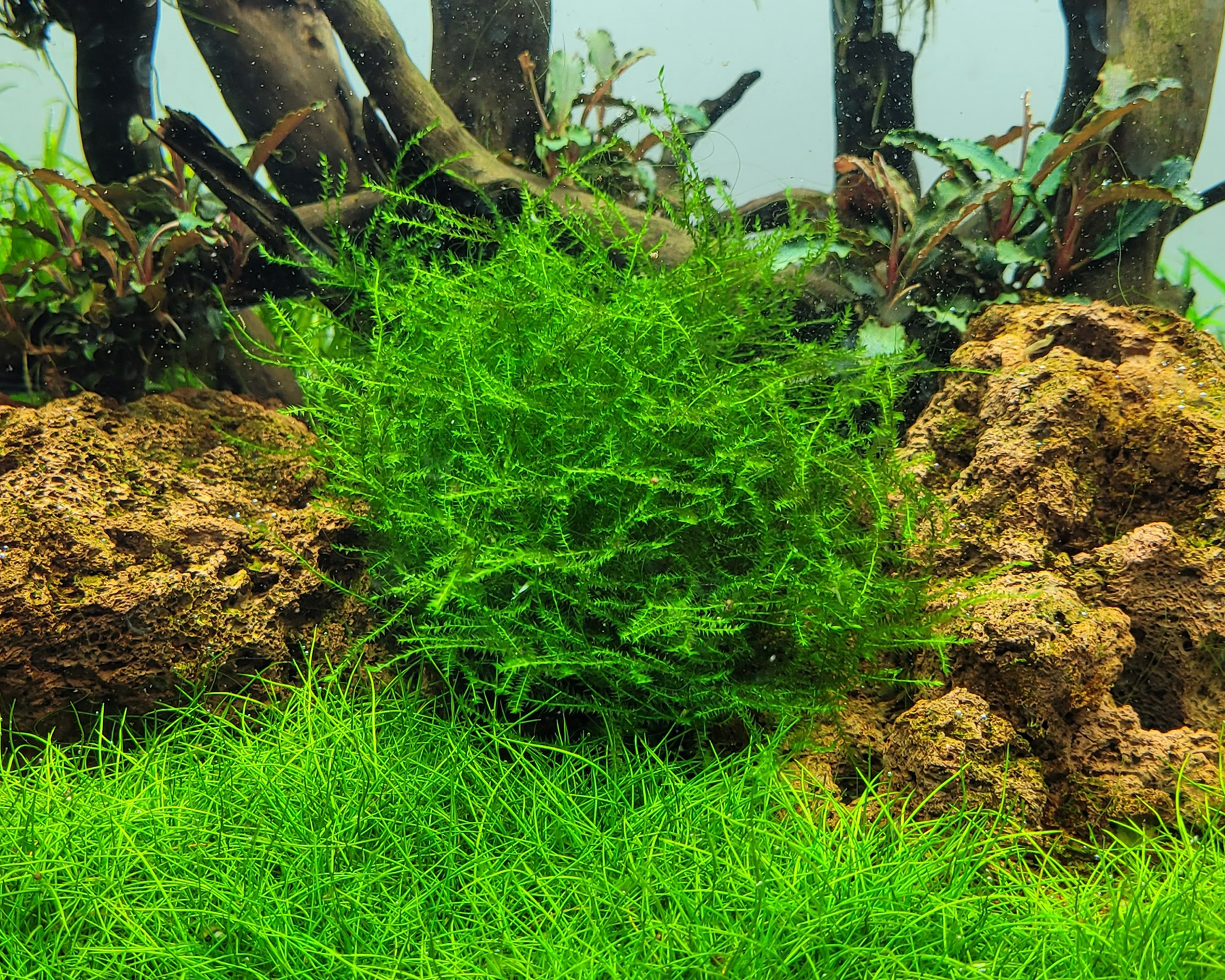
  • Vesicularia dubyana 'Christmas' (Christmas Moss)

    Vesicularia dubyana 'Christmas' (Christmas Moss)

    Christmas Moss is a popular aquatic moss characterized by its distinct triangular, fir-like branching pattern. Highly valued in aquascaping, it creates dense, lush carpets or textured surfaces when attached to hardscape. It is relatively adaptable, making it a suitable choice for both beginners and experienced hobbyists looking to enhance the aesthetic complexity of their planted aquarium setups.